


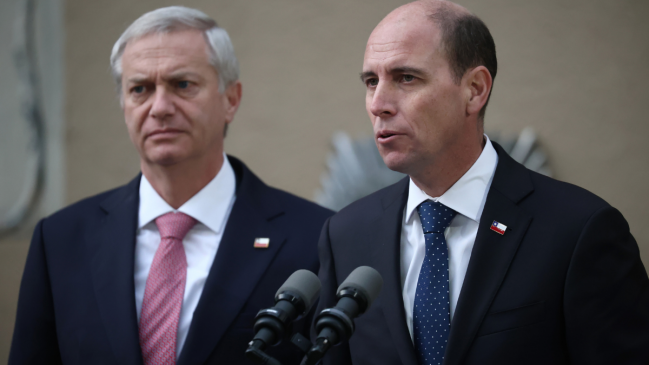
 Image: ATON (archivo)
Government Eases Urgency on Security Constitutional Reform Amid Congressional Resistance
Translated from Spanish and summarized by DistantNews. Read the original for the full story.
At a glance
News
Official statement
Ongoing story
- Chile’s government moved its security-related constitutional reform bill from “ suma urgencia,” which allows 15 days per chamber, to simple urgency, allowing up to 30 days.
- The change follows objections to the proposal and is intended to permit a slower debate in Congress.
- The government gave immediate-discussion priority to 10 public-order bills, including anti-hood and anti-barricade measures, while 10 others remain under 15-day urgency rules.
Chile’s government has slowed the congressional processing of its security-related constitutional reform after resistance emerged among lawmakers.
The proposal entered the Senate under “suma urgencia,” a designation that gives each chamber 15 days to act. The Executive has now assigned it simple urgency, extending the formal review period to as much as 30 days in each chamber.
The reform is now one of only three initiatives in Congress operating under the simple-urgency regime. The adjustment gives parliamentarians more time to debate a measure that has drawn objections.
At the same time, the government has accelerated other parts of its security agenda. Ten bills already before Congress received or retained immediate-discussion status, setting a six-day processing period. The package includes an anti-hood bill and the initiative known as “Antibarricades 2.0.”
A further 10 projects remain under “suma urgencia,” with 15 days for review. They include rules governing the use of force, protections for critical infrastructure and amendments to the law on juvenile criminal responsibility.
About this summary
Originally published by Cooperativa in Spanish. Translated, summarized, and contextualized automatically by DistantNews, with a note on how the source frames the story. Not individually reviewed before publishing. How this works.
More Stories


From Our Blog

What Gets Lost (and Found) When News Is Translated

The Critical Role of Diaspora Media in Global News

What Travellers Should Know About Countries with Restricted Press

A Digital Nomad's Guide to Following Local News

How the Same Story Looks Different in Different Countries
