


Govt committed to Balochistan's flood-hit people, ministry says
Translated from English, summarized and contextualized by DistantNews.
At a glance
News
Official statement
Outcome reported
- The Pakistani government reaffirms its commitment to rehabilitating families affected by the 2022 floods.
- Reports indicated that a World Bank-funded project might have excluded many families in Balochistan from promised resilient homes.
- The Ministry of Planning and Development stated that work has begun on nearly 75,000 houses, with over 26,000 already completed.
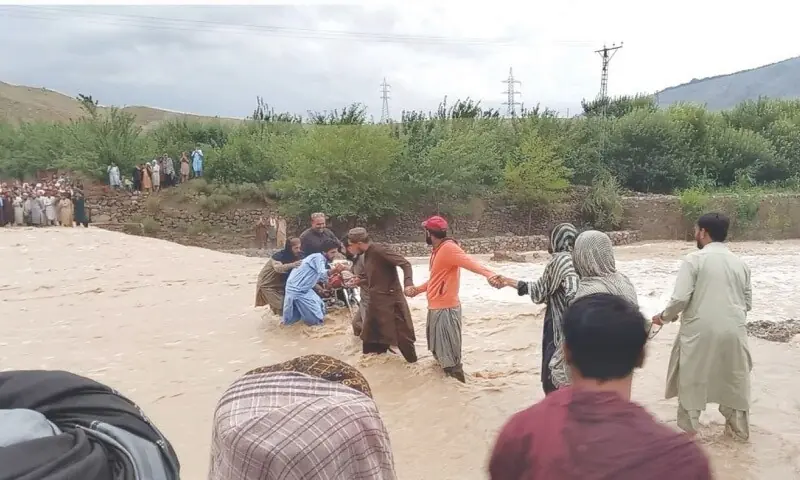
Pakistan's government is reiterating its dedication to assisting families impacted by the devastating 2022 floods, particularly in the Balochistan province. The Ministry of Planning and Development issued a statement affirming the commitment to reconstruct eligible houses identified by the Post-Disaster Needs Assessment (PDNA).
The government remains committed to the rehabilitation of every eligible family affected by the devastating floods of 2022.
This assurance comes amid reports suggesting that a World Bank-funded rehabilitation project may have restructured its approach, potentially leaving numerous affected families in Balochistan without the resilient homes they were promised. The ministry, however, maintains that each of the 68,992 identified fully damaged or destroyed houses remains entitled to reconstruction assistance under the Integrated Flood Resilience and Adaptation Programme (IFRAP).
Each one of them remains entitled to the housing assistance committed under the Integrated Flood Resilience and Adaptation Programme (IFRAP).
Furthermore, the ministry highlighted that the project also offers self-recovery support for 58,016 partially damaged houses. According to the planning ministry, construction has commenced on 74,988 houses, with a significant milestone of 26,357 already completed, indicating progress in the rehabilitation efforts.
In addition, the project provides self-recovery support for 58,016 partially damaged houses.
DistantNews Editorial
Originally published by Dawn in English. Translated, summarized, and contextualized by our editorial team with added local perspective. Read our editorial standards.
More Stories

From Our Blog

What Gets Lost (and Found) When News Is Translated

The Critical Role of Diaspora Media in Global News

What Travellers Should Know About Countries with Restricted Press

A Digital Nomad's Guide to Following Local News

How the Same Story Looks Different in Different Countries
