

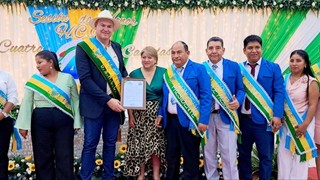
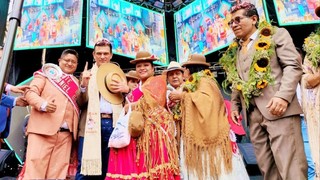
Gran Poder festival serves as popularity thermometer for Bolivian politicians
Translated from Spanish, summarized and contextualized by DistantNews.
At a glance
News
Sources not specified
Context piece
- Bolivian politicians are using the Gran Poder festival as a gauge of their popularity among the public.
- The festival, a significant cultural event, attracts politicians who participate in dances and processions.
- While faith and devotion are present, analysts note the clear political intention behind participation to measure public affection.
Bolivian politicians are increasingly using the Gran Poder festival, a major cultural and religious celebration in La Paz, as a barometer for their public standing. The event, which involves thousands of dancers and numerous folkloric groups, provides a platform for politicians to engage with constituents and gauge their popularity.
Wilson Santamaría, the deputy minister of coordination, is noted as one of the most consistent participants in the festival, often expressing gratitude for blessings received. His presence, like that of other politicians, is seen as a blend of genuine religious devotion and strategic political maneuvering.
Political analysts view the participation of politicians in such events as a clear indicator of their popularity. "The participation, their intervention as a dancer or as a dancer in the festival, is undoubtedly to measure popularity," explained analyst Ludwing Valverde. "Surely, faith and devotion are present, but undoubtedly this thermometer of popularity and the people's affection is present."
Lord of Gran Poder, thank you because we do not lack a loaf of bread to eat, a roof over our heads, and health to continue in life until you decree it.
This year, the pre-entry event, known as the 'promise,' saw fewer high-profile politicians. Organizers attribute this to two main reasons: many politicians prefer to appear only during the main Gran Poder festival on August 1, and the concurrent 'Tata Santiago' festival in Guaqui drew away many who had prior commitments or travel plans. Last year, Rodrigo Paz, who was campaigning at the time, danced with the 'Transporte Pesado' group. Organizers from the group recalled that politicians often join their specific dance blocks during the main event, arriving in costume.
The president is also known as an enthusiastic folklorist. Members of the 'Transporte Pesado' group mentioned that the president danced in Guaqui and Colquepata this year, highlighting his active participation in various regional festivities.
The participation, their intervention as a dancer or as a dancer in the festival, is undoubtedly to measure popularity, surely, faith and devotion are present, but undoubtedly this thermometer of popularity and the people's affection is present.
DistantNews Editorial
Originally published by El Deber in Spanish. Translated, summarized, and contextualized by our editorial team with added local perspective. Read our editorial standards.
More Stories

From Our Blog

What Gets Lost (and Found) When News Is Translated

The Critical Role of Diaspora Media in Global News

What Travellers Should Know About Countries with Restricted Press

A Digital Nomad's Guide to Following Local News

How the Same Story Looks Different in Different Countries
