


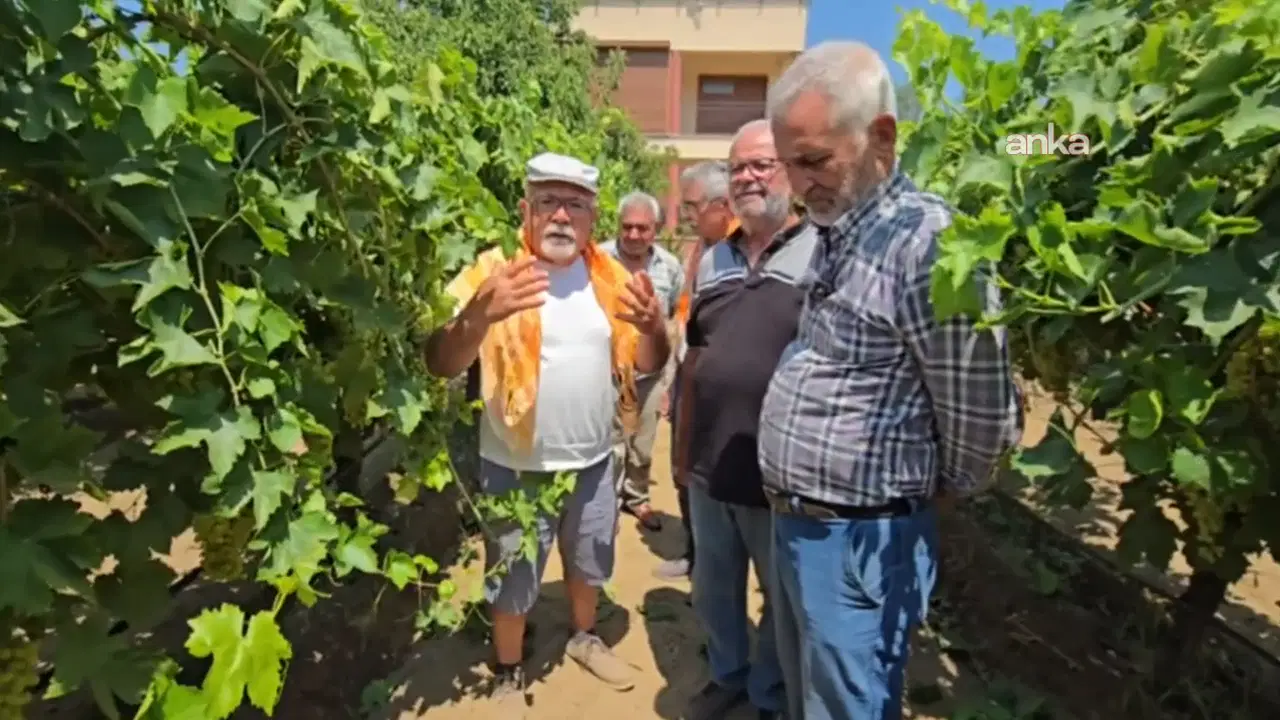
Grape producers revolt: 'We can no longer make a living, our children won't farm grapes'
Translated from Turkish, summarized and contextualized by DistantNews.
At a glance
News
Sources not specified
Context piece
- Turkish grape producers face severe economic hardship due to soaring costs and stagnant prices.
- Farmers report a 50-80% increase in expenses for fuel, fertilizer, and labor over the past year, while grape prices have fallen below previous levels.
- Uncertainty persists as official bodies like TMO and TARİŞ have not yet announced season prices, leaving growers vulnerable to traders.
Grape producers in Turkey's Manisa province are sounding the alarm over their dire economic situation, warning that the future of viticulture is at risk. Farmers in Kavaklıdere and Örneköy neighborhoods are struggling with a dramatic increase in production costs, which have surged by 50% to 80% in the last year alone. Expenses for diesel fuel, fertilizer, pesticides, electricity, irrigation, and labor have all climbed significantly.
We are five siblings. Grapes contributed to the education, upbringing, and even marriage of five siblings. Today, with the vineyards inherited from our father, we cannot even support ourselves. It seems impossible for our children to continue this work.
Despite these rising costs, the price for dried grapes has plummeted, falling below levels seen two years ago. This economic squeeze has made grape farming unsustainable, according to local producers. Gürcan Ertürk, a member of the Farmers' Union Supervisory Board, lamented that the income from their ancestral vineyards can no longer support their families, casting doubt on whether the younger generation will continue the tradition.
Potassium carbonate, which was 1,750 lira last year, is now around 2,950 lira today. When the costs of fertilizer, pesticides, irrigation, and electricity are added up, there is nothing left for the producer for their labor.
Adding to the uncertainty, key agricultural organizations like the Toprak Mahsulleri Ofisi (TMO) and TARİŞ have yet to announce their purchasing prices for the season. This delay leaves farmers at the mercy of traders and creates a volatile market. Ertürk highlighted that payments are often delayed, with farmers receiving money for their grapes months after delivery, just as the next growing season's expenses begin.
The dried grapes we sold for 115 lira two years ago are now selling for 75-80 lira today. In contrast, costs for diesel, fertilizer, electricity, and labor have multiplied. If this continues, we will be the last generation that can sustain grape farming.
Producers are now resorting to collecting grape leaves for sale as a means of survival, earning about 40 lira per kilogram. However, even this supplementary income is precarious. The situation has become so critical that many farmers fear they will be the last generation to cultivate grapes, a centuries-old tradition in the region.
TARİŞ says it will only buy 20,000 tons of grapes. In this much product, how many days will 20,000 tons last? Then we will be left to the mercy of traders again. Our future is completely dark.
DistantNews Editorial
Originally published by Cumhuriyet in Turkish. Translated, summarized, and contextualized by our editorial team with added local perspective. Read our editorial standards.
More Stories

From Our Blog

What Gets Lost (and Found) When News Is Translated

The Critical Role of Diaspora Media in Global News

What Travellers Should Know About Countries with Restricted Press

A Digital Nomad's Guide to Following Local News

How the Same Story Looks Different in Different Countries
