


Greece Confirms First West Nile Virus Case of Year; Officials Warn of Rising Infections
Translated from Greek, summarized and contextualized by DistantNews.
At a glance
News
Official statement
New plan
- Greece has confirmed its first case of West Nile virus this year, a patient over 60 with meningoencephalitis.
- Health authorities expect cases to rise during the summer and autumn, as is typical annually.
- The National Public Health Organization (EODY) urges the public to take preventive measures against mosquito bites, such as using repellents and eliminating stagnant water.
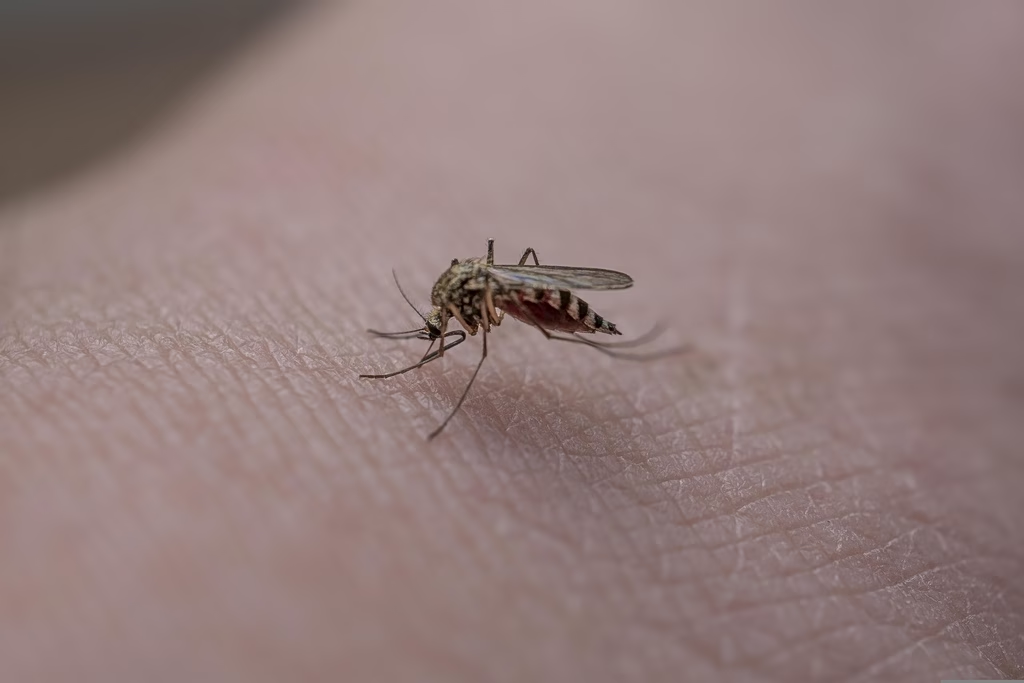
Greece has recorded its first case of West Nile virus for the year, with health officials confirming the infection in an individual over 60 years old who developed meningoencephalitis. The National Public Health Organization (EODY) announced the case, noting that an increase in infections is anticipated as summer and autumn progress, a pattern observed each year.
The patient first showed symptoms in late June, and experts believe the likely exposure site was the North Sector of Athens, specifically the Agia Paraskevi municipality. West Nile virus infections are a global occurrence, with many European countries also reporting annual cases during the warmer months. Since 2010, Greece has consistently seen cases each year, making its reappearance expected.
In response, EODY alerted healthcare professionals nationwide in May 2026 to remain vigilant for the disease. The organization also issued public recommendations for mosquito bite prevention. These include using approved insect repellents for both body and environment, installing screens, using mosquito nets, and employing air conditioning or fans. Crucially, residents are urged to eliminate stagnant water sources where mosquitoes breed, such as in yards, gardens, balconies, and rooftops, by emptying, covering, or regularly changing the water in any containers that collect it.
While most people infected with the West Nile virus experience no symptoms or only mild illness, a small percentage can develop severe neurological disease, including encephalitis or meningitis. Older adults and individuals with weakened immune systems or chronic health conditions face a higher risk of severe complications. The virus is primarily transmitted through the bite of infected mosquitoes, which contract the virus from birds. Humans do not transmit the virus to other humans or mosquitoes.
DistantNews Editorial
Originally published by Ta Nea in Greek. Translated, summarized, and contextualized by our editorial team with added local perspective. Read our editorial standards.
More Stories



From Our Blog

What Gets Lost (and Found) When News Is Translated

The Critical Role of Diaspora Media in Global News

What Travellers Should Know About Countries with Restricted Press

A Digital Nomad's Guide to Following Local News

How the Same Story Looks Different in Different Countries
