


Greece Expects Lower Fuel Prices as Oil Costs Drop, PM Announces
Translated from Greek, summarized and contextualized by DistantNews.
At a glance
News
Sources not specified
New plan
- Greek Prime Minister Kyriakos Mitsotakis announced that fuel prices at the pump are expected to decrease soon due to falling international oil prices.
- He stated that government control mechanisms will ensure these reductions are passed on to consumers.
- Mitsotakis also reviewed the government's first-half achievements, including measures against inflation and progress on reforms.
Greek Prime Minister Kyriakos Mitsotakis announced that a decrease in fuel prices at the pump is imminent, attributing the expected drop to a significant fall in international oil prices. He expressed confidence that this trend would be reflected at Greek gas stations in the coming days, emphasizing that state control mechanisms are in place to ensure consumers benefit from the lower prices.
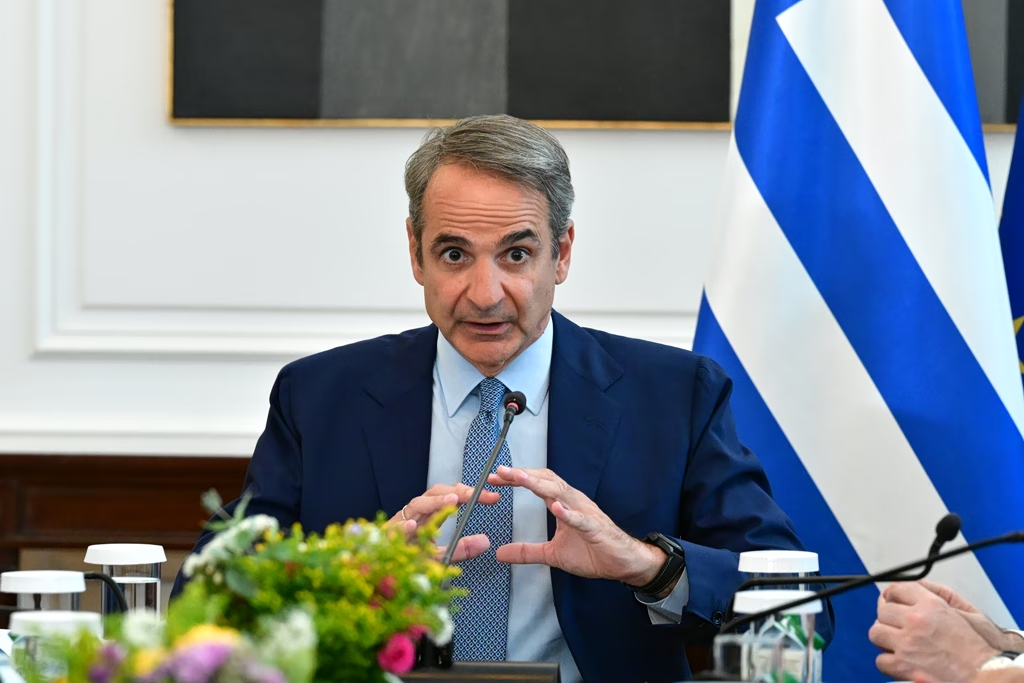
"And of course, the expectation of all of us is to see these reduced oil prices also reflected in the prices of gasoline at the pump. It is something I am sure will happen in the coming days," Mitsotakis stated during a cabinet meeting. He also noted an agreement between the government and the market to maintain stable prices for the next two months, with potential for further reductions starting in September, underscoring that tackling the high cost of living remains a top government priority.
The Prime Minister also presented an overview of the government's accomplishments in the first half of the year, asserting that the administration had fulfilled its initial commitments. He highlighted measures such as the increase in the minimum wage, financial support for families with children, aid for low-pensioners, and rent rebates. While acknowledging these measures do not offer a permanent solution to inflation, he stressed their role in providing substantial relief to households.
Mitsotakis further detailed progress on key reforms, including the promotion of collective labor agreements, changes to inheritance law, a new code for local government, interventions in private debt, and the implementation of projects funded by the Recovery Fund, with a particular focus on healthcare facility renovations. He also stressed the importance of strengthening primary healthcare, educational reforms, and advancing critical spatial and digital reforms. The Prime Minister concluded by affirming the government's commitment to consistently addressing daily challenges and leveraging Recovery Fund resources to drive national development, while continuously responding to societal needs amidst political debate.
DistantNews Editorial
Originally published by Ta Nea in Greek. Translated, summarized, and contextualized by our editorial team with added local perspective. Read our editorial standards.
More Stories



From Our Blog

What Gets Lost (and Found) When News Is Translated

The Critical Role of Diaspora Media in Global News

What Travellers Should Know About Countries with Restricted Press

A Digital Nomad's Guide to Following Local News

How the Same Story Looks Different in Different Countries
