


Greece Pursues 'Development with Rules' for Tourism and Renewable Energy
Translated from Greek, summarized and contextualized by DistantNews.
At a glance
News
Named sources
New plan
- Greece's Environment and Energy Minister Stavros Papastavrou discussed new spatial plans for tourism and renewable energy sources (RES).
- The plans aim for "development with rules," setting boundaries for wind turbines and solar panels to protect the environment and local communities.
- Papastavrou addressed energy prices, noting that while Greek electricity remains relatively cheap in Europe, RES help mitigate further increases caused by the Middle East conflict.
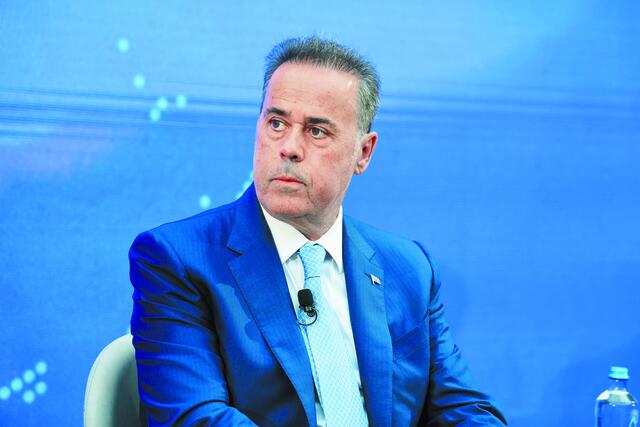
Greece is implementing new spatial plans for tourism and renewable energy sources (RES) to foster "development with rules," according to Stavros Papastavrou, the Minister of Environment and Energy. These plans, which have already taken effect, aim to balance economic growth with environmental protection and safety.
The electricity that our country has, Greek electricity from sun and wind, is a constituent element in our energy mix.
Papastavrou highlighted that Greek electricity generated from solar and wind power is a crucial component of the national energy mix, with RES often accounting for over 55-60% of electricity production on many days. This reliance on renewables helps lower costs for households and businesses. However, he stressed that this does not grant a "blank check" to developers, emphasizing the need to adhere to environmental laws and safety regulations, with consequences for violations.
This does not mean that we give a 'blank check' to anyone. Everyone must comply with the terms of environmental legislation and safety rules, and in case of violation, to suffer the consequences.
The new spatial frameworks specifically address the placement of wind turbines and solar panels. Exclusions are in place to prevent wind turbines in Attica or the metropolitan area of Thessaloniki. Solar panels will not be permitted above 1,200 meters in mountains, in Natura 2000 areas, or on forest lands. The minister stated, "We want development with rules, with respect for the environment and local communities."
In one word, it is development with rules.
Regarding energy prices, Papastavrou acknowledged the significant increases across Europe since February, largely due to the conflict in the Middle East. He noted that Greece currently ranks among the 10 cheapest countries in the EU for wholesale electricity prices, attributing this stability partly to the role of RES in acting as a buffer. The minister also touched upon Greece's assertive stance on its sovereign rights, particularly in response to Turkey's actions, mentioning the progress on maritime spatial planning for two marine parks and seismic surveys in the Aegean Sea.
We want development with rules, with respect for the environment and local communities.
DistantNews Editorial
Originally published by Ta Nea in Greek. Translated, summarized, and contextualized by our editorial team with added local perspective. Read our editorial standards.
More Stories


From Our Blog

What Gets Lost (and Found) When News Is Translated

The Critical Role of Diaspora Media in Global News

What Travellers Should Know About Countries with Restricted Press

A Digital Nomad's Guide to Following Local News

How the Same Story Looks Different in Different Countries
