


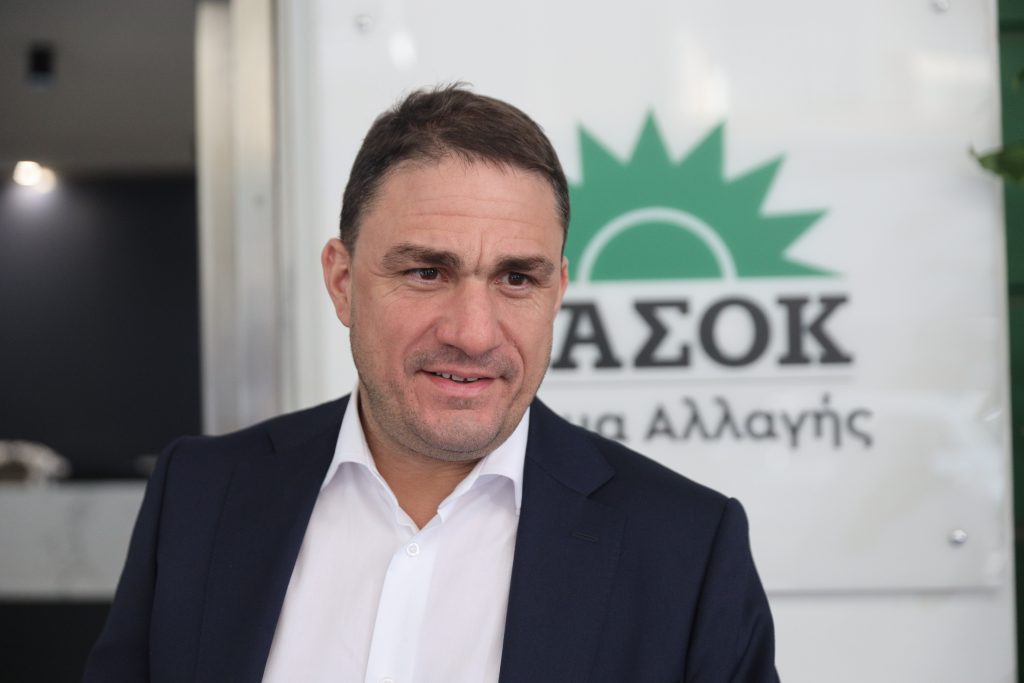
Greek Opposition Claims Government's Four-Day Work Week Narrative Has Collapsed
Translated from Greek, summarized and contextualized by DistantNews.
At a glance
News
Sources not specified
Context piece
- PASOK-KINAL spokesperson Kostas Tsoukalas claims the government's narrative demonizing the four-day work week has collapsed.
- He points to OTE, a major company, piloting a four-day week as evidence that dialogue on reduced working hours is gaining traction.
- Tsoukalas also criticized the government on pensions, stating their nominal increase is outpaced by inflation, effectively reducing purchasing power.
Kostas Tsoukalas, the spokesperson for Greece's PASOK-KINAL party, asserted that the government's attempts to "demonize" the concept of a four-day work week have failed.
Tsoukalas stated that when PASOK-KINAL initiated a dialogue two months prior about a voluntary, pilot four-day work week with tax incentives, the government responded with efforts to "terrorize businesses." However, he noted that a major telecommunications company, OTE, has now begun piloting the four-day week, demonstrating that the party's initiative has spurred action.
Yesterday, the government's narrative about demonizing the four-day work week collapsed.
He contrasted this with the current government's policies, which he characterized as promoting a 13-hour workday and a six-day work week.
We opened a dialogue, the government didn't want it. Then a large company, OTE, came and is trying it.
Turning to economic issues, Tsoukalas commented on the Prime Minister's recent announcement regarding pensions. He claimed this was the first time the government had "admitted" to a reduction in pensions. Tsoukalas explained that while nominal pensions increased by 16.4%, inflation rose by 19.8% during the same period. He argued that when inflation outpaces pension increases, the real value of pensions decreases.
Regarding recent opinion polls, Tsoukalas expressed confidence that PASOK-KINAL would emerge victorious in the next election. He attributed this to a strong public desire for political change, suggesting that the current political landscape is experiencing a temporary realignment due to the emergence of two new parties. He observed that one of these new parties appears to have reached its peak, while the other's appeal is diminishing.
For the first time, the government admits to the reduction of pensions.
Tsoukalas also touched upon the proposed electricity interconnection between Greece and Cyprus. He questioned who would defend national interests, referencing comments from a member of the ELAS party suggesting that PASOK leader Nikos Androulakis should not support the cable's installation. Tsoukalas clarified that PASOK-KINAL is not in conflict with ELAS but is focused on confronting the ruling New Democracy party.
When inflation increases more than pensions, you understand that pensions are not increasing.
DistantNews Editorial
Originally published by Ta Nea in Greek. Translated, summarized, and contextualized by our editorial team with added local perspective. Read our editorial standards.
More Stories



From Our Blog

What Gets Lost (and Found) When News Is Translated

The Critical Role of Diaspora Media in Global News

What Travellers Should Know About Countries with Restricted Press

A Digital Nomad's Guide to Following Local News

How the Same Story Looks Different in Different Countries
