

Greek PM: 'We don't have overtourism. Limits are dynamic'
Translated from Polish, summarized and contextualized by DistantNews.
At a glance
News
Named sources
Context piece
- Greek Prime Minister Kyriakos Mitsotakis rejected the notion of 'overtourism' as a systemic issue in Greece, advocating for flexible tourism management.
- He emphasized the need for development to align with infrastructure capacity and long-term planning, not just arrival numbers.
- Greece is implementing a new spatial planning policy, including 'Special Spatial Framework for Tourism,' to guide development and manage visitor flow.
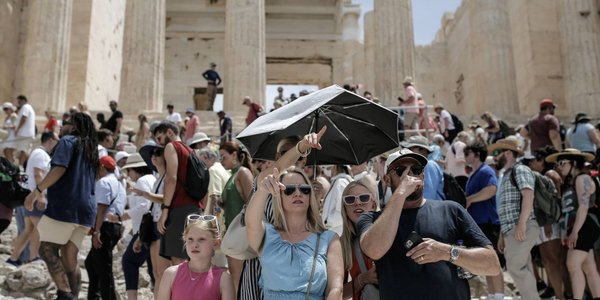
Greek Prime Minister Kyriakos Mitsotakis has firmly rejected narratives describing 'overtourism' as a systemic problem in Greece, instead advocating for a more dynamic and flexible approach to managing the country's tourism sector. Speaking at the 34th General Assembly of the Association of Hellenic Tourism Enterprises (SETE) in Athens, Mitsotakis stated, "There are destinations where we need to hit the brakes, and others where we can press the accelerator," highlighting the need for adaptable strategies.
He stressed that the sector's growth must be intrinsically linked to real infrastructural capabilities and strategic long-term planning, rather than solely focusing on increasing visitor numbers. Mitsotakis pushed back against simplified claims of the country being overwhelmed by tourism, noting that Greece has not experienced the widespread anti-tourism protests seen elsewhere. "We don't just live off tourism. We must learn to live with tourism and for tourism," he remarked.
There are destinations where we need to hit the brakes, and others where we can press the accelerator.
A key focus of his address was a new spatial planning policy, including the "Special Spatial Framework for Tourism." This initiative aims to establish clearer rules for tourism investments while maintaining consultation mechanisms and allowing for adjustments. The Prime Minister also challenged the idea of fixed "tourist capacity," arguing that limits are dynamic and depend heavily on infrastructural investments. He pointed to Crete, where upgrades to airports, roads, and key transport links could significantly increase its capacity to host tourists.
We don't just live off tourism. We must learn to live with tourism and for tourism.
Mitsotakis acknowledged that some areas are already under considerable pressure and require more stringent management of visitor flows. The overarching goal, he emphasized, is to achieve a balance between economic development and environmental sustainability. He also addressed the sector's resilience in the face of geopolitical tensions, particularly in the Middle East, which can influence international tourism sentiment.
Despite a strong start to 2026, Mitsotakis noted a recent cautiousness in the market due to geopolitical uncertainty. However, he asserted that the sector is not facing a systemic crisis, drawing parallels to its demonstrated resilience during the pandemic. The objective, he concluded, is not necessarily to break records annually but to maintain Greece's position as a stable destination during periods of global uncertainty.
The goal is balance between economic development and environmental sustainability.
DistantNews Editorial
Originally published by Rzeczpospolita in Polish. Translated, summarized, and contextualized by our editorial team with added local perspective. Read our editorial standards.
More Stories



From Our Blog

What Gets Lost (and Found) When News Is Translated

The Critical Role of Diaspora Media in Global News

What Travellers Should Know About Countries with Restricted Press

A Digital Nomad's Guide to Following Local News

How the Same Story Looks Different in Different Countries
