


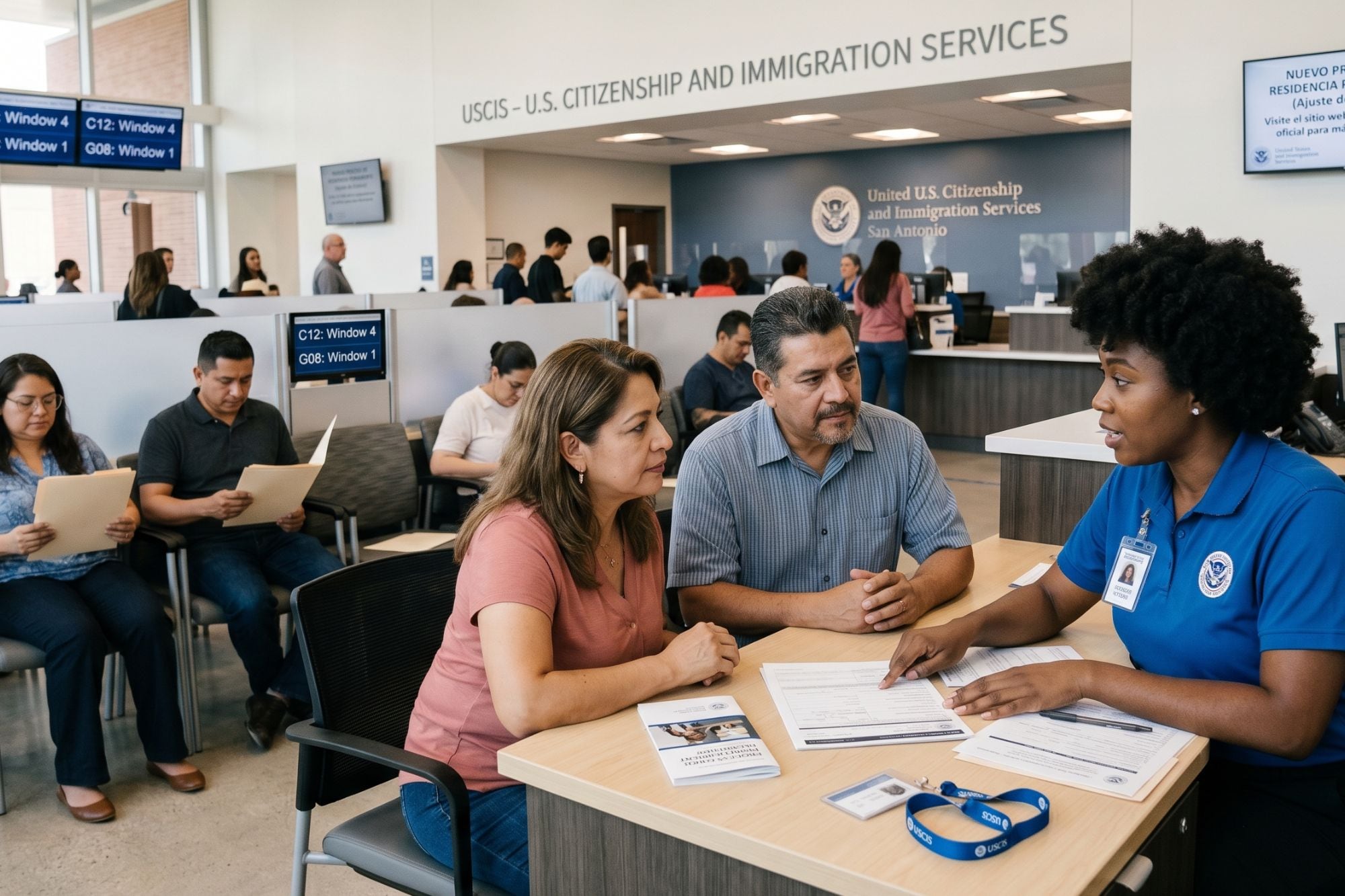
Green card and adjustment of status: the hidden risk for those who must leave the U.S. for a consular interview
Translated from Spanish, summarized and contextualized by DistantNews.
At a glance
News
Official statement
New plan
- New U.S. Citizenship and Immigration Services (USCIS) rules require many migrants to leave the U.S. for consular interviews to finalize green card applications.
- Departing the U.S. with a pending Form I-485 (Application to Register Permanent Residence) without Advance Parole can lead to the application being considered abandoned.
- Migrants may also face penalties for unlawful presence if they overstay their visa and leave the U.S., though waivers like Form I-601A exist for certain family members of U.S. citizens or legal permanent residents.
Recent changes by U.S. Citizenship and Immigration Services (USCIS) introduce a significant risk for migrants seeking green cards. Many individuals will now need to depart the United States to attend consular interviews, a process that carries a hidden danger: abandoning their application.
The Department of Homeland Security (DHS) modified rules on May 21, compelling a large group of immigration benefit applicants to complete their processes outside the U.S. This new directive conflicts with existing regulations that require individuals with pending applications to remain in the country unless they possess a special permit. USCIS explicitly states on its website that leaving the U.S. with a pending Form I-485 without Advance Parole is considered an abandonment of the application.
"In general, if you have a pending Form I-485 and you depart the United States without advance parole, your application will be considered abandoned," USCIS officials explain. Therefore, obtaining the necessary permission before leaving is crucial. Another risk involves penalties for unlawful presence. This rule can lead to inadmissibility for three to ten years if a person overstays their visa and then travels abroad.
To mitigate the unlawful presence penalty, USCIS offers Form I-601A, a provisional waiver. Applicants eligible for this waiver must be relatives of U.S. citizens or legal permanent residents and meet specific requirements for an immigrant visa. However, this form only addresses unlawful presence penalties, not sanctions for other violations. A limited group of individuals can travel without Advance Parole if they maintain valid immigration status and return with proper documentation, but the general rule emphasizes caution for those with pending I-485 applications.
DistantNews Editorial
Originally published by La Nación in Spanish. Translated, summarized, and contextualized by our editorial team with added local perspective. Read our editorial standards.
More Stories

From Our Blog

What Gets Lost (and Found) When News Is Translated

The Critical Role of Diaspora Media in Global News

What Travellers Should Know About Countries with Restricted Press

A Digital Nomad's Guide to Following Local News

How the Same Story Looks Different in Different Countries
