


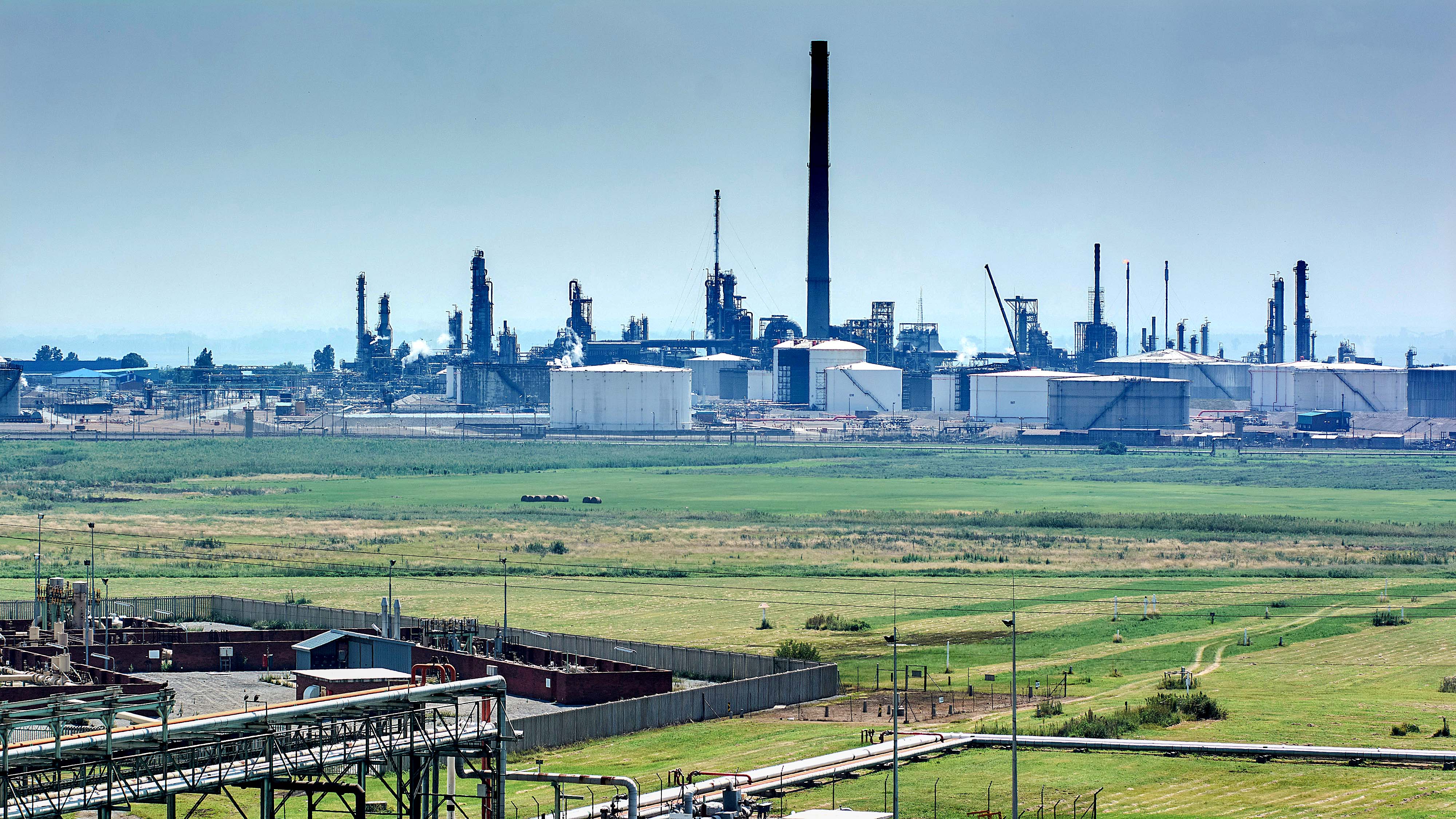
GREEN DREAMS PIVOT: Short‑term relief from Strait of Hormuz tension is great for Sasol’s fragile recovery story
Summarized by DistantNews. Read the original for the full story.
At a glance
Analysis
Named sources
Context piece
- Sasol is winding down its Zaffra BV sustainable aviation fuel venture with Topsoe because customers have not committed to buying green fuel at prices that support new plants.
- The company plans to use existing facilities at Natref and Secunda to produce sustainable aviation fuel while exploring technology partnerships in Asia.
- Sasol also says green hydrogen projects face weak demand and inadequate infrastructure, while its Secunda refinery remains fully impaired after R16.8 billion in non-cash impairments.
“Everyone wants it until they have to pay for it,” Sasol CFO Walt Bruns said of sustainable aviation fuel. The remark captures the commercial problem behind the company’s decision to unwind its key SAF joint venture, Zaffra BV, with Topsoe.
Sasol had promoted its technological capabilities in sustainable fuels, but the venture depended on the industry, particularly projects in the United States, reaching final investment decisions. That has not happened. Bruns said Sasol concluded that projects would take too long to reach the point where capital could be committed.
Everyone wants it until they have to pay for it
“The sustainable aviation fuel makes sense intuitively, but it needs to make sense economically,” he said. The company did not see enough purchase agreements being signed at the volume and price needed to justify building a new plant, especially in Europe.
The sustainable aviation fuel makes sense intuitively, but it needs to make sense economically.
Sasol is now taking a more defensive approach. Rather than constructing dedicated greenfield facilities abroad, it plans to use existing assets at Natref and Secunda to produce SAF and market it independently. It is also considering partnerships with companies in China or the Far East to license feedstock-agnostic Fischer-Tropsch technology. Bruns called the change a “speed bump but not a roadblock”.
The same demand problem affects Sasol’s green hydrogen ambitions in South Africa. The company says it has spent R16-billion over the past decade on environmental compliance and built a green hydrogen proof of concept in Sasolburg. But, Bruns said, potential customers expressed interest without accepting the price. Sasol continues to work with the Northern Cape on the Boegoebaai project, although the lack of infrastructure remains a major obstacle. Funding a port and broader reconstruction would make the hydrogen too expensive, and the company believes the sector will develop later, not now.
speed bump but not a roadblock
Sasol recorded R16.8-billion in non-cash impairments in FY26. The Secunda Liquid Fuels refinery cash-generating unit remains fully impaired, meaning capital spent to maintain or improve it is immediately written off as an impairment in the same period. The company is moving toward dividends and unqualified audits, but the recovery remains incomplete.
We think that green hydrogen will come, just not now.
About this summary
Originally published by Daily Maverick. Summarized and contextualized automatically by DistantNews, with a note on how the source frames the story. Not individually reviewed before publishing. How this works.
More Stories

From Our Blog

What Gets Lost (and Found) When News Is Translated

The Critical Role of Diaspora Media in Global News

What Travellers Should Know About Countries with Restricted Press

A Digital Nomad's Guide to Following Local News

How the Same Story Looks Different in Different Countries
