

Growing Inequality: How the Stock Market Boom Harms Democracy
Translated from German, summarized and contextualized by DistantNews.
At a glance
Analysis
Documents & data
Context piece
- Soaring stock markets are disproportionately benefiting the wealthy, while rising prices and rents increasingly marginalize lower-income populations.
- This growing economic disparity poses a significant political risk to democratic societies.
- The article argues that the boom in financial markets, contrasted with the struggles of essential services, highlights dangerous contradictions within market economies.
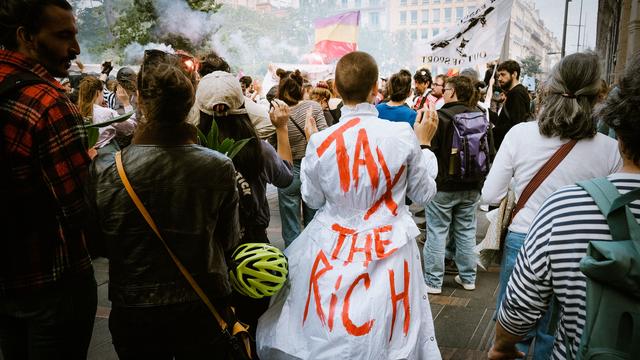
While the world celebrated Elon Musk's ascent to billionaire status with SpaceX's planned IPO, a more profound and politically charged shift is underway: the widening chasm between the ultra-wealthy and the rest of the population. Global private wealth is surging, fueled by robust stock and capital markets, according to the Boston Consulting Group's latest Global Wealth Report. However, this financial boom starkly contrasts with the stagnation or decline of real incomes for broad segments of society.
In Germany, the DAX index has nearly tripled since 2015, and the US S&P 500 has seen even greater gains. Those invested in stocks have become significantly wealthier, often with minimal personal effort. Yet, stock ownership remains concentrated: the wealthiest ten percent of German households hold about 67 percent of total net wealth, while the bottom half possesses virtually no net wealth, or is even in debt. This means the stock market boom benefits only a small elite.
Compounding this issue, the inflation experienced between 2021 and 2023, and recent price increases, have hit low-income households the hardest. These households spend a much larger portion of their disposable income on essentials like energy, food, and rent – precisely the goods that have seen the steepest price hikes. Inflation rates for low-income households were reportedly two to three percentage points higher than for high-income households during the peak years of 2022-23, representing a systematic redistribution of purchasing power from the bottom to the top.
Furthermore, the energy price crises of recent years have bolstered Russia and other authoritarian fossil fuel exporters. This inflation has thus not only redistributed wealth from poor to rich within open societies but also from democratic nations to dictatorships. The article suggests that this dual redistribution, both within and between states, carries significant political implications that are being underestimated.
DistantNews Editorial
Originally published by Die Zeit in German. Translated, summarized, and contextualized by our editorial team with added local perspective. Read our editorial standards.
More Stories



From Our Blog

What Gets Lost (and Found) When News Is Translated

How the Same Story Looks Different in Different Countries

The Critical Role of Diaspora Media in Global News

What Travellers Should Know About Countries with Restricted Press

A Digital Nomad's Guide to Following Local News
