

'Growing pattern of media curbs': HRCP, PFUJ express concern over new rules for foreign press
Summarized and contextualized by DistantNews.
At a glance
News
Named sources
New plan
- Pakistan's Human Rights Commission (HRCP) and the Pakistan Federal Union of Journalists (PFUJ) have voiced strong concerns over new government rules requiring foreign journalists to obtain state approval for travel outside major cities for news coverage.
- Both organizations described the rules as a "chilling message" that "institutionalizes bureaucratic control" over news gathering and risks deterring independent reporting.
- The PFUJ stated the guidelines amount to an "attack on freedom of expression," warning they would damage Pakistan's image and impact the employment of local journalists working with international media.
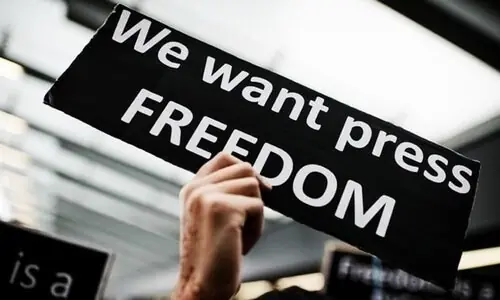
The Human Rights Commission of Pakistan (HRCP) and the Pakistan Federal Union of Journalists (PFUJ) have expressed grave concerns over new government regulations that mandate foreign media personnel to seek official permission before traveling to any city outside Islamabad, Lahore, and Karachi for news coverage. These new rules, termed the ‘Foreign Media Facilitation Guidelines 2026’, have been met with strong criticism from both journalistic and human rights bodies.
The requirement that journalists obtain state approval to report from large parts of the country sends a chilling message: that critical reporting is unwelcome.
The HRCP stated that the requirement for journalists to obtain state approval to report from large parts of the country sends a "chilling message" that critical reporting is unwelcome. The commission warned that the guidelines would "invariably institutionalize bureaucratic control over news gathering and risk deterring independent reporting on matters of public interest." It urged the government to withdraw these "restrictive measures" and uphold its constitutional and international obligations to protect freedom of expression.
This is the latest in a growing pattern of restrictions on media freedom in Pakistan. From arbitrary curbs on reporting and increasing censorship to legal and administrative barriers, the space for independent journalism has continued to shrink.
Similarly, the PFUJ "strongly condemned" the new rules, labeling them as direct restrictions on press freedom and an "attack on the freedom of expression." In a joint statement, PFUJ President Afzal Butt and Secretary General Arshad Ansari highlighted that the government has not only banned foreign journalists from most areas but also restricted Pakistani media personnel working with international outlets. They questioned how foreign correspondents and their local colleagues can perform their professional duties under such conditions.
The guidelines amount to attacking the freedom of expression and putting curbs on press freedom.
The PFUJ leaders asserted that these actions would "only bring disrepute to Pakistan and damage its image," noting the country's already low ranking in global press freedom indices. They demanded the government "lift this ban" immediately, arguing that such moves are characteristic of "banana republics, not in countries that claim to follow democratic principles." Furthermore, the union warned that if their demands are not met, they would be compelled to resort to protests. The PFUJ also pointed out the potential negative impact on the employment of Pakistanis working with international media, as their inability to travel and report freely could lead to job losses.
How can foreign correspondents and their Pakistani colleagues perform their professional duties after this notification?
DistantNews Editorial
Originally published by Dawn. Summarized and contextualized by our editorial team with added local perspective. Read our editorial standards.
More Stories

From Our Blog

What Gets Lost (and Found) When News Is Translated

The Critical Role of Diaspora Media in Global News

What Travellers Should Know About Countries with Restricted Press

A Digital Nomad's Guide to Following Local News

How the Same Story Looks Different in Different Countries
