


Gulf escalation
Summarized and contextualized by DistantNews.
At a glance
Analysis
Named sources
Ongoing story
- A ceasefire agreement between the US and Iran, known as the Islamabad MoU, is reportedly unraveling amid escalating tensions and retaliatory strikes across the Gulf.
- Hostilities were triggered by Iran's demand for exclusive use of an 'approved' route through the Strait of Hormuz, leading to attacks on ships and subsequent US military responses.
- The conflict risks expanding, with threats to close the Bab al-Mandeb strait and calls for regional states and the international community to revive dialogue and prevent further bloodshed and economic shockwaves.
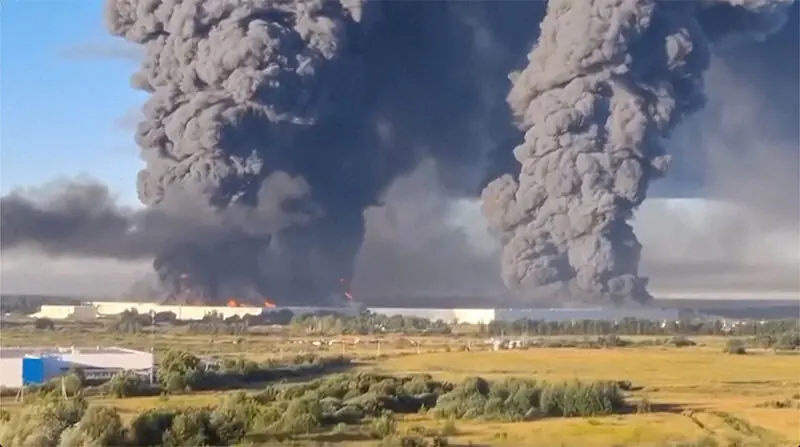
The Islamabad MoU, intended to underpin a US-Iran ceasefire, is reportedly collapsing as Washington and Tehran engage in escalating exchanges of fire across the Gulf. Each round of hostilities has intensified, with the US striking Iranian locations and Iran retaliating by targeting US-allied GCC states, as well as Iraq, Jordan, and Syria. Both sides have reportedly hit civilian sites, including water plants.
The immediate catalyst for the conflict was Iran's insistence that only its 'approved' route be used for transit through the Strait of Hormuz. Attacks on ships using 'unauthorised' routes prompted a US military response, suggesting differing interpretations of the MoU's clauses regarding the vital strait. Beyond Hormuz, Israeli attacks in Lebanon have also placed significant strain on the agreement. Iran's deputy foreign minister has stated that his country is "no longer implementing" its commitments under the document, casting doubt on its viability.
no longer implementing
The threat of war restarting and expanding is palpable. US attacks have failed to deter Iran, and there are discussions of a potential US ground invasion, an idea strongly cautioned against as it could lead to unmitigated disaster and extinguish any remaining chance for peace. Furthermore, Yemen's pro-Iran Houthis have threatened to close the Bab al-Mandeb strait, another critical chokepoint for global trade, should the conflict widen. The economic repercussions of such an action would be severe.
To avert further bloodshed and a new global economic shockwave, regional states and the international community are urged to intensify efforts to revive the ceasefire. Pakistani and Chinese foreign ministers have called for an immediate return to dialogue, a sentiment echoed by other nations like Egypt, Turkiye, and Qatar, who should also mediate between the belligerents. This conflict is described as entirely preventable, stemming from the hubris and arrogance of the US and Israel, who mistakenly believed they could dismantle the Iranian system quickly. The US, in particular, finds itself in a quagmire, facing the prospect of another "forever war" as mid-term elections approach. With few good options, the US is advised to halt hostilities immediately rather than deepen its involvement in what Iran perceives as an "existential war," as noted by its parliament speaker. A return to the negotiating table is presented as the only viable path to prevent a catastrophic regional conflagration.
existential war
DistantNews Editorial
Originally published by Dawn. Summarized and contextualized by our editorial team with added local perspective. Read our editorial standards.
More Stories
From Our Blog

What Gets Lost (and Found) When News Is Translated

The Critical Role of Diaspora Media in Global News

What Travellers Should Know About Countries with Restricted Press

A Digital Nomad's Guide to Following Local News

How the Same Story Looks Different in Different Countries
