


Gulf Investors Eye US Debt Opportunities Amid $40 Trillion Milestone
Translated from English, summarized and contextualized by DistantNews.
At a glance
News
Named sources
Context piece
- Gulf investors are exploring new opportunities in US debt as yields rise, despite the US national debt surpassing $40 trillion.
- The US dollar and American markets remain central to Gulf portfolios due to their depth and stability.
- Higher yields present chances for Gulf sovereign wealth funds to rebalance portfolios and diversify investments.
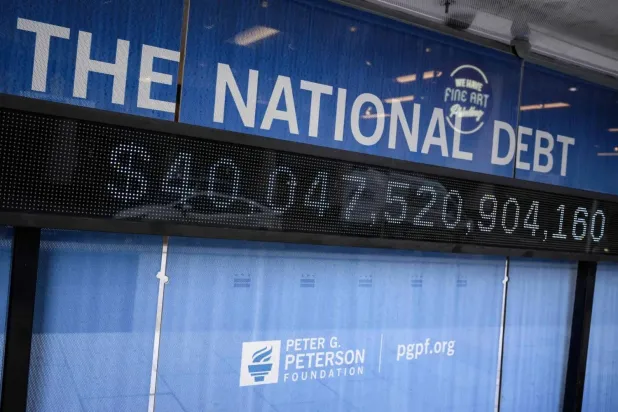
As the United States national debt crosses the $40 trillion mark, investors in the Gulf region are strategically assessing the implications, particularly the opportunities presented by rising Treasury yields. Despite the record debt figure, US assets and the dollar continue to anchor Gulf investment portfolios, a நிலை supported by the depth and liquidity of American markets, as well as the fixed links between Gulf currencies and the dollar. The current environment of higher yields is creating attractive prospects for Gulf sovereign wealth funds to adjust their investment strategies and potentially achieve stronger returns on new capital. Economists note that the robust financial standing of Gulf nations provides them with significant flexibility to navigate global interest rate fluctuations. This has encouraged a move towards more diversified investment approaches, encompassing bonds, private credit, infrastructure, and global equities, alongside burgeoning sectors like technology and artificial intelligence. Abdullah Almeer, an economics professor at King Fahd University of Petroleum and Minerals, stated that while the $40 trillion debt raises long-term structural risks that require monitoring by sovereign wealth funds and central banks, it does not pose an immediate threat to Gulf dollar-denominated investments. He highlighted Saudi Arabia's substantial holdings of US Treasury securities, amounting to approximately $142 billion, and the dollar's dominant 57% share in global central bank reserves, underscoring its enduring global financial significance. Almeer argued that although the doubling of US debt since 2016 warrants careful observation of fiscal trends, it is unlikely to diminish the appeal of US markets or the dollar's importance to Gulf economies in the foreseeable future. He also dismissed the possibility of a large-scale Gulf exit from US assets, emphasizing the high liquidity, depth, and institutional stability of American markets. The primary channel through which shifts in US interest rates affect Gulf economies is through the interest rate mechanism itself. The substantial issuance of Treasury debt needed to finance the growing US deficit could further elevate yields, especially if inflationary pressures persist or oil prices increase. Saudi Arabia's currency peg to the dollar means its monetary policy is closely aligned with US interest rates, and a widening interest rate differential could impact the exchange rate and capital flows. With estimated Gulf financial reserves around $874 billion and sovereign wealth fund assets nearing $5 trillion, the region possesses considerable financial strength to manage these dynamics.
US debt reaching $40 trillion does not pose an “immediate risk” to Gulf dollar-denominated investments, although it increases longer-term structural risks monitored by sovereign wealth funds and central banks.
DistantNews Editorial
Originally published by Asharq Al-Awsat in English. Translated, summarized, and contextualized by our editorial team with added local perspective. Read our editorial standards.
More Stories


From Our Blog

What Gets Lost (and Found) When News Is Translated

The Critical Role of Diaspora Media in Global News

What Travellers Should Know About Countries with Restricted Press

A Digital Nomad's Guide to Following Local News

How the Same Story Looks Different in Different Countries
