


Gyeonggi Governor Choo Mi-ae Appeals to Parliament: 'Reverting to Direct Prosecution is Anti-Democratic Return'
Translated from Korean, summarized and contextualized by DistantNews.
At a glance
News
Sources not specified
Context piece
- Gyeonggi Province Governor Choo Mi-ae expressed strong concern over moves to revive the prosecution's direct investigation powers, calling it a return to an anti-democratic system.
- Choo argued that separating investigation and prosecution is a necessary mission for protecting citizens' human rights and aiding victims, refuting claims of public safety concerns.
- She criticized a recent legislative proposal as a dangerous regression to pre-Moon Jae-in government policies, emphasizing the need for parliamentary action to reform the prosecution.
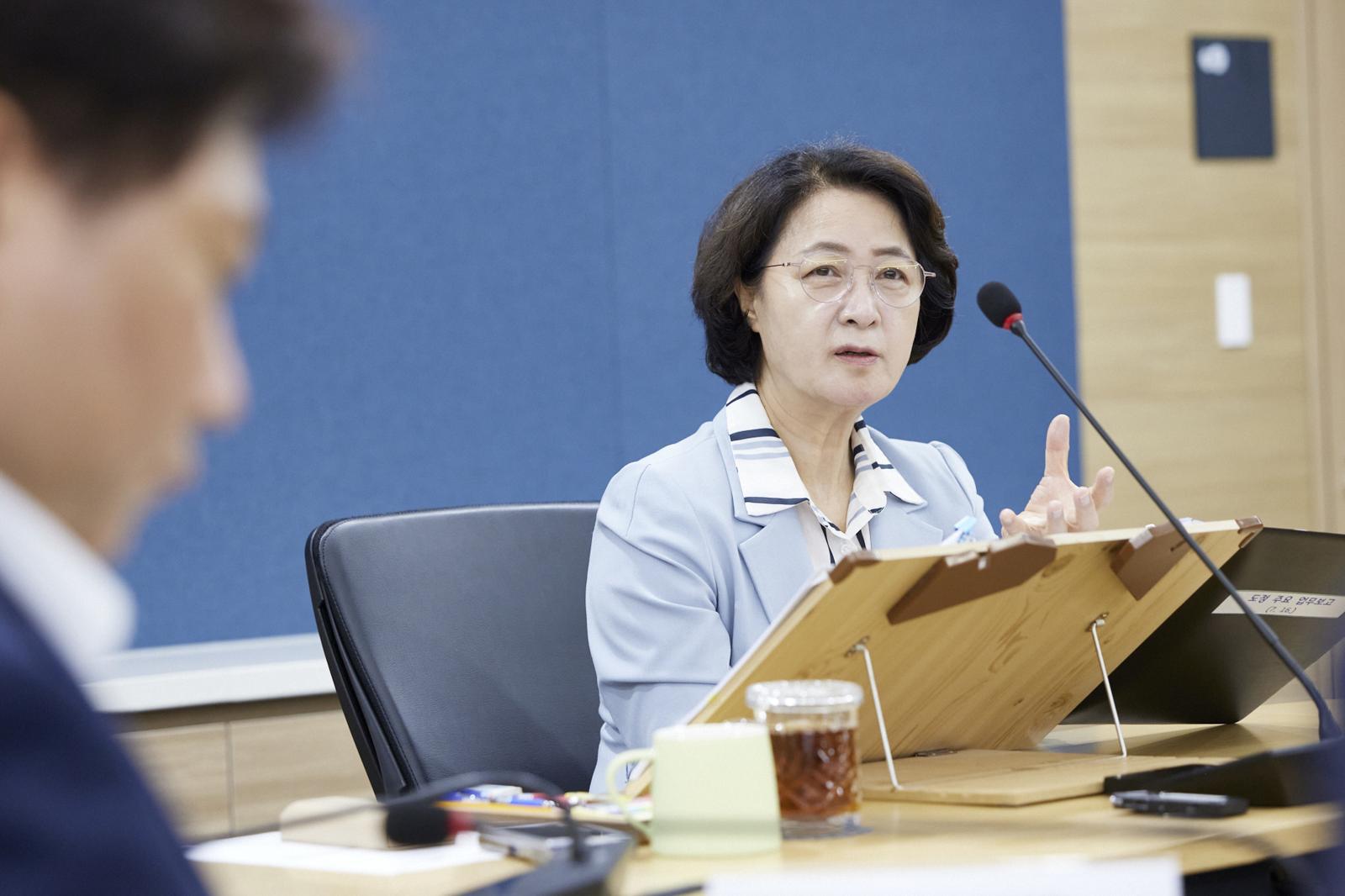
Gyeonggi Province Governor Choo Mi-ae has voiced significant apprehension regarding proposals to restore the prosecution's direct investigative authority, asserting that such a move represents a dangerous regression to an anti-democratic system.
The separation of investigation and prosecution is a mission of the times that must be completed for the protection of citizens' human rights and the relief of victims.
In a social media post addressed to lawmakers, Choo stated that separating investigative and prosecutorial powers is a "mission of the times" essential for safeguarding citizens' rights and assisting victims. She dismissed concerns about public safety arising from this separation as "confusion and misunderstanding" deliberately stirred up by some.
Choo characterized South Korea's prosecutorial system as an "offshoot of the Japanese colonial system," granting it "immense, unchecked power." She contrasted this with the German system, where prosecutors primarily offer supervisory and legal advisory roles to the police rather than conducting direct investigations. Japan, she noted, has also transitioned to a cooperative police-prosecution relationship where police handle investigations and prosecutors handle indictments, with prosecutors' investigative powers being largely abstract in practice.
Our prosecutorial system is an offshoot of the Japanese colonial system, possessing the most unchecked, immense power.
She strongly criticized a recent legislative proposal by lawmaker Hong Ki-won, labeling it as highly risky and a "return to the most anti-democratic prosecutorial system." Choo argued that this would nullify previous reform efforts and revert the system to its state before the Moon Jae-in administration. She warned that allowing direct investigative powers while retaining prosecutorial discretion in indictments is perilous.
The proposal by lawmaker Hong Ki-won carries a high risk of reverting to the most anti-democratic prosecutorial system.
Choo also highlighted the significance of the "Guidelines on Cooperation Between Police and Prosecutors in Investigations," which she spearheaded as Justice Minister and which took effect in January 2021. She explained that these guidelines established a judicial control structure, enabling prosecutors to oversee police investigations from the initial stages through a shared information system and allowing them to request re-investigations or review cases. She urged the 22nd National Assembly to take decisive action, stating that "prosecution reform can no longer be delayed."
Prosecution reform can no longer be delayed; it is the mission of the 22nd National Assembly members.
DistantNews Editorial
Originally published by Hankyoreh in Korean. Translated, summarized, and contextualized by our editorial team with added local perspective. Read our editorial standards.
More Stories

From Our Blog

What Gets Lost (and Found) When News Is Translated

The Critical Role of Diaspora Media in Global News

What Travellers Should Know About Countries with Restricted Press

A Digital Nomad's Guide to Following Local News

How the Same Story Looks Different in Different Countries
