


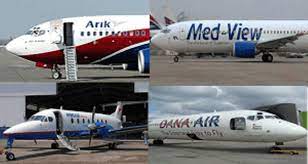
H1 2026 Review: Airlines battle rising operational costs, FAAN faces policy hurdle
Summarized and contextualized by DistantNews.
At a glance
News
Sources not specified
Context piece
- Nigerian airlines faced significant challenges in the first half of 2026, including rising operational costs and policy implementation hurdles.
- Airlines battled a sharp increase in aviation fuel prices (Jet-A1) and numerous bird strikes, leading to flight disruptions and increased maintenance costs.
- Government agencies like FAAN and NCAA also faced scrutiny over policy implementation and regulatory oversight.
Nigeria's air transport sector experienced a challenging first half of 2026, marked by escalating operational costs for airlines and difficulties faced by government agencies, particularly the Federal Airports Authority of Nigeria (FAAN) and the Nigeria Civil Aviation Authority (NCAA).
Airlines grappled with a substantial rise in the price of aviation fuel, known as Jet-A1, and frequent bird strikes, which disrupted schedules and increased maintenance expenses. For instance, Ibom Air reported that its fueling costs tripled between January and April, rising from an average of N2.1 million per flight to N7.6 million. The Airline Operators of Nigeria (AON) even threatened to cease operations in April due to a reported 300% spike in Jet-A1 prices, with the cost per liter allegedly jumping from N900 to N3,300.
The price of Jet-A1 sold by marketers had increased from N900 per litre as of February 28, 2026, to N3,300 per litre, forcing some airlines to cut routes, while others temporarily suspended operations.
These rising costs forced some airlines to reduce flight frequencies or temporarily suspend operations. Air Peace scaled back its Abuja-London flights, and Rano Air halted some of its operations. However, the Major Energies Marketers Association of Nigeria (MEMAN) contested the reported fuel prices, suggesting they were inflated. MEMAN Executive Secretary Clement Isong attributed the price surge to external factors like Middle East tensions impacting global supply chains.
Beyond fuel costs, airlines contended with numerous bird strikes, with at least 11 recorded incidents causing operational disruptions and financial losses. FAAN also faced criticism following a February fire at the old terminal of Murtala Muhammed International Airport (MMIA) in Lagos. Insurance experts questioned whether MMIA and other FAAN-managed airports had adequate insurance coverage. The NCAA's regulatory oversight was also tested, notably after a private aircraft landed on a road in Delta State.
Though he acknowledged the severe pressure on airline operators, Isong attributed the surge in Jet-A1 prices to external shocks, particularly tensions in the Middle East, which disrupted global supply chains and pushed up the cost of refined petroleum products.
DistantNews Editorial
Originally published by Vanguard. Summarized and contextualized by our editorial team with added local perspective. Read our editorial standards.
More Stories


From Our Blog

How the Same Story Looks Different in Different Countries

What Gets Lost (and Found) When News Is Translated

The Critical Role of Diaspora Media in Global News

What Travellers Should Know About Countries with Restricted Press

A Digital Nomad's Guide to Following Local News
