

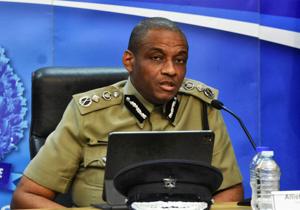

Hadeeds judgment: Court misread Parliament's intent on detention orders, says senior counsel
Translated from English, summarized and contextualized by DistantNews.
At a glance
Analysis
Named sources
Context piece
- A senior counsel argues that the Court of Appeal misread parliamentary intent regarding preventive detention orders.
- The counsel contends that while regulations grant the minister sole discretion, the court wrongly granted interim relief without considering objective grounds for detention.
- The article highlights a debate over the interpretation of draconian emergency regulations and ministerial powers.
Senior counsel Israel Khan argues that the Court of Appeal fundamentally misunderstood Parliament's intent in a recent judgment concerning preventive detention orders (PDOs) issued by Homeland Security Minister Roger Alexander.
Having perused the Court of Appeal judgment in the Hadeeds’ matter, I have reluctantly but firmly arrived at the conclusion that our esteemed judges were patently wrong in granting them interim non-custodial relief pending the determination of the preventive detention orders (PDOs) imposed upon them by Homeland Security Minister Roger Alexander.
Khan contends the judges erred by granting interim non-custodial relief to the Hadeeds, stating the core issue was not the legality of the regulations themselves, but the lack of disclosed objective grounds for their application. He emphasizes that Parliament intended these regulations, enacted during a state of emergency, to be "draconian," granting the minister sole discretion without a right to bail or habeas corpus.
Parliament had intended that the regulations under a state of emergency in relation to the issue of PDO would be drastically draconian, with no right to bail or right to file a habeas corpus writ against the minister.
The regulations empower the minister to detain citizens if satisfied that it is "necessary to prevent a person from acting in any manner prejudicial to the public safety or public order." Khan points out that the regulations do not require the minister to demonstrate objectively justifiable grounds for issuing a PDO. He asserts that if Parliament had intended such a requirement, it would have been explicitly stated.
It is of interest to note that the regulations gave the minister extraordinary powers to arrest and detain citizens if he is satisfied that preventative detention “is necessary to prevent a person from acting in any manner prejudicial to the public safety or public order”.
The article quotes the Court of Appeal's acknowledgment of the need for judicial respect towards ministerial decisions in national security matters, especially those made by elected officials responsible to the community. However, Khan's argument suggests this respect should not override the principle of requiring objective justification for detention, even under emergency powers, unless Parliament clearly intended otherwise.
There are no provisions in the regulations for the minister to demonstrate that the PDO issued by him was based on objectively justifiable grounds. All that is required is that he must be satisfied that it was necessary.
DistantNews Editorial
Originally published by Trinidad Express in English. Translated, summarized, and contextualized by our editorial team with added local perspective. Read our editorial standards.
More Stories

From Our Blog

What Gets Lost (and Found) When News Is Translated

The Critical Role of Diaspora Media in Global News

What Travellers Should Know About Countries with Restricted Press

A Digital Nomad's Guide to Following Local News

How the Same Story Looks Different in Different Countries
