


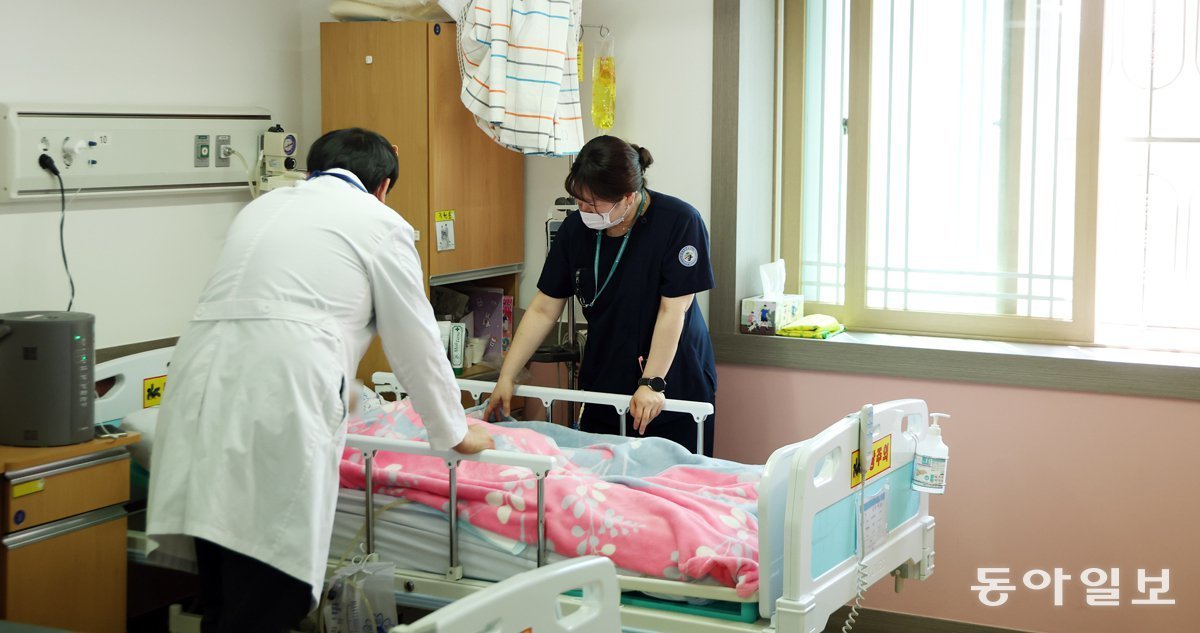
Half of hospice care facilities concentrated in Seoul metropolitan area, raising concerns over regional access
Translated from Korean and summarized by DistantNews. Read the original for the full story.
At a glance
News
Official statement
Context piece
- Nearly half of South Korea's hospice care institutions are located in the Seoul metropolitan area, with 47.6% of the 126 facilities concentrated there.
- The Seoul metropolitan area accounts for approximately 51.4% of the nation's total inpatient hospice beds.
- This concentration raises concerns about weakened hospice infrastructure in non-metropolitan regions and equitable access to end-of-life care.
South Korea faces a significant imbalance in hospice care access, with nearly half of all specialized hospice institutions and over half of inpatient beds concentrated in the Seoul metropolitan area. Data reveals that out of 126 hospice facilities nationwide, 60 are located in the capital region, comprising Seoul, Gyeonggi Province, and Incheon.
Gyeonggi Province leads with 29 facilities, followed by Seoul with 25 and Incheon with 6. This concentration extends to inpatient capacity, where the metropolitan area holds about 51.4% of the total 1,851 beds. This leaves non-metropolitan regions with considerably fewer resources for end-of-life care, potentially impacting patients outside the capital.
While discussions about fostering a 'well-dying' culture gain momentum, the geographical disparity in hospice services highlights a critical challenge. The data, submitted to the National Assembly's Health and Welfare Committee by Rep. Seo Young-seok, underscores the urgent need to strengthen regional hospice infrastructure to ensure more equitable access to palliative care across the country.
Regions outside the capital show starkly lower numbers. Busan and Daegu have the highest counts in non-metropolitan areas with 9 facilities each. Other regions like Jeonbuk and Gyeongbuk have 6 each, followed by Chungbuk with 5. Cities like Gwangju, Chungnam, Daejeon, Gangwon, and Jeonnam have 4 each, while Ulsan has 3 and Jeju has 2. This uneven distribution raises concerns about whether all citizens can readily access the necessary support during their final days.
About this summary
Originally published by Dong-A Ilbo in Korean. Translated, summarized, and contextualized automatically by DistantNews, with a note on how the source frames the story. Not individually reviewed before publishing. How this works.
More Stories

From Our Blog

What Gets Lost (and Found) When News Is Translated

The Critical Role of Diaspora Media in Global News

What Travellers Should Know About Countries with Restricted Press

A Digital Nomad's Guide to Following Local News

How the Same Story Looks Different in Different Countries
