


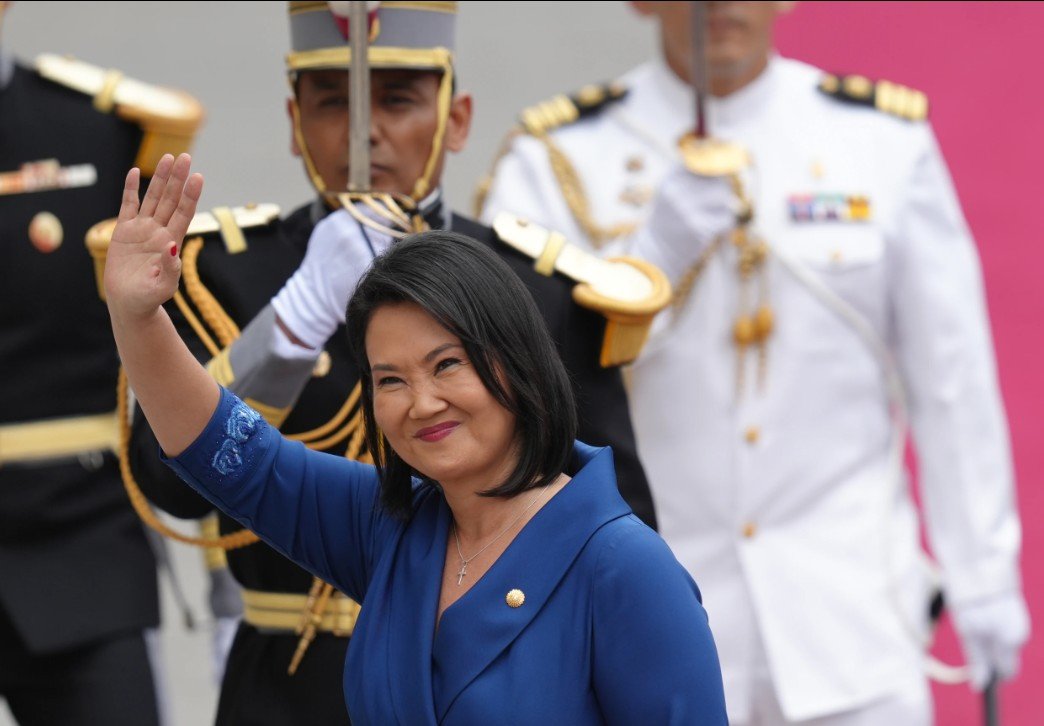
‘Hardline conservative’ Fujimori inaugurated as Peru president amid Latin America’s ‘blue tide’
Translated from Korean, summarized and contextualized by DistantNews.
At a glance
News
From a news agency
Outcome reported
- Keiko Fujimori was inaugurated as Peru's president, marking a continuation of the "blue tide" of conservative leaders in Latin America.
- Fujimori, the daughter of former President Alberto Fujimori, pledged to faithfully carry out her duties during her five-year term.
- Her administration plans to deploy the military in areas with high crime rates and has appointed a pro-U.S. foreign minister.
- Despite her conservative stance, Fujimori faces political instability due to a deeply divided congress and ongoing opposition from left-wing groups.
Keiko Fujimori was inaugurated as Peru's president on August 28, beginning her five-year term amid a broader trend of conservative leaders gaining power across Latin America, often referred to as the "blue tide." Fujimori, the eldest daughter and political successor of former President Alberto Fujimori, is Peru's first president of Japanese descent.
During her inauguration ceremony in Lima, Fujimori, dressed in blue, took the oath of office, vowing to "faithfully perform the duties of President of the Republic entrusted by the people from 2026 to 2031." The ceremony was attended by several right-wing leaders from the region, including presidents Javier Milei of Argentina, José Antonio Kast of Chile, Daniel Noboa of Ecuador, Santiago Peña of Paraguay, and Rodrigo Paz of Bolivia.
I swear to faithfully perform the duties of President of the Republic entrusted by the people from 2026 to 2031.
Fujimori's administration has outlined key priorities, including the deployment of the military to combat rampant crime, drug trafficking, and illegal mining. She stated that the military would temporarily lead operations in declared emergency zones until security is restored. In foreign policy, she has appointed Carlos Esparza, who has experience at the Peruvian embassy in the U.S. and is considered pro-American, as her foreign minister. Peru also intends to join the "Shield of the Americas," a U.S.-proposed initiative to combat serious crime in the Americas.
However, Fujimori's presidency is expected to face significant challenges. Peru has experienced extreme political instability in recent years, with nine presidents in the last decade. Her narrow victory in the recent election, by a mere 0.27 percentage points against left-wing candidate Roberto Sánchez, has fueled ongoing opposition. Sánchez's camp has raised allegations of electoral fraud and vowed to continue protests. Furthermore, Fujimori's party holds a minority in both the Senate and the House of Representatives, necessitating cooperation with opposition parties. Left-wing groups have also organized protests against her inauguration, indicating a polarized political landscape.
The military will temporarily lead operations in declared emergency zones until security is restored.
DistantNews Editorial
Originally published by Dong-A Ilbo in Korean. Translated, summarized, and contextualized by our editorial team with added local perspective. Read our editorial standards.
More Stories


From Our Blog

What Gets Lost (and Found) When News Is Translated

The Critical Role of Diaspora Media in Global News

What Travellers Should Know About Countries with Restricted Press

A Digital Nomad's Guide to Following Local News

How the Same Story Looks Different in Different Countries
