

Have You Seen the Summer Flowers?
Translated from Korean, summarized and contextualized by DistantNews.
At a glance
In-depth
Sources not specified
Context piece
- The article reflects on the often-overlooked beauty and vibrancy of summer flowers, contrasting them with the more celebrated spring blooms.
- It highlights the poem 'Summer Flowers Bloom Brightly' by Wei Yingwu, which captures the bold and fiery essence of mid-day summer blossoms.
- The piece suggests that by truly seeing and appreciating summer flowers, one can find new meaning and significance in their presence.
Spring flowers often receive the spotlight, but summer blooms deserve their own moment of recognition. The article, drawing from a classical Chinese poem, celebrates the unyielding spirit and vivid colors of flowers that thrive under the intense summer sun.
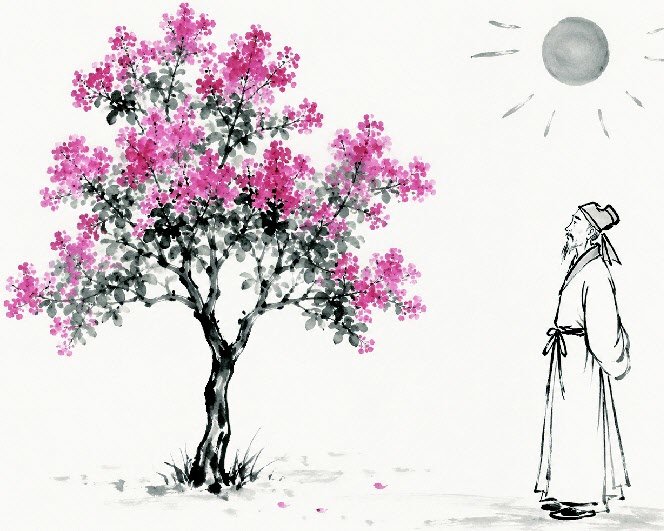
Summer branches are already deeply green, with bright red calyxes clearly attached. The midday sun is scorching, and the flower colors are like burning flames. After being tossed by the wind for a moment, they become disheveled, but when reflected in water, they shine beautifully again. Returning to look at the characters by the window, the bright light is still filling my eyes.
The poem 'Summer Flowers Bloom Brightly' by Wei Yingwu (circa 737-791) paints a striking picture of mid-day blossoms. The verse describes the deep green foliage, punctuated by bright red calyxes, and flowers that blaze like a fiery inferno under the scorching sun. Even when momentarily disturbed by the wind, their beauty is restored when reflected in water, creating a dynamic and captivating scene.
This appreciation for summer flowers echoes philosophical ideas about perception. The article references Wang Yangming, who believed that flowers exist in a silent state until observed, at which point they become vibrant and real to the viewer. Similarly, Kim Chun-su's famous poem 'Flower' suggests that an object becomes a flower only when it is named and acknowledged by someone, transforming from a mere gesture into a meaningful entity.
Flowers exist in a silent state when not being looked at, and only become bright the moment I see them.
Wei Yingwu's summer flowers, too, become a significant event when they meet the poet's gaze. The lingering impression of the flowers' brilliance is so strong that even upon returning indoors, the characters on the page seem dim in comparison. The article concludes with an invitation to the reader: the next time you encounter a vibrant red summer flower, pause and truly see it. In that moment of observation, it might just bloom into a personal symbol of meaning.
It became a flower to me when you called its name.
DistantNews Editorial
Originally published by Dong-A Ilbo in Korean. Translated, summarized, and contextualized by our editorial team with added local perspective. Read our editorial standards.
More Stories


From Our Blog

What Gets Lost (and Found) When News Is Translated

The Critical Role of Diaspora Media in Global News

What Travellers Should Know About Countries with Restricted Press

A Digital Nomad's Guide to Following Local News

How the Same Story Looks Different in Different Countries
