


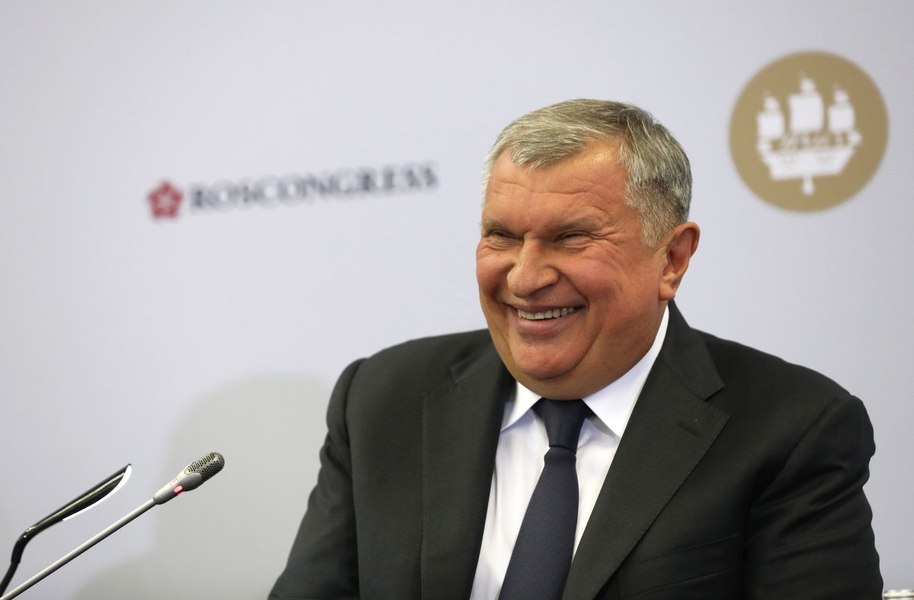
Head of Russia's largest oil company: main beneficiaries of the Strait of Hormuz closure are US companies
Translated from Romanian, summarized and contextualized by DistantNews.
At a glance
News
Sources not specified
Context piece
- Russian oil giant Rosneft CEO Igor Sechin stated that U.S. energy companies are the primary beneficiaries of the Strait of Hormuz closure.
- He warned that prolonged regional tensions could negatively impact global oil demand and encourage alternative energy sources.
- Sechin also noted that China is well-prepared for the energy crisis, while other global trade routes could become vulnerable.
Igor Sechin, the CEO of Russia's largest oil company, Rosneft, declared that American energy firms are reaping the most significant benefits from the closure of the Strait of Hormuz. Speaking at the St. Petersburg International Economic Forum, Sechin highlighted how the disruption of this critical maritime route, which handles about one-fifth of global oil supply, has fundamentally altered the global energy market balance.
Sechin asserted that the measures imposed against Iran have had far-reaching consequences, stating, "The main beneficiaries have, of course, been American companies, which have gained non-competitive advantages and the opportunity to trade high-cost volumes of oil at more favorable prices." He cautioned that sustained tensions in the Strait of Hormuz could lead to a long-term reduction in global oil demand and accelerate the shift towards alternative energy sources.
The conflict involving the United States, Israel, and Iran has caused substantial disruptions in the global energy market. Rising oil prices have boosted Russia's revenue from oil taxes and royalties, with data from the Russian Ministry of Finance showing a 32.4% increase in oil and gas budget revenues in May compared to the previous year.
Sechin believes China is best positioned to navigate the current energy crisis due to its strategic policies. However, he warned that other vital global trade chokepoints, such as the Malacca, Bab el-Mandeb, and Gibraltar straits, could also face similar disruptions. He projected that if the Strait of Hormuz reopens soon, Brent crude could reach $95-$96 per barrel by year-end, potentially falling to $80-$85 within 12 months, before stabilizing in the second half of 2027.
The main beneficiaries have, of course, been American companies, which have gained non-competitive advantages and the opportunity to trade high-cost volumes of oil at more favorable prices.
DistantNews Editorial
Originally published by Adevărul in Romanian. Translated, summarized, and contextualized by our editorial team with added local perspective. Read our editorial standards.
More Stories



From Our Blog

What Gets Lost (and Found) When News Is Translated

The Critical Role of Diaspora Media in Global News

What Travellers Should Know About Countries with Restricted Press

A Digital Nomad's Guide to Following Local News

How the Same Story Looks Different in Different Countries
