


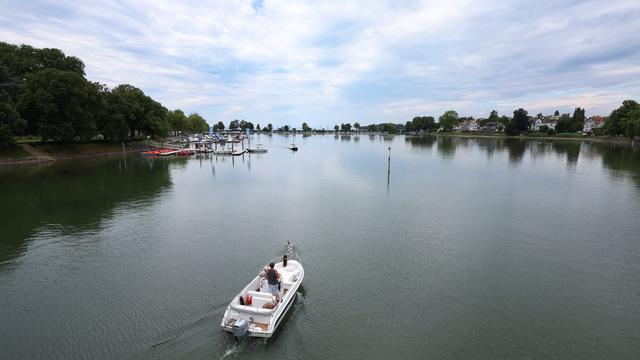
Health authorities advise against swimming in Lake Constance bay due to toxic algae
Translated from German, summarized and contextualized by DistantNews.
At a glance
News
From a news agency
New plan
- Health authorities advise against swimming in a small bay of Lake Constance due to the presence of green-brown slime clumps.
- These clumps are identified as benthic cyanobacteria, which can produce toxins harmful to humans and animals.
- Water samples are being tested, and swimming is prohibited until lab results are available, with dogs also warned away from the water.
Residents and visitors planning to swim in Lake Constance are being cautioned to avoid a specific area known as the Kleiner See, a tranquil inlet situated between the Lindau island and the mainland. The local health department has issued a precautionary advisory against bathing in the water due to the discovery of green-brown slime clumps floating on the surface.
These unusual formations have been identified by authorities as benthic cyanobacteria. These microorganisms have the potential to generate toxins that pose a health risk. The city confirmed the findings, which were initially reported by the "Schwäbische Zeitung."
In response, the health department has collected water samples for laboratory analysis to determine if the bacteria are indeed producing harmful toxins. Until these results are finalized, the public is strongly advised to refrain from entering the Kleiner See. The advisory also extends to pets, with owners urged to keep dogs away from the water, as the toxins can be life-threatening to them.
According to health officials, exposure to contaminated water can lead to skin irritations and gastrointestinal issues like diarrhea in humans. The growth of these cyanobacteria is believed to be fueled by the current high water temperatures, around 26 degrees Celsius, and a rich nutrient content in the water. Typically found on stones and aquatic plants at the lakebed, these bacteria form a slimy layer often described as "toad skin." Warmer temperatures can cause these layers to detach and rise to the surface, increasing the risk of contact with swimmers and animals.
DistantNews Editorial
Originally published by Die Zeit in German. Translated, summarized, and contextualized by our editorial team with added local perspective. Read our editorial standards.
More Stories



From Our Blog

What Gets Lost (and Found) When News Is Translated

How the Same Story Looks Different in Different Countries

The Critical Role of Diaspora Media in Global News

What Travellers Should Know About Countries with Restricted Press

A Digital Nomad's Guide to Following Local News
