


Heatwaves and UV Rays Worsen Glaucoma, South Korea's Leading Cause of Blindness
Translated from Indonesian, summarized and contextualized by DistantNews.
At a glance
News
Sources not specified
Context piece
- Heatwaves and strong UV rays can worsen glaucoma, a leading cause of blindness, by accelerating eye aging and affecting blood circulation.
- Glaucoma cases in South Korea increased by 17.6% between 2021 and 2025, reaching over 1.27 million patients.
- Regular eye exams are crucial, especially for those over 40 or with risk factors, as early detection is key to slowing disease progression.
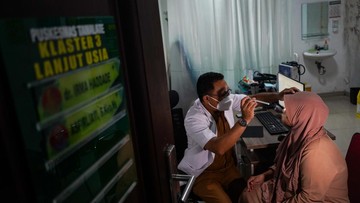
Record-breaking heatwaves, with temperatures soaring to 38 degrees Celsius, are not only challenging daily life but also posing a significant threat to eye health. Intense ultraviolet (UV) radiation associated with these heatwaves can accelerate eye aging and exacerbate conditions like glaucoma, a leading cause of irreversible blindness.
Medical data reveals a concerning rise in glaucoma diagnoses. According to the Health Insurance Review & Assessment Service, the number of patients treated for glaucoma in South Korea climbed by approximately 17.6% from 1.08 million in 2021 to 1.27 million in 2025. Glaucoma damages the optic nerve, gradually narrowing the field of vision. Often, patients experience no early symptoms, leading to diagnosis only when the disease is significantly advanced.
Both eyes compensate for each other's visual field defects, making it difficult for patients to notice changes even when one eye or part of the visual field is damaged.
During hot and humid summer months, dehydration can negatively impact blood circulation, leading to fluctuations in intraocular pressure (IOP). Elevated IOP or blood flow issues can damage the optic nerve, potentially causing glaucoma. While high IOP increases risk, it's important to note that many glaucoma patients, around 70-80% in South Korea, suffer from normal-tension glaucoma, where optic nerve damage occurs despite normal IOP levels. Factors like blood flow abnormalities, genetics, and high myopia contribute to this condition.
You should not assume you don't have glaucoma just because your intraocular pressure was measured as normal during a health check-up; you must also check the condition of the optic nerve, retinal nerve fiber layer, and visual field.
Dr. Park Ji-hye, an ophthalmologist at Korea University Ansan Hospital, emphasizes the difficulty patients face in recognizing vision loss due to the eyes compensating for each other. She advises against assuming the absence of glaucoma based solely on normal IOP readings during check-ups. Comprehensive eye examinations, including assessments of the optic nerve, retinal nerve fiber layer, and visual field, are essential. Symptoms can range from misjudging steps or obstacles to experiencing tunnel vision in advanced stages.
While most glaucoma progresses slowly, acute angle-closure glaucoma presents sudden, severe symptoms like intense eye pain, redness, blurred vision, and even nausea and vomiting. This condition requires immediate ophthalmological attention. The primary goal of glaucoma treatment is not to restore damaged vision but to lower IOP and slow disease progression through medication, laser therapy, or surgery. Dr. Park strongly recommends regular eye check-ups for individuals over 40, those with high IOP, a family history of glaucoma, high myopia, or diabetes, even in the absence of symptoms, to preserve vision.
Glaucoma can be slowed down by early detection and appropriate treatment, preserving the remaining visual field for a long time.
DistantNews Editorial
Originally published by Tempo in Indonesian. Translated, summarized, and contextualized by our editorial team with added local perspective. Read our editorial standards.
More Stories


From Our Blog

What Gets Lost (and Found) When News Is Translated

The Critical Role of Diaspora Media in Global News

What Travellers Should Know About Countries with Restricted Press

A Digital Nomad's Guide to Following Local News

How the Same Story Looks Different in Different Countries
