


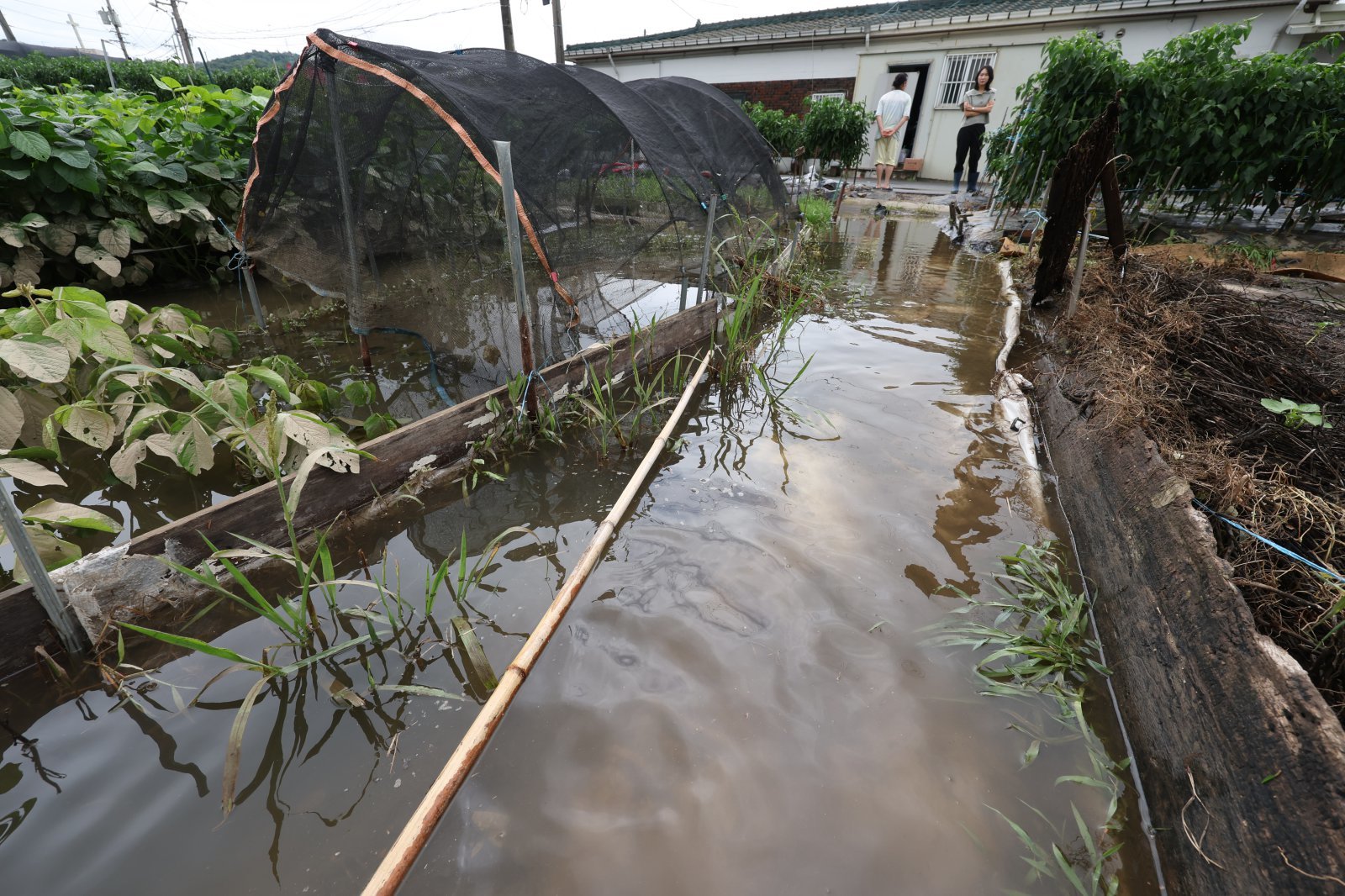
Heavy rain advisories reissued for South Korea as downpours intensify
Translated from Korean, summarized and contextualized by DistantNews.
At a glance
News
Sources not specified
Ongoing story
- Heavy rain warnings have been reissued for parts of South Korea, with intense downpours expected overnight and into the next day.
- Several regions, including Gyeongsangbuk-do and Daegu, are under heavy rain advisories, with some areas experiencing severe warnings.
- Authorities are urging caution against flash floods, overflowing rivers, landslides, and potential structural collapses.
Heavy rain advisories have been reinstated across South Korea as of Saturday evening, following their earlier cancellation. The Korea Meteorological Administration forecasts intense rainfall, with hourly rates potentially reaching 50mm, particularly in the central and southern regions from Saturday night into Sunday morning.
As of Saturday 10 p.m., a heavy rain warning (hoou경보) was in effect for Uiseong in Gyeongsangbuk-do, while heavy rain advisories (hoou주의보) were issued for several other locations in Gyeongsangbuk-do, Gyeongsangnam-do, and Daegu. The KMA noted that the rain clouds are moving eastward, increasing the possibility of further advisories being issued.
Preliminary heavy rain warnings are also in place for parts of Gangwon, Chungcheongbuk-do, and other southern areas for Sunday morning. Meanwhile, heatwave advisories remain active in southern regions, with some areas experiencing tropical nights where temperatures stay above 25 degrees Celsius overnight.
Authorities are strongly advising residents to be vigilant against potential dangers, including flash floods in valleys and rivers, landslides, and the collapse of structures. The forecast indicates widespread rain across the country through Sunday, with a particular emphasis on the severe downpours expected in central and southern inland areas.
Please be especially careful about isolated accidents due to rapid water level rises in valleys and rivers, flooding in low-lying areas, river overflows, landslides and soil erosion, and building collapses.
DistantNews Editorial
Originally published by Dong-A Ilbo in Korean. Translated, summarized, and contextualized by our editorial team with added local perspective. Read our editorial standards.
More Stories



From Our Blog

What Gets Lost (and Found) When News Is Translated

The Critical Role of Diaspora Media in Global News

What Travellers Should Know About Countries with Restricted Press

A Digital Nomad's Guide to Following Local News

How the Same Story Looks Different in Different Countries
