


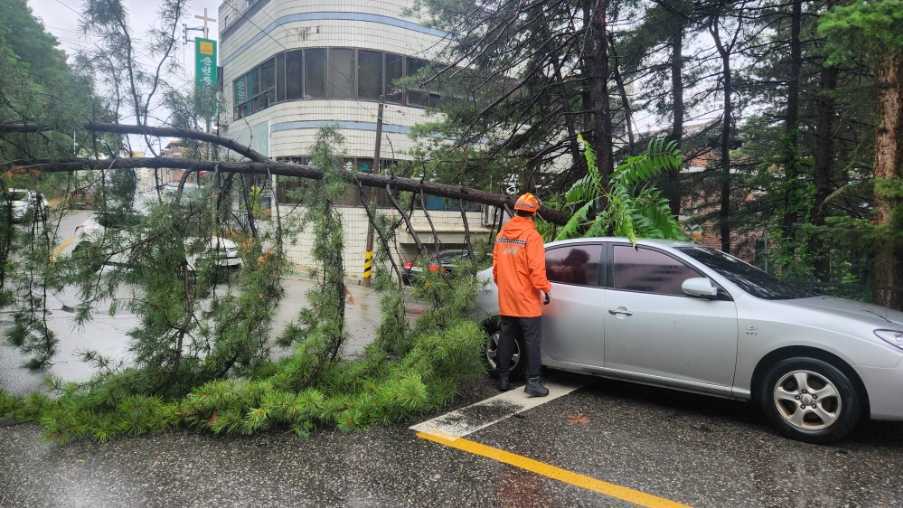
Heavy Rain Triggers Landslides, Flooding in South Korea's Gangwon Province; Coastal Warnings Issued
Translated from Korean, summarized and contextualized by DistantNews.
At a glance
News
Named sources
Context piece
- Heavy rainfall in Gangwon Province, South Korea, caused fallen trees and landslides, with 37 emergency responses reported.
- The downpour disrupted weekend events, including the Gangneung Danoje Festival, and led to the temporary closure of Seoraksan National Park.
- While the heavy rain warning has been lifted, a strong wind and high wave warning remains in effect for the eastern seas, prompting warnings for coastal areas.
Gangwon Province in South Korea experienced significant disruption due to heavy rainfall and strong winds, prompting 37 emergency responses. The downpour, which saw some areas receive over 220 millimeters of rain, caused numerous fallen trees and landslides, with the fire department responding to 30 tree-related incidents alone.
Gangneung reported the highest number of incidents with 11, followed by Chuncheon with 8. The adverse weather forced cancellations and postponements of weekend events, including parts of the Gangneung Danoje Festival. Seoraksan National Park was also temporarily closed to visitors due to the heavy rain warning.
While the heavy rain advisories have since been lifted for most of the province, the situation remains tense along the coast. A strong wind and high wave warning is now in effect for all seas off Gangwon Province, with forecasts predicting very strong winds and high waves through June 22.
Authorities are urging the public to exercise caution and avoid coastal areas, including breakwaters and rocky shores, due to the risk of dangerous waves. The meteorological agency warned of potential "sneaker waves" that could surge onto beaches and over coastal structures. The cumulative rainfall has been substantial, with mountainous regions like Misiryeong recording over 223 mm and coastal areas like Sokcho's Daepo receiving nearly 200 mm.
DistantNews Editorial
Originally published by Dong-A Ilbo in Korean. Translated, summarized, and contextualized by our editorial team with added local perspective. Read our editorial standards.
More Stories


From Our Blog

What Gets Lost (and Found) When News Is Translated

The Critical Role of Diaspora Media in Global News

What Travellers Should Know About Countries with Restricted Press

A Digital Nomad's Guide to Following Local News

How the Same Story Looks Different in Different Countries
