


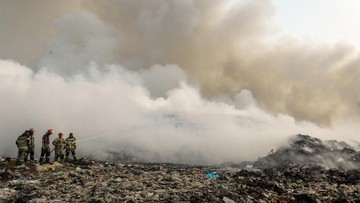
Helicopter Deployed for Water Bombing at Indonesian Landfill Fire
Translated from Indonesian, summarized and contextualized by DistantNews.
At a glance
News
Official statement
Ongoing story
- A helicopter is being used for water bombing to extinguish a fire at the Jatiwaringin landfill in Tangerang, Banten, Indonesia.
- The fire has been burning since Tuesday, June 30, and is difficult to control due to the nature of the waste material and strong winds.
- Extreme heat is suspected as a cause, potentially igniting methane gas produced by the decomposing waste.
A helicopter is actively engaged in water bombing operations to combat a persistent fire at the Jatiwaringin landfill in Tangerang, Banten, Indonesia.
The blaze, which began on Tuesday, June 30, has proven challenging to extinguish. The National Disaster Management Agency (BNPB) deployed a helicopter on Wednesday, July 1, to assist in the firefighting efforts. If necessary, weather modification techniques will also be considered.
On Wednesday (1/7) we brought in a water bombing helicopter. If necessary, we will carry out weather modification operations.
BNPB Chief Lt. Gen. Suharyanto directed his team to the site on Tuesday afternoon to assess the situation and coordinate with the Tangerang Regency government. The primary goal is to suppress the fire quickly to prevent its spread and minimize its impact.
Initial assessments by the BNPB team indicated that the fire was still not under control by Tuesday evening. The difficulty in extinguishing the fire stems from the burning material – piles of waste – and the location of the hotspots, which are high and hard for ground crews to reach. Strong winds and high temperatures are further exacerbating the spread of the flames.
Try to extinguish it immediately so it doesn't spread and the impact can be minimized.
The Regional Disaster Management Agency (BPBD) of Tangerang Regency suspects extreme heat is the primary cause. Achmad Taufik, head of BPBD Tangerang, explained that the intense heat likely triggered methane gas, which accumulates from years of waste decomposition, to ignite.
"The piles of waste, which have been there for years, contain methane gas. When the heat is extreme, that gas can turn into fire," Taufik stated at the scene.
The piles of waste, which have been there for years, contain methane gas. When the heat is extreme, that gas can turn into fire.
DistantNews Editorial
Originally published by CNN Indonesia in Indonesian. Translated, summarized, and contextualized by our editorial team with added local perspective. Read our editorial standards.
More Stories


From Our Blog

What Gets Lost (and Found) When News Is Translated

The Critical Role of Diaspora Media in Global News

What Travellers Should Know About Countries with Restricted Press

A Digital Nomad's Guide to Following Local News

How the Same Story Looks Different in Different Countries
