


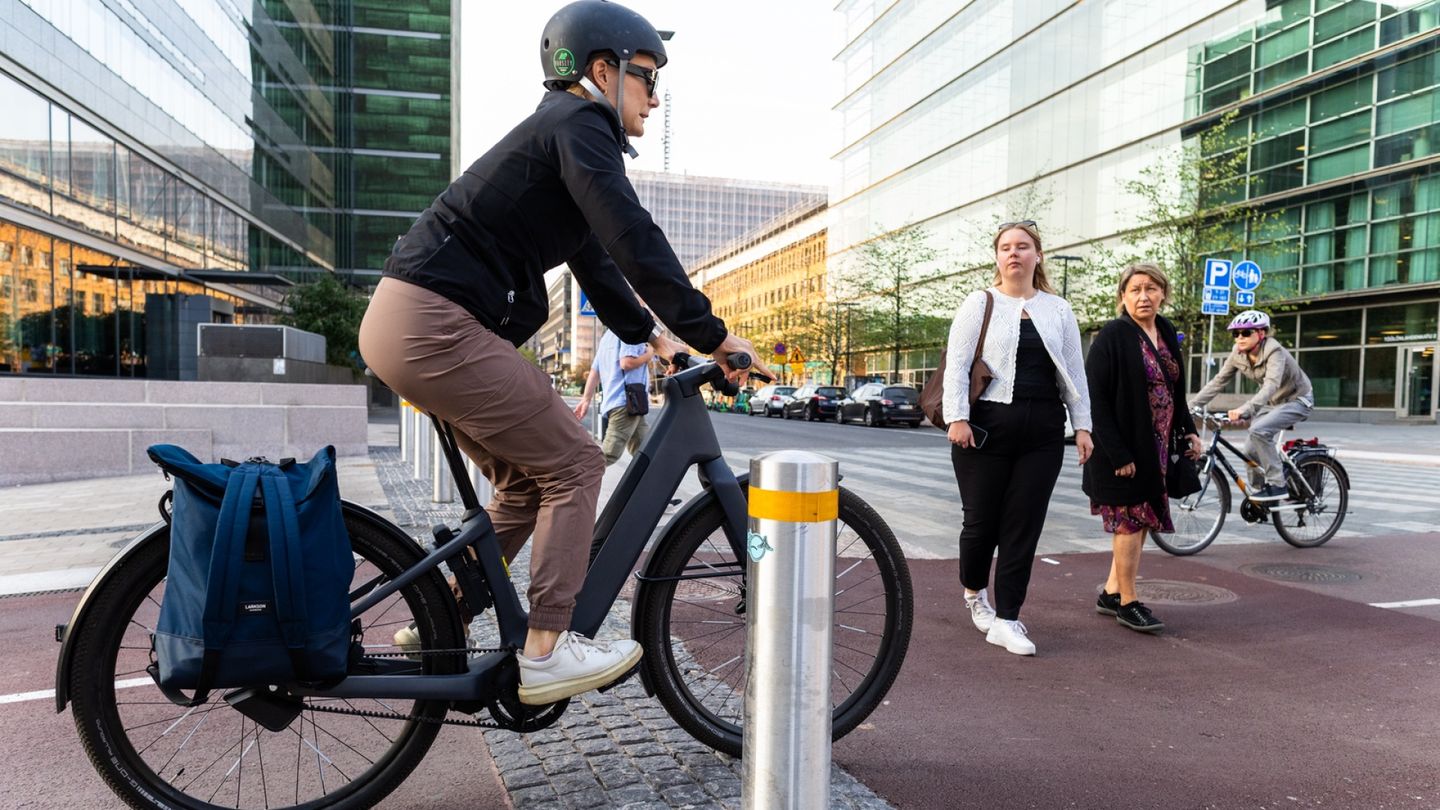
Helsinki Disputes Thesis Claiming Decline in Cycling Numbers
Translated from Finnish, summarized and contextualized by DistantNews.
At a glance
News
Named sources
Context piece
- Helsinki's city environment department disputes a doctoral thesis claiming a 15% drop in cycling between 2018-2024.
- The city argues the thesis incorrectly compares Helsinki's cycling data with broader regional data for other transport modes.
- City officials state cycling numbers in Helsinki are not declining and are part of a long-term growth trend, with recent data showing an increase.
Helsinki's city environment department has refuted claims made in a doctoral thesis that cycling numbers in the city have declined by approximately 15% between 2018 and 2024. The thesis, from the University of Helsinki, suggested that cycling is lagging behind other modes of transport post-pandemic, despite significant annual investments in new cycle paths.
The observations about the decline of cycling in Helsinki are misleading.
Oskari Kaupinmäki, a team leader at the city environment department, described the thesis's assessment as erroneous. He explained that the research compares cycling development using Helsinki-specific data, but contrasts it with data for other modes of transport across the entire Helsinki region. This methodology, Kaupinmäki argued, does not accurately represent Helsinki's mobility trends. "The situation is a bit different in Mäntsälä than in Helsinki," he noted, emphasizing that cycling in Helsinki has not diverged from other transport modes, which have also seen decreases compared to pre-pandemic levels.
Kaupinmäki also pointed to the short timeframe of the study, which includes several anomalies. He cited the exceptionally warm summer of 2018, which boosted cycling figures, and the pandemic's disruption to traffic volumes for several years. He asserted that, over the current millennium, cycling volumes in Helsinki are undeniably on an upward trend and that the recent dip appears to be temporary. Data from a peak day this year showed 39,500 cyclists, a 12.4% increase compared to the same day in 2023.
The situation is a bit different in Mäntsälä than in Helsinki.
Professor Milos Mladenović from Aalto University, who pre-reviewed the thesis, also raised concerns about the research methodology. He stated that the analysis relies on isolated counting points and does not adequately capture the development of the broader cycling network. Mladenović added that the study oversimplifies the promotion of cycling, suggesting that simply building more bike lanes does not automatically increase their usage. Kaupinmäki concurred, noting that the idea of immediate popularity growth from new bike lanes is misleading. Currently, cycling accounts for 9-11% of all trips in Helsinki, a figure considered high internationally. The city has completed less than half of its planned cycle network in the core city and about a fifth of the entire city's network, indicating that creating the conditions for a significant increase in cycling popularity is a long-term endeavor.
In the bigger picture, the plans are still underway. Currently, less than half of the targeted cycle network in Helsinki's core city is complete, and only about a fifth of the entire city's 'baana' network.
DistantNews Editorial
Originally published by Helsingin Sanomat in Finnish. Translated, summarized, and contextualized by our editorial team with added local perspective. Read our editorial standards.
More Stories

From Our Blog

What Gets Lost (and Found) When News Is Translated

The Critical Role of Diaspora Media in Global News

What Travellers Should Know About Countries with Restricted Press

A Digital Nomad's Guide to Following Local News

How the Same Story Looks Different in Different Countries
