


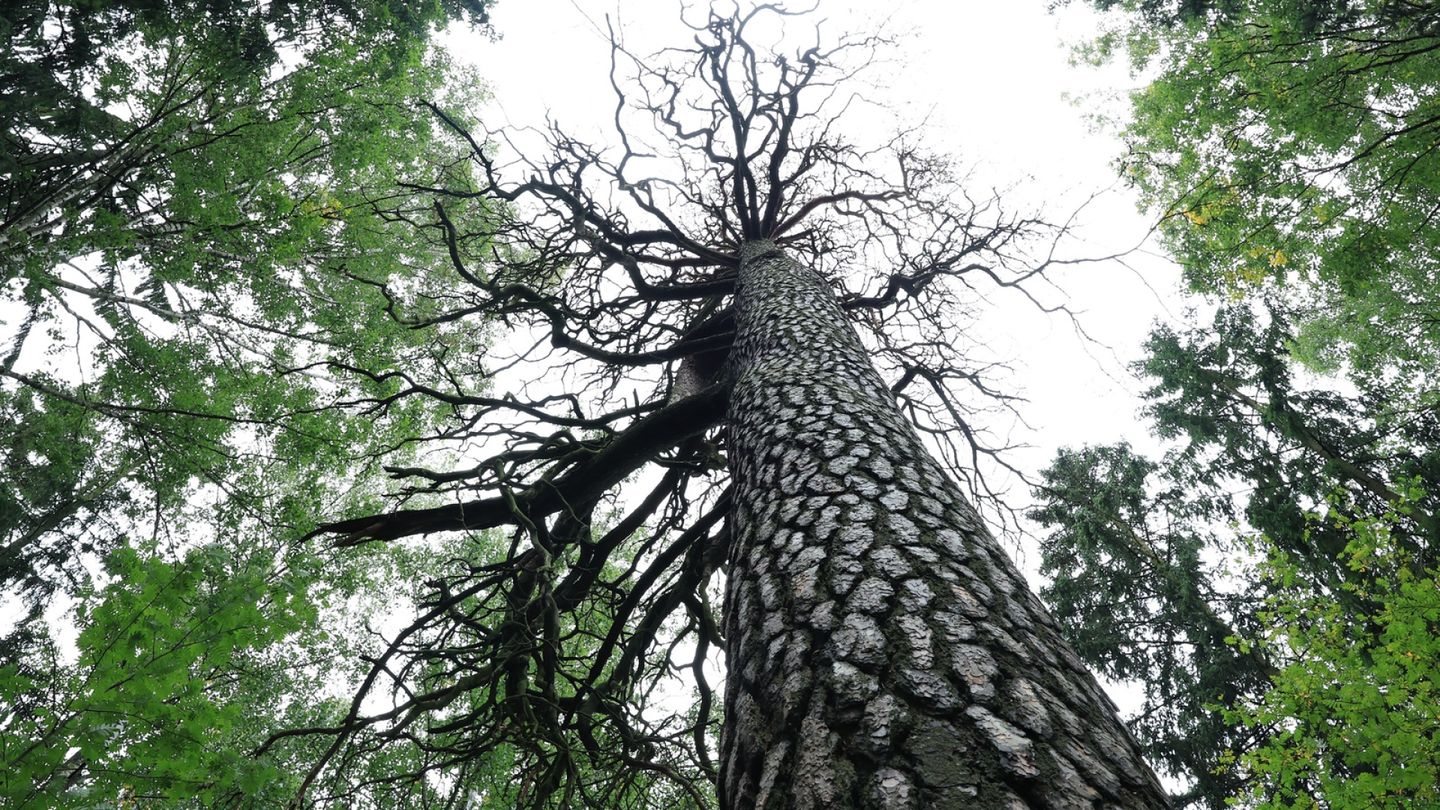
Helsinki's ancient pine tree, over 250 years old, is dying
Translated from Finnish, summarized and contextualized by DistantNews.
At a glance
News
Sources not specified
Context piece
- A protected pine tree in Helsinki's Vesala, estimated to be over 250 years old, is dying.
- Researchers believe the tree's death is likely due to a gradual weakening over time, possibly from competition with surrounding trees for light and resources, or from insect infestation.
- The ancient pine, a local landmark, was designated a natural monument in the early 2000s.
A protected pine tree in Helsinki's Vesala, estimated to be over 250 years old, is showing signs of imminent death. The tree's graying appearance indicates it has seen better days, according to Anna Lintunen, a researcher at the University of Helsinki's Department of Forest Sciences.
Lintunen explained that pine trees are evergreen and should always have green needles. The loss of greenness suggests the tree is either dead or dying. Without green needles, the tree cannot photosynthesize, leading to a rapid cessation of its energy supply. She added that scratching the bark of a branch could reveal if there are still signs of life inside, noting that a green layer under the bark indicates living tissue.
The surrounding trees appear to be in better health. Lintunen suggests the pine likely weakened gradually over a long period. Typically, a pine's natural death occurs when surrounding trees compete for space and shade it. As the crown shrinks, the tree can no longer photosynthesize enough to sustain its vital functions. Weakened trees can also be susceptible to bark beetles or other destructive insects. Drought is considered an unlikely cause, given the healthy deciduous trees nearby and the seemingly lush growing conditions.
Without green needles, the tree cannot photosynthesize, leading to a rapid cessation of its energy supply.
The pine, known locally as a landmark, stands at the intersection of Humikkalantie and Muinaistutkijantie in Vesala. At the turn of the millennium, the environmental board designated the ancient pine as a natural monument. In the early 2000s, the tree measured nearly three meters in circumference and stood 22 meters tall. Over the years, more growth rings have accumulated.
This news follows a report earlier this summer about a gnarled pine in Koli National Park, described as Finland's most famous, also being reported as dead. The famous pine is depicted in Eero Järnefelt's iconic 1928 painting "Landscape from Koli." Determining the exact time of death for such trees is difficult, as archival photos show the Koli pine already appearing weathered 20 years ago. Metsähallitus natural services team leader Suvi Haapalehto commented in June that a pine dies slowly, eventually shedding its last needles. It can then remain standing as a snag for up to a hundred years, providing a habitat for endangered fungi even after falling.
The tree dies slowly and eventually sheds its last needles. After that, it can remain standing as a snag for up to a hundred years.
DistantNews Editorial
Originally published by Helsingin Sanomat in Finnish. Translated, summarized, and contextualized by our editorial team with added local perspective. Read our editorial standards.
More Stories



From Our Blog

What Gets Lost (and Found) When News Is Translated

The Critical Role of Diaspora Media in Global News

What Travellers Should Know About Countries with Restricted Press

A Digital Nomad's Guide to Following Local News

How the Same Story Looks Different in Different Countries
