


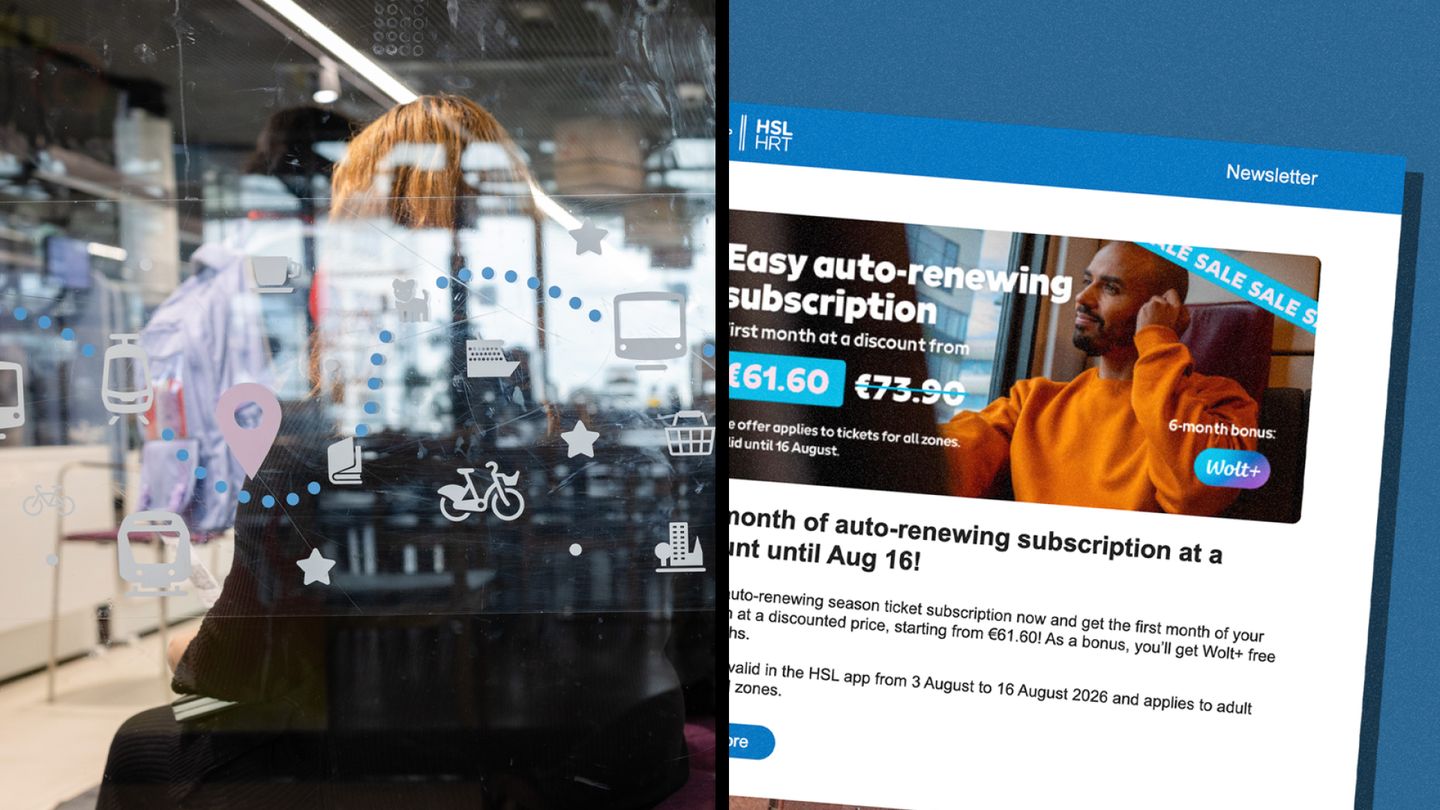
Helsinki's public transport faces criticism over limited travel card access, partners with Wolt
Translated from Finnish, summarized and contextualized by DistantNews.
At a glance
News
Sources not specified
Context piece
- Helsinki's public transport authority, HSL, is facing criticism for its limited options for obtaining travel cards, with the main service point located solely in the Pasila Tripla.
- HSL has partnered with Wolt Market to deliver travel cards to homes, a service not offered directly by HSL, raising questions about the necessity and ethics of the collaboration.
- HSL defends the partnership as a way to improve accessibility, stating that Wolt is the first of potentially many commercial partners for such services, and that the current agreement falls below the threshold requiring adherence to stricter ethical guidelines.
Helsinki's public transport authority, HSL, is under scrutiny for its inconvenient process of obtaining travel cards. Despite the city's population exceeding 700,000, residents can only acquire a physical travel card from a single HSL service point in Pasila Tripla. This limitation has led to long queues, particularly as the new school year begins.
Mari Flink, HSL's director, acknowledged the issue as "a difficult matter," noting that neighboring municipalities like Espoo and Vantaa offer card services through their own municipal points. HSL's online portal currently only allows for loading value or season tickets onto existing cards, not for ordering new ones. Flink indicated that adding a full online ordering capability is a future service development goal.
Sitä kautta se on vastuullista, että me helpotetaan sitä matkakortin saatavuutta.
In an effort to address accessibility, HSL has partnered with Wolt Market to deliver travel cards to homes. However, Wolt is currently the sole provider of this delivery service, prompting questions about the necessity of such a collaboration for a public entity. Flink stated that the partnership is not specific to Wolt and that any commercial entity could potentially offer similar services if they purchased cards from HSL.
HSL's ethical guidelines emphasize "bold actions" but also responsibility. Flink defended the Wolt partnership as responsible because it enhances the travel card's availability. She explained that HSL's stricter ethical principles, which mandate adherence to national agreements, are applied to procurement exceeding 100,000 euros. The current Wolt agreement falls below this threshold, leading to a different set of ethical considerations. Flink expressed a goal to extend these principles to smaller procurements in the future.
Näen, että se on vastuullista. Mutta kuten sanoin, meillä on tavoitteena, että laajennetaan niiden periaatteiden käyttöä myös pienempiin hankintoihin.
DistantNews Editorial
Originally published by Helsingin Sanomat in Finnish. Translated, summarized, and contextualized by our editorial team with added local perspective. Read our editorial standards.
More Stories



From Our Blog

What Gets Lost (and Found) When News Is Translated

The Critical Role of Diaspora Media in Global News

What Travellers Should Know About Countries with Restricted Press

A Digital Nomad's Guide to Following Local News

How the Same Story Looks Different in Different Countries
