


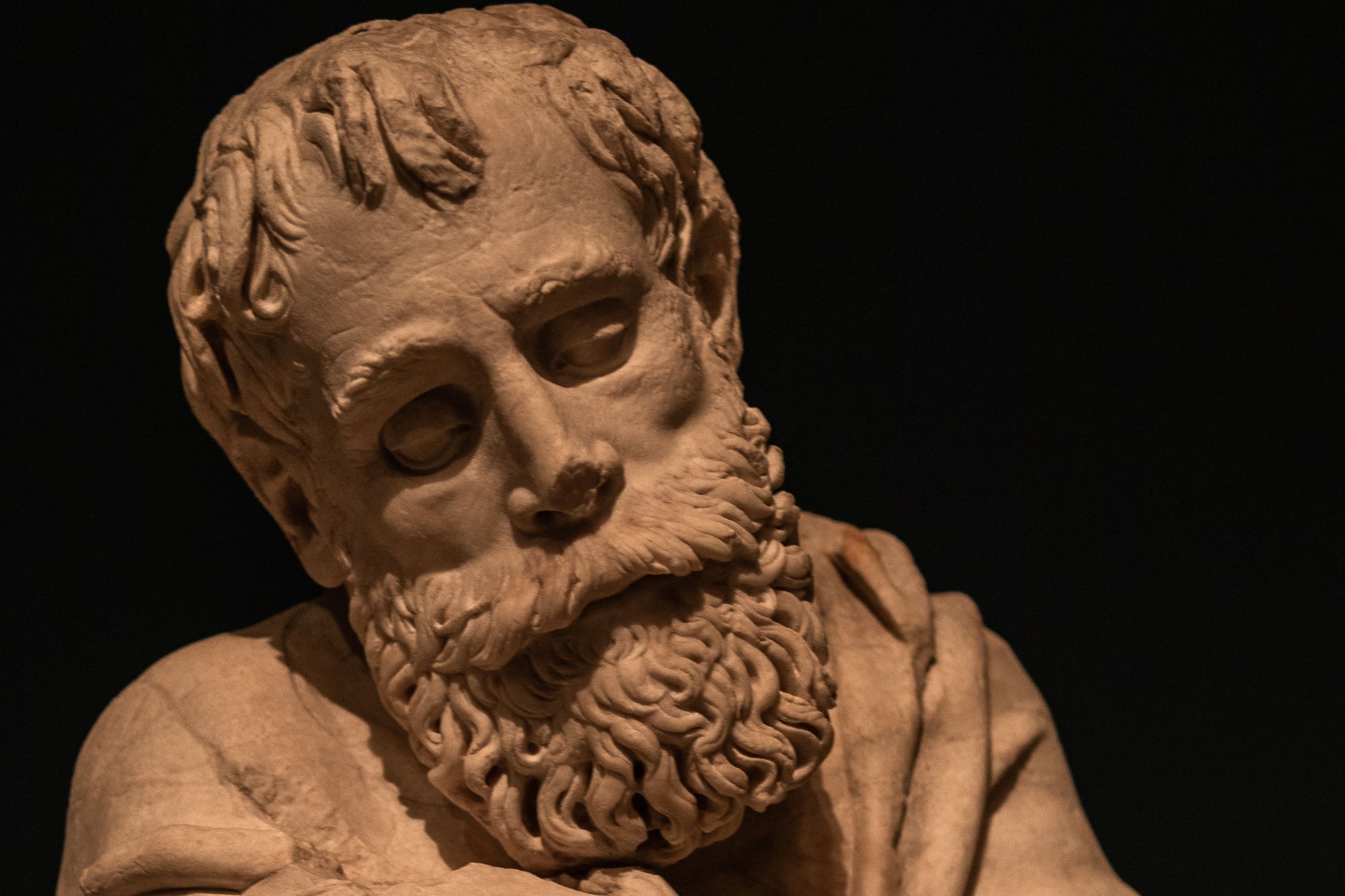
Heraclitus's Quote on Crying and Deep Feeling: A Modern Perspective
Translated from Spanish, summarized and contextualized by DistantNews.
At a glance
In-depth
Sources not specified
Context piece
- The phrase "Crying cleanses the soul and reminds us that feeling deeply makes us live more," often attributed to the Greek philosopher Heraclitus, is explored for its modern psychological and philosophical relevance.
- While historical evidence directly linking the quote to Heraclitus is scarce, ancient writers noted his melancholic disposition and reflections on human suffering.
- Modern psychology and existentialism support the idea that emotional crying, a form of catharsis, releases stress hormones and promotes well-being, while embracing deep feelings enhances life's richness.
The enduring phrase, "Crying cleanses the soul and reminds us that feeling deeply makes us live more," is frequently attributed to the ancient Greek philosopher Heraclitus, known as "the melancholic." This association stems from his reputation for deep contemplation of human emotions. However, direct textual evidence from Heraclitus's own writings to support this specific quote remains elusive.
Historical accounts from figures like Diogenes Laërtius and Seneca suggest Heraclitus possessed a melancholic temperament. They documented his tendency to weep over humanity's "spiritual blindness, ignorance, and self-destruction." These observations likely led to the attribution of various reflections, including the popular saying, to him, even if some are apocryphal.
Analyzing the phrase through the lens of modern psychology and existential philosophy reveals its contemporary value. The first part, "Crying cleanses the soul," aligns with the concept of catharsis, famously discussed by Aristotle in relation to tragedy. Modern science confirms that emotional crying releases beneficial hormones like oxytocin and endorphins, alongside stress hormones, providing a biological mechanism for "cleansing" and relaxation.
The second part, "...reminds us that feeling deeply makes us live more," resonates with 20th-century existentialism and humanistic psychology. This perspective posits that a full life is measured not just by years but by the depth of experience. Suppressing pain can numb our capacity for joy, whereas acknowledging suffering through tears serves as a reminder of our vulnerability and our profound connection to the present moment.
DistantNews Editorial
Originally published by La Nación in Spanish. Translated, summarized, and contextualized by our editorial team with added local perspective. Read our editorial standards.
More Stories

From Our Blog

What Gets Lost (and Found) When News Is Translated

The Critical Role of Diaspora Media in Global News

What Travellers Should Know About Countries with Restricted Press

A Digital Nomad's Guide to Following Local News

How the Same Story Looks Different in Different Countries
