


History’s lesson: When deterrence fades, war can begin
Translated from Korean and summarized by DistantNews. Read the original for the full story.
At a glance
Analysis
Named sources
Context piece
- The commentary compares today’s great-power tensions, protectionism, nationalism and weakening international rules with conditions before the First and Second World Wars.
- It cites historians and investor Ray Dalio, who warn that economic, political and geopolitical instability may be moving the world toward a more dangerous phase.
- The piece argues that governments should prepare for worst-case scenarios rather than dismiss early signs of escalation.
The assassination of Austria’s crown prince in Sarajevo on June 28, 1914, took only five weeks to grow into the First World War. Few people could have imagined that the gunshot would help unleash a conflict that killed 40 million people.
In his 1925 memoir, former British foreign secretary Edward Grey recalled that “the sky of international politics seemed clearer than ever” during the first months of 1914. Historians later described the war as the explosion of pressures that had built up over time: distrust between Britain and a rising Germany, the spread of protectionism, declining globalization, nationalism, imperial competition and an arms race. The arrogance and miscalculations of major leaders completed the chain reaction.
The sky of international politics seemed clearer than ever.
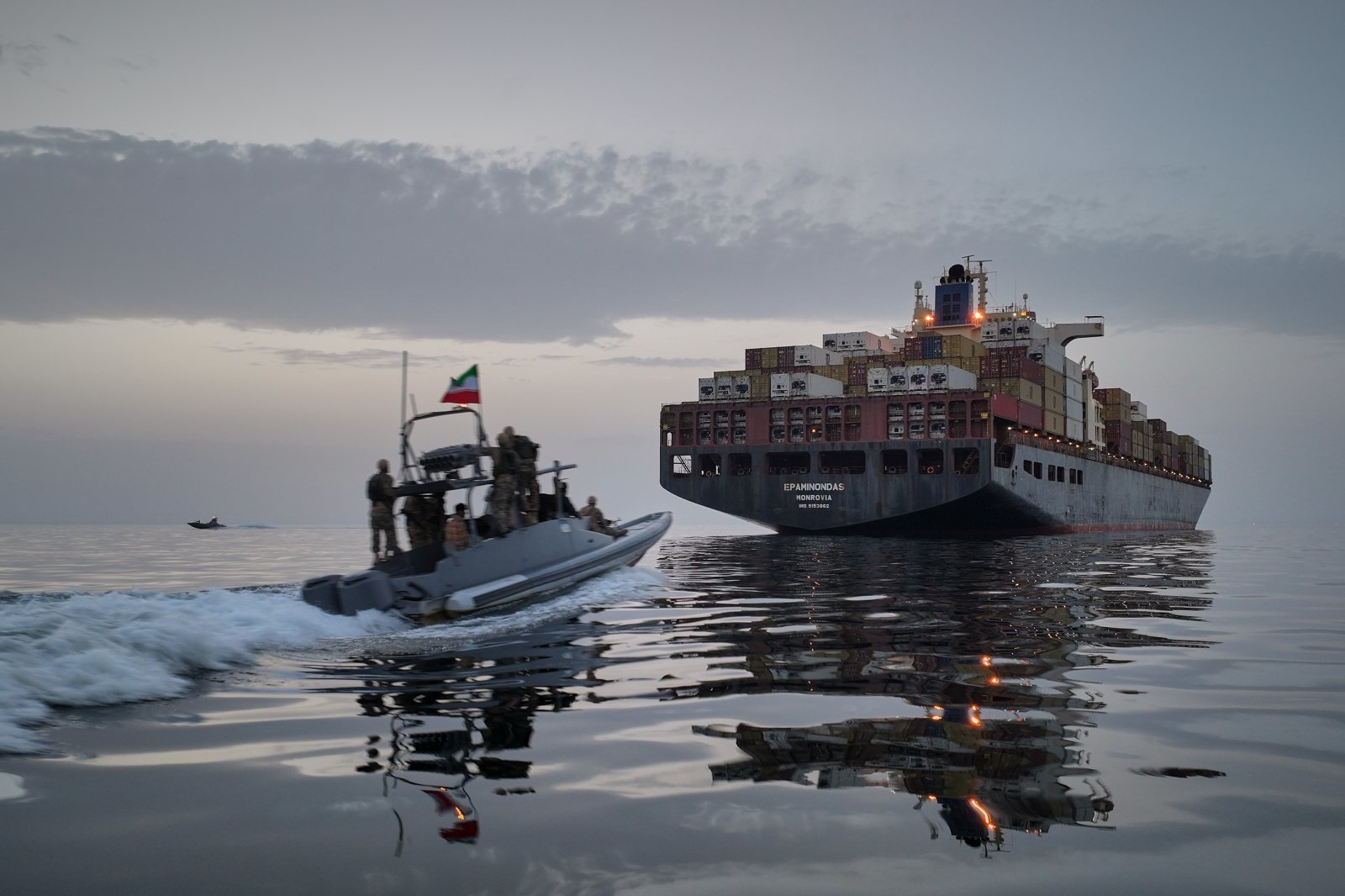
The commentary sees troubling similarities today. It says the rivalry between the United States and China resembles the earlier contest between Britain and Germany across trade, military power and security. It also points to current regional conflicts, including Russia’s invasion of Ukraine, the continuing limited war between Israel and Hamas despite a nominal ceasefire, and the US invasion of Iran. The common feature, it argues, is an effort by major or regional powers to expand their spheres of influence while disregarding international law.
The piece also warns that local conflicts can become triggers for wider wars when great-power competition prevents them from being contained. Before 1914, crises in Morocco, Austria-Hungary’s annexation of Bosnia and the Balkan Wars accumulated without resolving the underlying tensions. Before 1939, Japan’s invasion of Manchuria, Italy’s invasion of Ethiopia and Germany’s successive acts of expansion lowered the threshold for further challenges.
America, like Britain 100 years ago, has squandered its global standing through unnecessary wars, uncertain strategic priorities, and domestic social and economic decline.
Yale historian Odd Arne Westad compares China’s manufacturing rise and dependence on overseas resources with Germany’s position before the First World War. He also compares America’s tariffs and export controls with Britain’s turn away from free trade. Ray Dalio identifies heavy public debt, distributional conflict, populism, protectionism and the erosion of international institutions as parallels with the 1930s. He says the world is shifting from the stage before full conflict toward actual combat, resembling 1913-14 or 1938-39.
The commentary does not claim that a third world war will happen. It says uncertainty is no reason for complacency, recalling how Britain and France underestimated Adolf Hitler until 1938 while Germany rearmed and pursued territorial expansion.
We are in a transition from the stage before full-scale conflict to the stage of actual combat, corresponding roughly to 1913-1914 and 1938-1939.
About this summary
Originally published by Hankyoreh in Korean. Translated, summarized, and contextualized automatically by DistantNews, with a note on how the source frames the story. Not individually reviewed before publishing. How this works.
More Stories


From Our Blog

What Gets Lost (and Found) When News Is Translated

The Critical Role of Diaspora Media in Global News

What Travellers Should Know About Countries with Restricted Press

A Digital Nomad's Guide to Following Local News

How the Same Story Looks Different in Different Countries
