

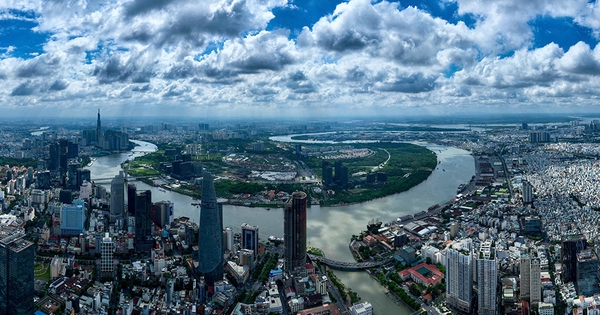
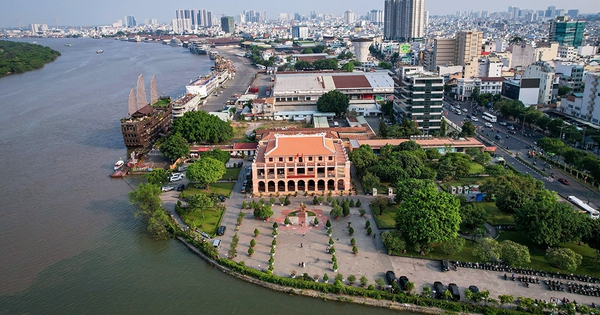
Ho Chi Minh City Aims to Build a Livable Metropolis
Translated from Vietnamese, summarized and contextualized by DistantNews.
At a glance
News
Named sources
New plan
- Ho Chi Minh City is set to merge with Ba Ria-Vung Tau and Binh Duong provinces in July 2025, creating a megacity with over 14 million people and an area of 6,770 km2.
- The strategic merger aims to create new development momentum and elevate the city's status, with a vision to become one of the world's top 100 livable cities by 2030 and a smart, green, international metropolis by 2045.
- The new entity will integrate planning, with Ho Chi Minh City's old area as the financial and high-tech hub, Binh Duong as the industrial hub, and Ba Ria-Vung Tau as the coastal economic and energy hub.
Ho Chi Minh City is on the cusp of a major transformation, set to merge with Ba Ria-Vung Tau and Binh Duong provinces in July 2025. This strategic consolidation will create a megacity spanning over 6,770 square kilometers with a population exceeding 14 million, aiming to become a globally competitive urban center.
This ambitious plan, driven by a directive from the Party and State, seeks to generate new development dynamics and elevate the city's standing. The vision is clear: to be recognized among the world's top 100 livable cities by 2030 and evolve into a smart, green, and innovative international metropolis by 2045. This transformation hinges on a unified planning approach, integrating the distinct economic strengths of the merged regions.
Under the new structure, the former Ho Chi Minh City will serve as the financial and high-tech capital, while the former Binh Duong province will be the industrial powerhouse. Ba Ria-Vung Tau province is designated as the coastal economic hub, encompassing international port gateways and energy industries. This division of roles aims to optimize resource utilization and foster synergistic growth across the megacity.
Significantly, Ho Chi Minh City will be the second locality in Vietnam, after Hanoi, to be permitted to integrate multiple planning schemes into a single master plan. The city is currently developing a comprehensive master plan for 2025-2050, with a century-long outlook, targeting approval by October 2026. This plan aims to position Ho Chi Minh City as a key economic, financial, commercial, logistics, educational, and innovation center for the region, enhancing its overall quality of life and international competitiveness.
DistantNews Editorial
Originally published by Thanh Niên in Vietnamese. Translated, summarized, and contextualized by our editorial team with added local perspective. Read our editorial standards.
More Stories
From Our Blog

What Gets Lost (and Found) When News Is Translated

The Critical Role of Diaspora Media in Global News

What Travellers Should Know About Countries with Restricted Press

A Digital Nomad's Guide to Following Local News

How the Same Story Looks Different in Different Countries
