

Ho Chi Minh City deploys AI-powered cameras for smart traffic management
Translated from Vietnamese, summarized and contextualized by DistantNews.
At a glance
News
Sources not specified
Context piece
- Ho Chi Minh City operates a smart traffic system with approximately 2,000 cameras to monitor traffic flow, detect incidents, and manage congestion.
- The system uses AI to analyze data, automatically adjust traffic signal timings, and alert authorities to incidents, improving traffic flow and response times.
- This intelligent system helps the city manage traffic more efficiently by providing real-time data for signal adjustments, public information, and emergency response coordination.
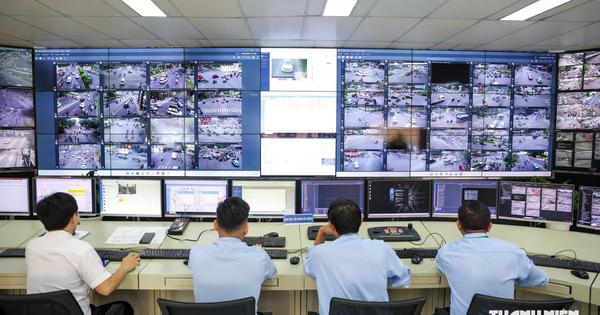
Ho Chi Minh City is deploying a sophisticated smart traffic management system, utilizing around 2,000 cameras to enhance urban mobility. This network goes beyond simple observation, integrating artificial intelligence to analyze traffic flow, detect incidents, and automatically adjust signal timings. Recently, the system proved its worth when a collision on Truong Son street caused a traffic jam. AI-powered cameras detected the slowdown, triggering an alert at the control center. Simultaneously, the system calculated and extended green light durations at nearby intersections to ease congestion. This allowed traffic police and relevant units to quickly dispatch personnel to the scene. Information about the congested area was also disseminated through electronic displays, traffic apps, and radio channels, enabling drivers to choose alternative routes.
Do Ngoc Hai, head of the Traffic Works Maintenance and Operation Department at the Ho Chi Minh City Department of Transport, explained that the city is implementing a "networked system utilizing Digital Twins technology." This allows traffic signals to dynamically adapt to real-time traffic volumes, moving away from fixed-cycle timings. For instance, green light phases can be extended on routes experiencing high traffic density. This adaptive system is currently operational on major roads like Pham Van Dong, Mai Chi Tho, and Vo Van Kiet.
Data from AI helps the traffic signal system automatically adjust flexibly according to the volume of vehicles on the road, and the duration of green lights can be extended in directions with heavy traffic.
Doan Van Tan, director of the Urban Traffic Management and Operation Center, detailed the system's components. It includes 1,251 cameras for 24/7 traffic monitoring, 653 specialized cameras for traffic volume counting, 50 cameras for automatic incident detection in tunnels, 31 AI cameras for enforcing traffic violations, and 30 speed measurement devices at key locations. Data from these cameras and sensors are fed into the central system to inform traffic signal adjustments and the development of "green wave" scenarios on major arteries.
When cameras and sensors in the traffic monitoring system detect high traffic volume, the data is automatically transmitted to the central system for calculation.
DistantNews Editorial
Originally published by Thanh Niên in Vietnamese. Translated, summarized, and contextualized by our editorial team with added local perspective. Read our editorial standards.
More Stories

From Our Blog

What Gets Lost (and Found) When News Is Translated

The Critical Role of Diaspora Media in Global News

What Travellers Should Know About Countries with Restricted Press

A Digital Nomad's Guide to Following Local News

How the Same Story Looks Different in Different Countries
