

Ho Chi Minh City Marks 50 Years Since Renaming, Highlighting Institutional Breakthroughs and Development
Translated from Vietnamese, summarized and contextualized by DistantNews.
At a glance
News
Sources not specified
New plan
- Ho Chi Minh City celebrated 50 years since being renamed after President Ho Chi Minh, marking a significant historical decision made by the National Assembly in 1976.
- The renaming was based on the city's people's deep affection for President Ho Chi Minh and the city's revolutionary contributions.
- Since 1975, the city has undergone significant development, with its GRDP growing substantially and per capita income rising from approximately $700 to nearly $5,000 by 2010.
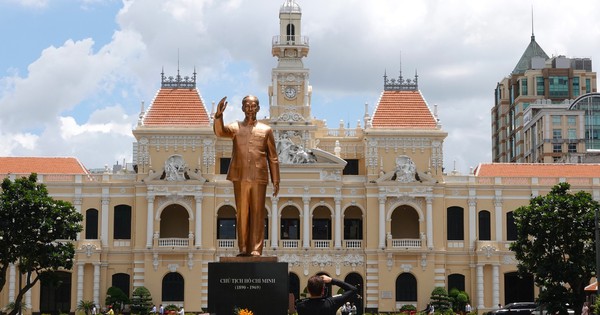
Ho Chi Minh City marked its 50th anniversary of bearing the name of President Ho Chi Minh with a scientific conference on June 25. The event, organized by the city's People's Committee, focused on the historical significance, development aspirations, and institutional breakthroughs achieved over the past five decades.
the people of Saigon-Gia Dinh always showed boundless affection for President Ho Chi Minh and earnestly wished for the city to bear his name.
During the conference, PGS-TS Ha Minh Hong, Vice President of the Ho Chi Minh City Historical Science Association, recalled the National Assembly's historic decision in 1976 to rename Saigon-Gia Dinh to Ho Chi Minh City. This decision was rooted in two key factors: the profound respect and affection the city's residents held for President Ho Chi Minh, and the city's own history of unwavering resilience and significant achievements in the revolutionary struggle.
The idea to name Saigon after Ho Chi Minh actually predates the official decision by 30 years. In 1946, physician Tran Huu Nghiep proposed the name change to honor President Ho Chi Minh's role as a pioneer of the national liberation movement. This proposal was met with widespread support from attendees at a meeting of Southern Vietnamese individuals in Hanoi, who signed a petition to the National Assembly and Government.
in the long and arduous revolutionary struggle, Saigon-Gia Dinh continuously promoted the nation's indomitable spirit and achieved many outstanding victories, deserving the honor of bearing the great President Ho Chi Minh's name.
Experts at the conference also highlighted the city's comprehensive transformation since 1975. Master Nguyen Van Giap from the Ho Chi Minh City Cadre Academy noted the city's consistently high economic growth rates. During the Doi Moi period, the Gross Regional Domestic Product (GRDP) increased significantly, with average annual growth rates of 7.82% between 1986-1990 and 12.62% between 1991-1995. The city maintained double-digit growth from 1996 to 2010, with per capita GRDP rising from around $700 to nearly $5,000. Economic growth continued at an average of 6.86% annually from 2011 to 2020.
to honor President Ho Chi Minh's merits, the city of Saigon should be renamed Ho Chi Minh City.
DistantNews Editorial
Originally published by Thanh Niên in Vietnamese. Translated, summarized, and contextualized by our editorial team with added local perspective. Read our editorial standards.
More Stories


From Our Blog

What Gets Lost (and Found) When News Is Translated

The Critical Role of Diaspora Media in Global News

What Travellers Should Know About Countries with Restricted Press

A Digital Nomad's Guide to Following Local News

How the Same Story Looks Different in Different Countries
