

Hoành Sơn Pass: Vietnam's Northern Gateway to the Imperial Capital
Translated from Vietnamese, summarized and contextualized by DistantNews.
At a glance
In-depth
Named sources
Context piece
- Hoành Sơn Quan, a historical pass in Vietnam, served as a crucial northern gateway to the imperial capital of Huế during the Nguyễn Dynasty.
- Emperor Minh Mạng ordered its construction in 1833 to strengthen defenses and control movement into the capital.
- The pass, built with local stone and a unique Nguyễn-era brick, was completed in just one month and served security and tax collection purposes.
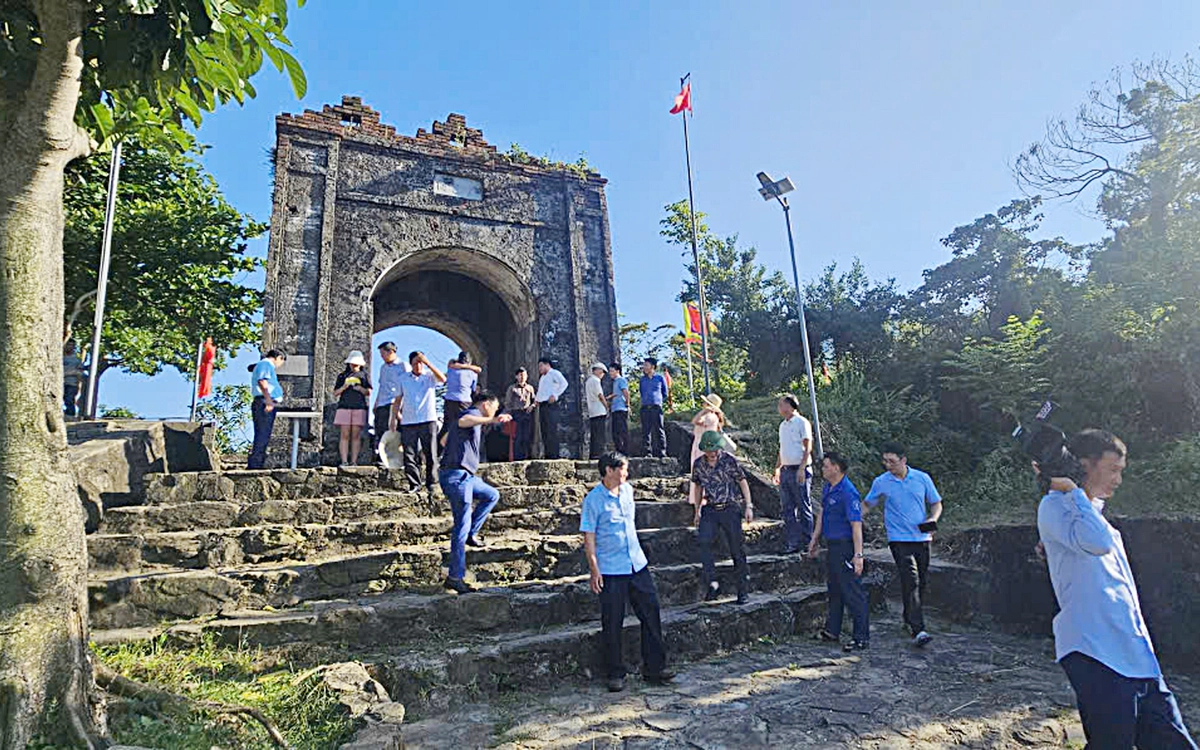
Hoành Sơn Quan, a historical pass in Vietnam, served as a crucial northern gateway to the imperial capital of Huế during the Nguyễn Dynasty. If Hải Vân Quan guarded the capital from the south, Hoành Sơn Quan acted as a steadfast left arm protecting the northern entrance. Following the unification of the country in 1802, the Ngang Pass, where Hoành Sơn Quan is located, transitioned from a dividing line to an administrative and military stronghold. Emperor Minh Mạng, known for his administrative and military reforms, recognized the strategic importance of the area. In 1833, he issued a decree stating, "I believe Quảng Bình to the south is close to the capital, and Hoành Sơn to the north is a crucial point; fortifications cannot but be made strong." This led to the establishment of a formal pass on the summit of Ngang Pass as part of a long-range defense strategy. Historical records detail the mobilization of 300 soldiers from Quảng Bình and Hà Tĩnh provinces, under the command of Đoàn Văn Phú, to construct the fortifications. Emperor Minh Mạng emphasized that the pass was primarily for "questioning suspicious individuals" and serving as a forward defense post, urging efficiency and cost-effectiveness in its construction. The project was later overseen by Trần Văn Tuân. The Đại Nam thực lục records the pass's dimensions: a stone wall 11.8 truong long and 5 thước high, with a single front gate and side walls extending 36 and 39 truong, respectively, built according to the mountain's terrain. Remarkably, this entire structure was completed in just one month. The pass's primary purpose, as clarified by Minh Mạng, was security control along the main route to the capital, managing travelers, collecting taxes, and preventing unrest from the north from reaching the royal court. Upon completion, a suất đội and 20 soldiers were stationed there, with monthly rotations. Architecturally, Hoành Sơn Quan exemplifies Nguyễn Dynasty military construction techniques, utilizing local stone and characteristic Nguyễn-era bricks, with a unique binding mortar.
Nay Nam, Bắc một nhà, bốn phương vô sự, trong có các cửa ải Quảng Bình, Vũ Thắng là nơi hiểm yếu đủ cậy rồi. Còn cửa ải Hoành Sơn này lập nên chỉ để xét hỏi quân gian, cũng là một đồn phân phòng đó thôi. Ngươi nên xét kỹ hình thế, trù tính việc làm, cốt sao đỡ tốn
DistantNews Editorial
Originally published by Tuổi Trẻ in Vietnamese. Translated, summarized, and contextualized by our editorial team with added local perspective. Read our editorial standards.
More Stories


From Our Blog

What Gets Lost (and Found) When News Is Translated

The Critical Role of Diaspora Media in Global News

What Travellers Should Know About Countries with Restricted Press

A Digital Nomad's Guide to Following Local News

How the Same Story Looks Different in Different Countries
