


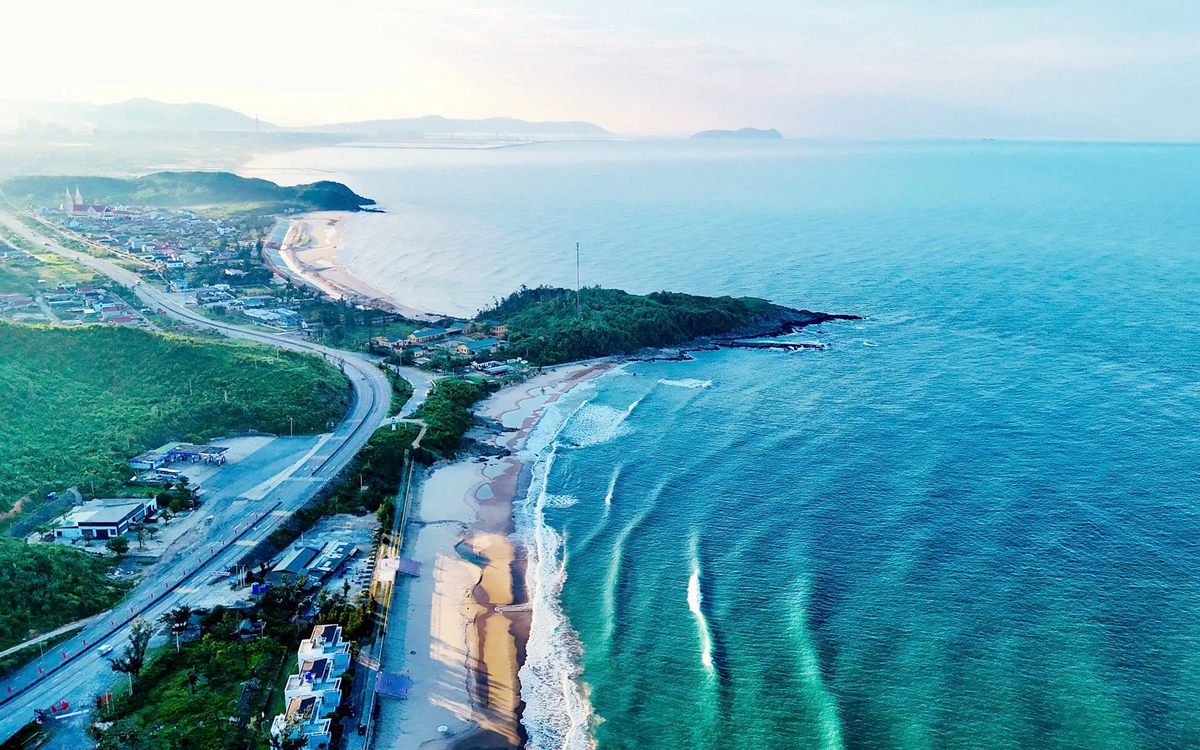
Hoành Sơn Pass: Vietnam's Poetic and Spiritual Crossroads
Translated from Vietnamese, summarized and contextualized by DistantNews.
At a glance
In-depth
Sources not specified
Context piece
- The Hoành Sơn Pass, a historically significant location on Vietnam's North-South route, is rich in poetry and spiritual significance.
- The area is associated with the legend of Thánh Mẫu Liễu Hạnh, a revered figure in Vietnamese folklore who is said to have opened a roadside stall there.
- The pass has inspired numerous poems throughout history, with a stone stele bearing a poem by Emperor Thiệu Trị discovered during road expansion.
The Hoành Sơn Pass, a crucial strategic point on Vietnam's historic North-South "Thiên Lý" route, is more than just a geographical landmark; it's a place deeply embedded in Vietnamese consciousness, evoking a sense of awe between the clouds and the sea.
Legend tells of Thánh Mẫu Liễu Hạnh, one of Vietnam's "Four Immortals," who descended to earth multiple times. During one such visit to the remote Hoành Sơn region, she is said to have opened a roadside stall, offering not only refreshments but also aid to locals by combating epidemics, warding off wild animals, and teaching agriculture and weaving. Her three-year presence is believed to have transformed the area from a perilous "lam chướng" (malarial swamp) into a peaceful and prosperous settlement for travelers and pioneers.
Today, at the foot of the pass in Quảng Trị province, stands the Hoành Sơn Linh Từ temple, dedicated to Thánh Mẫu Liễu Hạnh. Described as "somber, ancient... with a touch of the mysterious and divine," the temple serves as a spiritual anchor for travelers facing the arduous climb over the pass. It also reflects the historical interplay between state power and folk beliefs in shaping the region's heritage.
The pass is also renowned for its "density of poetry." In 2000, road expansion work unearthed a stone stele inscribed with a poem by Emperor Thiệu Trị, written during his 1842 Northern journey. The emperor, inspired by the pass's beauty and strategic importance, commemorated it in verse, noting its role in dividing the northern and southern realms and its historical significance. Thiệu Trị is one of countless scholars and poets who have been moved to write about the Hoành Sơn Pass, making it a uniquely poetic location in Vietnam.
Hoành Sơn một dải núi ngăn đôi/ Uốn lượn nhấp nhô cạnh biển khơi/ Đồn trấn Bắc Nam chia dải cõi/ Ải nghiêm kim cổ trải bao đời…
DistantNews Editorial
Originally published by Tuổi Trẻ in Vietnamese. Translated, summarized, and contextualized by our editorial team with added local perspective. Read our editorial standards.
More Stories



From Our Blog

What Gets Lost (and Found) When News Is Translated

The Critical Role of Diaspora Media in Global News

What Travellers Should Know About Countries with Restricted Press

A Digital Nomad's Guide to Following Local News

How the Same Story Looks Different in Different Countries
