


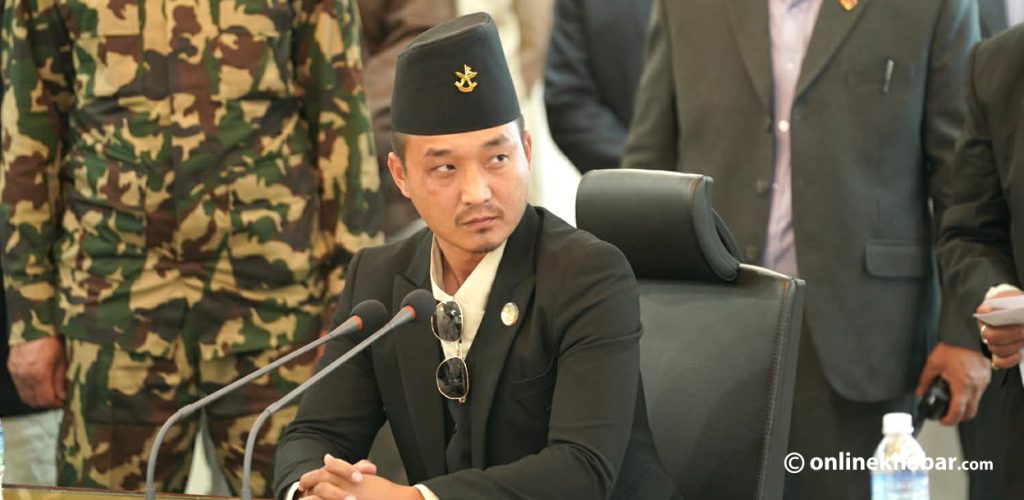
Home Minister Sudan Gurung to hold direct interaction with citizens
Summarized and contextualized by DistantNews.
At a glance
News
Official statement
New plan
- Nepal's Home Minister Sudan Gurung will engage directly with citizens in a new program launched by the Rastriya Swatantra Party (RSP).
- The 'Citizen, Policy and Leadership' program aims to bridge the gap between public concerns and government policy formulation.
- Citizens will have the opportunity to voice grievances and suggestions, which will then be discussed by the minister, lawmakers, and party leadership.
Nepal's Home Minister Sudan Gurung is set to participate in a new initiative aimed at fostering direct engagement between citizens and policymakers. The 'Citizen, Policy and Leadership' program, launched by the Rastriya Swatantra Party (RSP), will provide a platform for the public to interact directly with the Home Minister at the party's central office.
The program is structured in two phases. Initially, citizens will have the chance to directly present their grievances, concerns, suggestions, and expectations to Minister Gurung. This initial phase is designed to capture the immediate needs and sentiments of the populace. Following this, the second phase will involve in-depth discussions where the minister, alongside RSP lawmakers and the party's central leadership, will deliberate on the issues raised by citizens. These discussions will also encompass current affairs and policy-related matters.
The RSP stated that the core objective of this program is to establish a clear and direct link between the voices of citizens and the formulation and effective implementation of both government and party policies. By creating this channel, the party aims to ensure that public input is a tangible part of the policy-making process. The initiative is intended to empower citizens by providing them with a direct avenue to engage with those in leadership positions on issues that significantly affect their lives.
This direct interaction model signifies a commitment by the RSP to a more participatory form of governance, where the concerns and suggestions of ordinary citizens are not only heard but actively considered in shaping policy. The program's success could set a precedent for greater transparency and responsiveness in Nepal's political landscape.
DistantNews Editorial
Originally published by OnlineKhabar English. Summarized and contextualized by our editorial team with added local perspective. Read our editorial standards.
More Stories


From Our Blog

What Gets Lost (and Found) When News Is Translated

The Critical Role of Diaspora Media in Global News

What Travellers Should Know About Countries with Restricted Press

A Digital Nomad's Guide to Following Local News

How the Same Story Looks Different in Different Countries
