

Honduran Judge Dismisses Corruption Charges Against Former President Hernández
Translated from Spanish and summarized by DistantNews. Read the original for the full story.
At a glance
News
Official statement
Outcome reported
- A Honduran judge dismissed corruption charges against former President Juan Orlando Hernández over the alleged diversion of $2 million in public funds.
- The judge said Hernández did not authorize or administer the funds and had no increase in personal assets, leading to a definitive dismissal of the case.
- Hernández, who was pardoned in the United States by President Donald Trump after a drug-trafficking conviction, said the ruling closed a chapter of political persecution.
A Honduran court dismissed corruption charges against former President Juan Orlando Hernández, clearing the way for his release, the judiciary said.
Did not authorize
Hernández, 57, was accused by prosecutors of taking part in the diversion of $2 million in public funds to finance his 2013 presidential campaign. The money was disbursed by the government while Hernández served as president of Congress.
Administer
Judge Carlos Silva, a judicial spokesman, said Hernández “did not authorize” or “administer” the funds. Silva added that the former president had experienced “no increase in personal assets,” and said the court had therefore issued a definitive dismissal. Hernández was due to receive his release document the same day.
No increase in personal assets
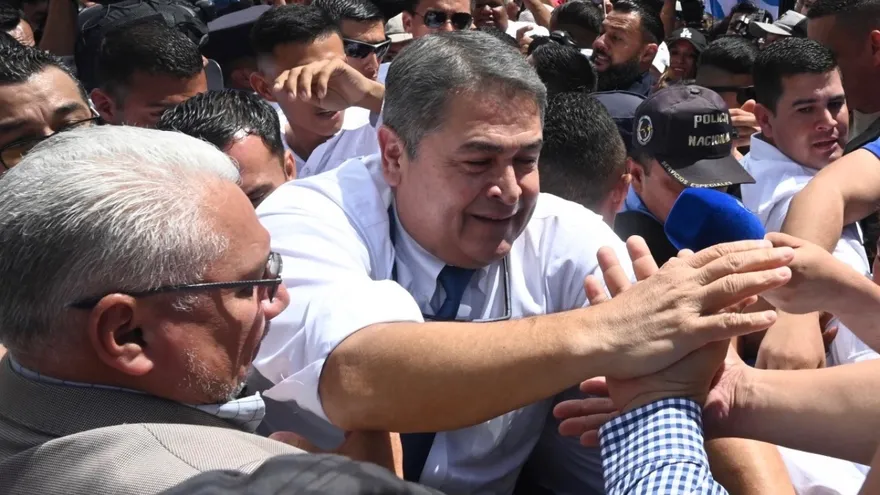
Hernández governed Honduras from 2014 to 2022. He had already been pardoned in the United States by President Donald Trump after receiving a conviction for drug trafficking. Speaking to reporters outside the court in Tegucigalpa, Hernández said: “Today this chapter of political persecution closes. The one in the United States closed, and this one is closing.”
Today this chapter of political persecution closes. The one in the United States closed, and this one is closing
About this summary
Originally published by TVN Panamá in Spanish. Translated, summarized, and contextualized automatically by DistantNews, with a note on how the source frames the story. Not individually reviewed before publishing. How this works.
More Stories


From Our Blog

What Gets Lost (and Found) When News Is Translated

The Critical Role of Diaspora Media in Global News

What Travellers Should Know About Countries with Restricted Press

A Digital Nomad's Guide to Following Local News

How the Same Story Looks Different in Different Countries
