


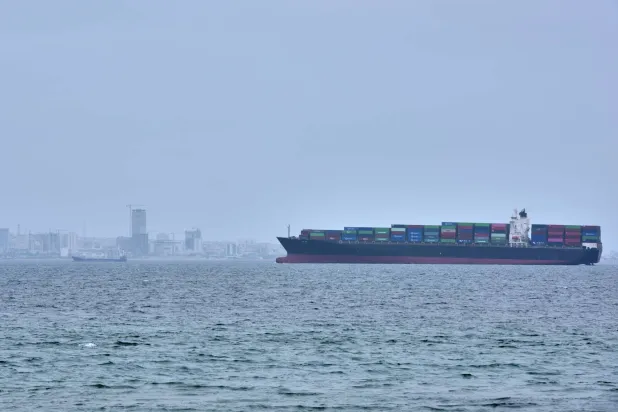
Hormuz Closure Triggers Global Food Security Shock: IFAD Warns
Translated from English, summarized and contextualized by DistantNews.
TLDR
- The closure of the Strait of Hormuz has triggered a global food security shock, disrupting fertilizer and fuel supplies and increasing costs, the International Fund for Agricultural Development (IFAD) reported.
- IFAD Vice President Gerardine Mukeshimana warned that these disruptions are threatening agricultural production, especially for small-scale producers and rural populations, leading to local food crises.
- The timing is critical as farmers globally enter planting seasons, and input shortages risk lower yields and reduced food availability, impacting vulnerable populations disproportionately.
The International Fund for Agricultural Development (IFAD) has issued a grave warning regarding the escalating global food security crisis, directly linking it to the disruptions caused by the closure of the Strait of Hormuz. Vice President Gerardine Mukeshimana articulated that the repercussions of the conflict in the region have unleashed a "global food security shock" that is already manifesting as local food crises, particularly impacting small-scale farmers and rural communities who form the backbone of global food production.
The ripple effects of the conflict have triggered a global food security shock that is already translating into local food crises, particularly for small-scale producers and rural populations. While it is too early to quantify a precise global ‘food gap,’ nor foresee all possible consequences, we do know that many of the women and men who produce our food are already under pressure.
IFAD highlights the critical timing of these disruptions. Farmers across nearly half the world are entering crucial planting seasons between March and June. Any shortfall in essential inputs like fertilizers and fuel, coupled with soaring costs, at this juncture will inevitably lead to reduced harvests and diminished food availability in the coming months. This situation places immense pressure on those least equipped to absorb such shocks, exacerbating existing vulnerabilities and potentially leading to widespread food insecurity.
Between March and June, farmers across nearly half the world enter critical planting seasons, meaning that input shortfalls and price spikes today risk lower harvests and tighter food availability in the months ahead. As past crises have shown, these shocks do not originate at the farm level, but they ultimately land there, among those with the least capacity to absorb them.
The Vice President's statement, echoed in a position paper by IFAD President Alvaro Lario titled "Global shock, local crisis," details how the abrupt halt in shipping through vital waterways like the Strait of Hormuz and Bab el-Mandeb has severely impacted the supply chain for agricultural inputs. While precise figures are still being assessed, evidence points to significant shipment delays, curtailed exports, and cascading market effects. These include reduced planting, distorted farm-gate prices, and declining rural incomes, painting a grim picture of the challenges facing global agriculture and the urgent need for intervention to protect the world's most vulnerable populations.
The abrupt halt and severe disruption of shipping through the Strait of Hormuz and Bab el-Mandeb has had immediate repercussions for fertilizers, fuel and other agricultural inputs. While exact volume losses over the past 40 days vary by commodity and route, evidence from IFAD investments points to significant shipment delays, curtailed exports and cascading market effects, from reduced planting to distorted farm-gate prices and declining rural incomes, as gathered in detail by the position paper, ‘Global shock, local crisis,’ published by Alvaro Lario, President of IFAD this week.
DistantNews Editorial
Originally published by Asharq Al-Awsat in English. Translated, summarized, and contextualized by our editorial team with added local perspective. Read our editorial standards.
More Stories


From Our Blog

What Gets Lost (and Found) When News Is Translated

The Critical Role of Diaspora Media in Global News

What Travellers Should Know About Countries with Restricted Press

A Digital Nomad's Guide to Following Local News

How the Same Story Looks Different in Different Countries
