


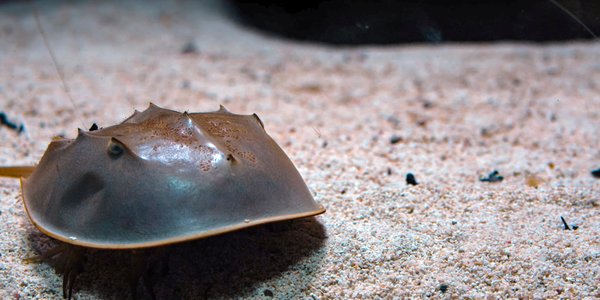
Horseshoe Crabs: Ancient 'Living Fossils' With Life-Saving Blue Blood
Translated from Polish, summarized and contextualized by DistantNews.
At a glance
News
Sources not specified
Context piece
- Horseshoe crabs, often called "living fossils," have existed for about 445 million years with minimal changes to their appearance.
- Their unique blue blood, rich in copper, is crucial for biomedical testing of vaccines for bacterial toxins.
- Despite surviving mass extinctions, horseshoe crabs now face threats from human activities like rising sea levels and coastal development.
Known as "living fossils," horseshoe crabs have roamed the Earth for an astonishing 445 million years, their ancient appearance changing only slightly over millennia. Their distinctive armor resembles a prehistoric helmet, a feature that gives them their Japanese name, "helmet crab." Despite this moniker, they are not crustaceans but arthropods, more closely related to scorpions.
These creatures possess a unique biology, featuring nine eyes distributed across their bodies and six pairs of legs. Five pairs are used for locomotion, while the sixth pair aids in processing food, such as mollusks and worms, directing it to the mouth. Their long, pointed tail, called a telson, is not a weapon but a tool to help them right themselves if they flip over.
Perhaps the most remarkable aspect of the horseshoe crab is its blue blood. Unlike human red blood, it contains copper-based compounds. This unique characteristic is vital for modern medicine. The biomedical industry uses horseshoe crab blood to test for endotoxins, harmful substances that can contaminate vaccines and injectable drugs, ensuring their safety.
Horseshoe crabs inhabit the coasts of North America, from Maine to Mexico. A related species, the mangrove horseshoe crab, lives in India, Bangladesh, and Southeast Asia. Like sea turtles, they lay their eggs in sandy beaches, typically during high tide and full moons. However, a significant portion of these eggs serve as a food source for coastal birds.
These resilient animals have survived multiple mass extinction events. Today, however, they face new challenges posed by human activities. Rising sea levels and coastal development are shrinking their available habitats, raising concerns about their future survival.
DistantNews Editorial
Originally published by Rzeczpospolita in Polish. Translated, summarized, and contextualized by our editorial team with added local perspective. Read our editorial standards.
More Stories



From Our Blog

What Gets Lost (and Found) When News Is Translated

The Critical Role of Diaspora Media in Global News

What Travellers Should Know About Countries with Restricted Press

A Digital Nomad's Guide to Following Local News

How the Same Story Looks Different in Different Countries
