


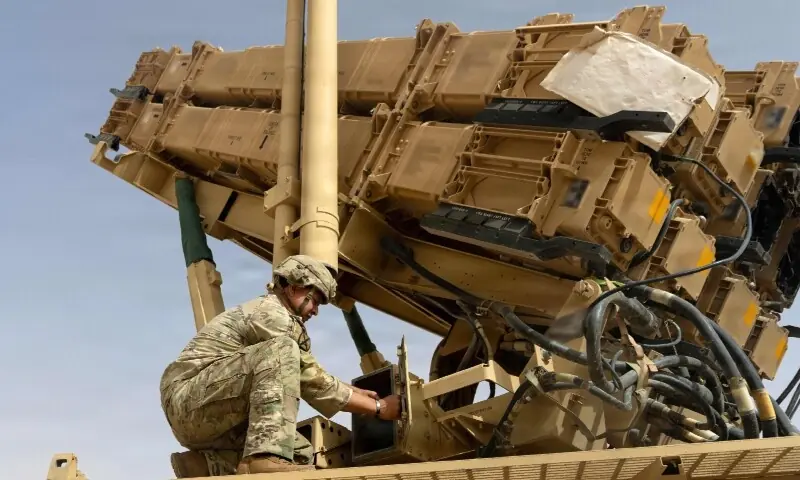
Hostilities flare in Gulf as US-Iran talks at a stalemate
Summarized and contextualized by DistantNews.
At a glance
News
Named sources
Ongoing story
- Gulf hostilities escalated with a drone and missile attack on Kuwait's airport, causing injuries and flight suspensions.
- The U.S. military conducted strikes near the Strait of Hormuz in response.
- Diplomatic efforts between the U.S. and Iran show little sign of progress amid the heightened tensions.
Tensions in the Persian Gulf flared dramatically this week as a coordinated drone and missile attack damaged Kuwait's international airport, leading to injuries and flight disruptions. The incident marks a significant escalation in regional hostilities.
In response to the attack on Kuwait, the U.S. military carried out strikes near the vital Strait of Hormuz. This action underscores the volatile security situation in the region, where maritime traffic, particularly oil tankers, is critical to the global economy. The exchange of hostilities sent oil prices up by more than 1 percent, reflecting market concerns over potential supply disruptions.
The renewed conflict occurs against a backdrop of a fragile ceasefire and a largely closed Strait of Hormuz. This escalation follows initial U.S. and Israeli strikes on Iran over three months ago. Meanwhile, diplomatic channels between Washington and Tehran appear to be yielding little progress, leaving the region in a precarious state.
Kuwait International Airport suspended and diverted flights until further notice after the Iranian drone and missile attack targeted its main building. State news agency KUNA reported the aviation authorities' decision. The ongoing stalemate in diplomacy, coupled with the recent military actions, paints a grim picture for regional stability and international relations.
Kuwait reports injuries, suspends flights after drone and missile attack, state news agency says.
DistantNews Editorial
Originally published by Dawn. Summarized and contextualized by our editorial team with added local perspective. Read our editorial standards.
More Stories

From Our Blog

What Gets Lost (and Found) When News Is Translated

The Critical Role of Diaspora Media in Global News

What Travellers Should Know About Countries with Restricted Press

A Digital Nomad's Guide to Following Local News

How the Same Story Looks Different in Different Countries
