


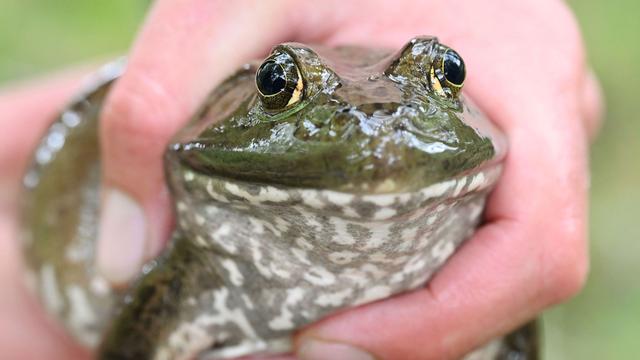
Hot Summer Fuels Spread of Invasive Bullfrog in Germany
Translated from German, summarized and contextualized by DistantNews.
At a glance
News
Sources not specified
Context piece
- Germany's hot summer may be encouraging the spread of the American bullfrog.
- This invasive species poses a threat to native ecosystems.
- Scientists are monitoring the frog's population and its impact on local wildlife.
The unusually hot summer experienced in Germany may be contributing to the increased spread of the American bullfrog, an invasive species posing a significant threat to native ecosystems. Scientists are closely monitoring the amphibian's population growth and its potential impact on local biodiversity.
The American bullfrog, originally from North America, has established populations in parts of Europe, including Germany. Its large size and voracious appetite allow it to outcompete native frog species for food and habitat. It also preys on insects, small mammals, birds, and other amphibians, disrupting the delicate balance of local food webs.
Warmer temperatures, like those experienced during recent heatwaves, can accelerate the bullfrog's reproductive cycle and increase its survival rates, particularly for tadpoles. Researchers are investigating the extent of its current distribution and the ecological consequences of its proliferation. Efforts to control or eradicate invasive species like the bullfrog are often challenging and require sustained monitoring and intervention strategies.
DistantNews Editorial
Originally published by Die Zeit in German. Translated, summarized, and contextualized by our editorial team with added local perspective. Read our editorial standards.
More Stories



From Our Blog

What Gets Lost (and Found) When News Is Translated

How the Same Story Looks Different in Different Countries

The Critical Role of Diaspora Media in Global News

What Travellers Should Know About Countries with Restricted Press

A Digital Nomad's Guide to Following Local News
