


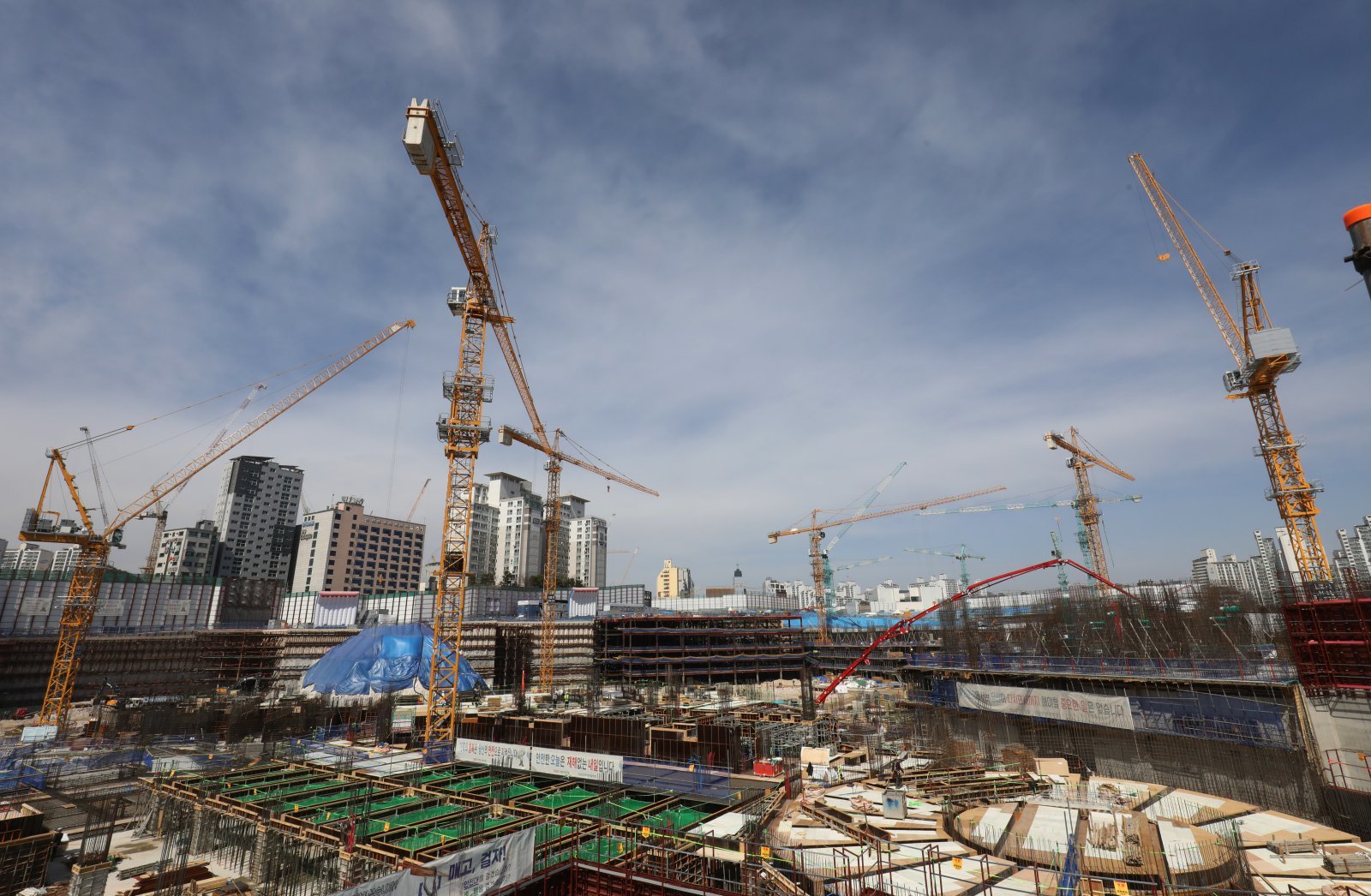
Housing supply starts fall 16% in Seoul despite government push
Translated from Korean, summarized and contextualized by DistantNews.
At a glance
News
Sources not specified
Context piece
- South Korea's government emphasizes increasing housing supply to stabilize prices, but actual construction starts lag significantly behind targets.
- From January to April, only 14% of the annual housing construction goal for the Seoul metropolitan area was met, with Seoul itself seeing a 16% year-on-year decrease in new constructions.
- Experts suggest deregulation is needed to boost private sector involvement, as public housing projects face delays and local government disputes over urban development sites.
Despite government calls to "just build housing" to curb soaring prices, South Korea's actual housing construction starts are falling short of official targets. Between January and April, the Seoul metropolitan area commenced construction on just 37,170 units, a mere 14% of the annual goal. This pace is less than half the monthly average needed to reach the target of 269,000 units.
Seoul is experiencing a decline, with only 7,023 units started in the first four months of the year, a 16% drop from the same period last year. While the government assures that public housing projects are proceeding, even these face potential hurdles. The Korea Land and Housing Corporation (LH), a key implementer of public housing, has been without a president for eight months, and reforms planned under a previous supply measure remain unannounced.
We need to just build housing.
Urban development projects, a cornerstone of recent supply plans, are also encountering difficulties. The Seoul mayor disagrees with the central government on the number of units that can be built at a key site in Yongsan, and the mayor of Gwacheon has raised concerns about infrastructure strain from another proposed development. These local disputes highlight the challenges in securing suitable land for new housing.
To accelerate supply, experts argue that private sector participation must be revitalized. A significant portion of the government's construction targets relies on private developers, including affordable rental housing and private apartments on public land. "Government real estate policies sometimes conflict with the goal of expanding housing supply," said Kim Deok-rye, head of housing policy at the Housing & Urban Research Institute. "Regulations that can be eased to activate private supply should be loosened."
There are cases where government real estate policies conflict with the goal of expanding housing supply. Regulations that can be eased to activate private supply should be loosened.
DistantNews Editorial
Originally published by Dong-A Ilbo in Korean. Translated, summarized, and contextualized by our editorial team with added local perspective. Read our editorial standards.
More Stories


From Our Blog

What Gets Lost (and Found) When News Is Translated

The Critical Role of Diaspora Media in Global News

What Travellers Should Know About Countries with Restricted Press

A Digital Nomad's Guide to Following Local News

How the Same Story Looks Different in Different Countries
