


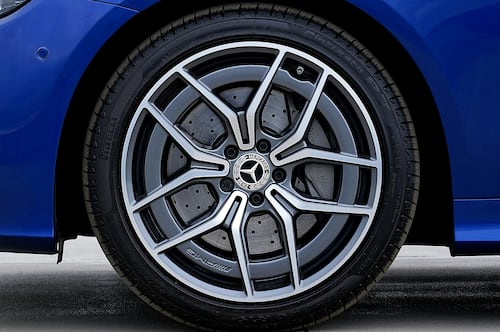
How often should you rotate your car tires for optimal performance and fuel savings?
Translated from Spanish, summarized and contextualized by DistantNews.
At a glance
News
Named sources
Context piece
- Rotating tires is crucial for vehicle maintenance, extending their lifespan and improving performance.
- Manufacturers like Michelin recommend rotation every 8,000 to 10,000 kilometers, or every six months.
- The process involves moving tires to different positions based on the vehicle's drive type (front-wheel, rear-wheel, or all-wheel drive) to ensure even wear.
Proper tire maintenance, including regular rotation, is essential for maximizing vehicle performance and longevity. Tires are a critical component, and beyond ensuring correct inflation, their position on the vehicle needs periodic adjustment.
According to Michelin, tires on the drive axle typically wear out faster due to the engine's power transmission. However, factors like driving on rough terrain, improper alignment, and sudden braking also contribute to uneven wear. To counteract this, the French manufacturer suggests rotating tires every 8,000 to 10,000 kilometers. For those aiming to optimize their vehicle's performance, performing this rotation every six months is an option.
The tires on the drive axle are the ones that wear out the fastest due to the transmission and power of the engine.
Kia notes that electric and all-wheel-drive vehicles experience tire wear differently, emphasizing the need for periodic checks and proactive rotation if necessary. A key benefit of tire rotation is improved fuel efficiency.
The rotation process varies depending on the vehicle's traction type. For front-wheel-drive cars, front tires move to the rear in the same direction, while rear tires move to the front in a crossed pattern. Rear-wheel-drive vehicles follow a similar crossed pattern for the front tires moving to the rear. In all-wheel-drive vehicles, the rotation is also crossed: the front right tire goes to the rear left, and the front left to the rear right. For directional tires, rear tires move forward, and front tires move backward. If tires are non-directional and of different rim sizes, they are swapped side-to-side.
For electric cars or those with all-wheel drive, wear occurs differently. Therefore, it is appropriate to check the tires periodically and advance the rotation if necessary.
DistantNews Editorial
Originally published by El Universal in Spanish. Translated, summarized, and contextualized by our editorial team with added local perspective. Read our editorial standards.
More Stories



From Our Blog

What Press Freedom Means for the News You Read

What Gets Lost (and Found) When News Is Translated

The Critical Role of Diaspora Media in Global News

What Travellers Should Know About Countries with Restricted Press

A Digital Nomad's Guide to Following Local News
