


Trinidad and Tobago Signs Data Center Deals with U.S. Firms Amid Environmental Worries
Translated from Spanish, summarized and contextualized by DistantNews.
At a glance
News
Named sources
New plan
- Trinidad and Tobago has signed agreements with U.S. companies to develop large-scale data centers, marking the first such deals in the Caribbean.
- Concerns have been raised by activists regarding the potential environmental impact, particularly the high energy and water consumption of these facilities.
- The agreements are with Hummingbird AI Holdings for a 150 MW AI and data center infrastructure proposal and Ernst and Young LLP for a 300 MW data center.
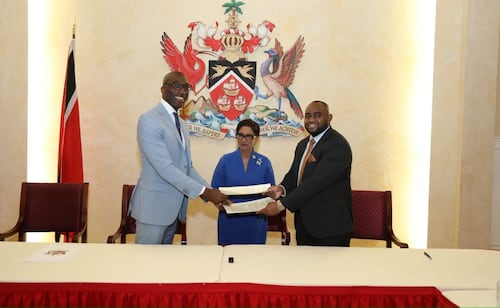
Trinidad and Tobago is paving the way for U.S. companies to establish major data centers through newly signed agreements, a move that marks the first of its kind in the Caribbean. The Memoranda of Understanding were signed with Florida-based Hummingbird AI Holdings and New York-based Ernst and Young LLP, according to a statement from the office of Trinidad and Tobago's Prime Minister Kamla Persad-Bissessar.
The agreement with Ernst and Young LLP outlines a framework for developing large-scale data centers, with plans to partner with third parties on a 300-megawatt facility. Separately, the deal with Hummingbird AI Holdings establishes preliminary cooperation for a proposed 150 MW AI and data center infrastructure installation. Data centers are measured in megawatts (MW) to indicate their power capacity.
However, the initiative has sparked environmental concerns among activists. Dr. Wayne Kublalsingh, a prominent social activist, expressed worries about the significant energy and water demands of these data centers. He argued that the government is promoting projects that may not represent true development. Trinidad and Tobago already faces chronic water shortages and intermittent supply, raising fears that the substantial water requirements of data centers could further strain the existing infrastructure.
Data centers are known for their intensive water usage, often employing cooling systems that require vast amounts of the resource. In Trinidad and Tobago, where the state-owned utility company implements strict water schedules and many households rely on storage tanks, the potential addition of such large consumers of water is a significant point of contention. Reports suggest that data centers could account for nearly 3% of global electricity consumption by 2030.
The government is trying to present something that looks like development, but is not development.
DistantNews Editorial
Originally published by El Universal in Spanish. Translated, summarized, and contextualized by our editorial team with added local perspective. Read our editorial standards.
More Stories


From Our Blog

What Press Freedom Means for the News You Read

What Gets Lost (and Found) When News Is Translated

The Critical Role of Diaspora Media in Global News

What Travellers Should Know About Countries with Restricted Press

A Digital Nomad's Guide to Following Local News
