

How one family built a regenerative farm around a rescued joglo in Bali
Summarized and contextualized by DistantNews.
At a glance
In-depth
Sources not specified
Context piece
- Stefan Magnus and his family transitioned from a one-year plan in Bali to a permanent lifestyle shift, embracing regenerative living.
- They established Heveya Farm Sibang, centered around a rescued Javanese joglo, integrating fruit trees, bees, and vegetable gardens.
- The family chose a life connected to nature over developing the land for rental villas, prioritizing quietness and fulfillment.
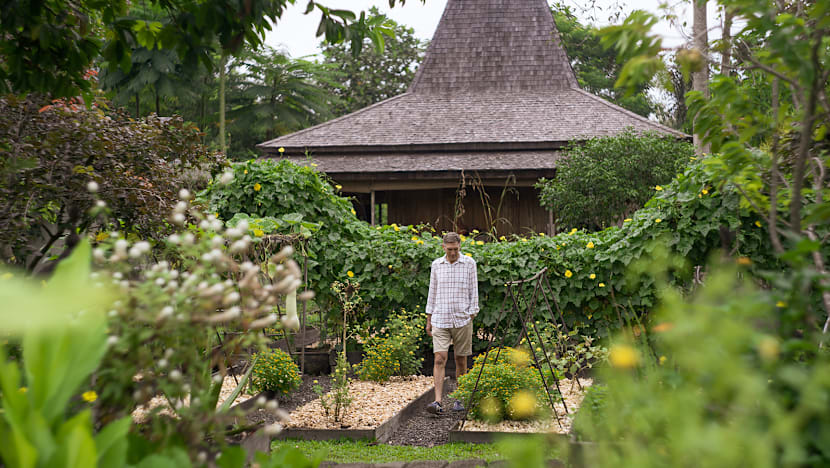
What began as a temporary year-long move from Singapore to Bali has evolved into a profound lifestyle transformation for Heveya CEO Stefan Magnus and his family. They now reside in Sibang, Bali, on a regenerative farm surrounded by nature, with their home built around a rescued Javanese joglo.
The family's initial plan was a brief respite from their 27 years in Singapore. However, the COVID-19 pandemic shifted their perspective, turning the temporary stay into a more permanent arrangement. While initially living in a villa, the experience in Bali prompted a deeper reflection on their way of life, balancing the island's beauty and the warmth of its people against the challenges of rapid development and waste management.
On one hand, Bali is incredibly beautiful, the nature, the friendliness of the people. But on the other hand, Bali is grappling with rapid development, and waste management challenges.
Magnus, whose company specializes in sustainable mattresses, found inspiration in the concept of regenerative living. They acquired land in Sibang, near Green School Bali, where his son attends. Here, they chose to restore and rebuild a traditional Javanese joglo, a common and environmentally sound practice in Bali, rather than constructing anew. This reclaimed structure now forms the heart of their 1.3-hectare farm.
Despite opportunities to develop the land into rental villas, a typical practice in Bali, the Magnus family opted for a different path. They found greater value in the tranquility, space, and connection to nature that their farm offers, a sense of fulfillment they felt was increasingly rare. The joglo itself, measuring 15x15 meters, serves as a large, open living space, designed without rigid room divisions and centered around their organic latex mattress and bedding, embodying their commitment to intentional living.
We found value in something else: the quietness, the space, the connection to nature. That gives us a fulfilment that’s not easy to find in many places now.
DistantNews Editorial
Originally published by CNA. Summarized and contextualized by our editorial team with added local perspective. Read our editorial standards.
More Stories


From Our Blog

What Gets Lost (and Found) When News Is Translated

The Critical Role of Diaspora Media in Global News

What Travellers Should Know About Countries with Restricted Press

A Digital Nomad's Guide to Following Local News

How the Same Story Looks Different in Different Countries
