

/nginx/o/2026/07/26/17807640t1hf4a1.jpg)
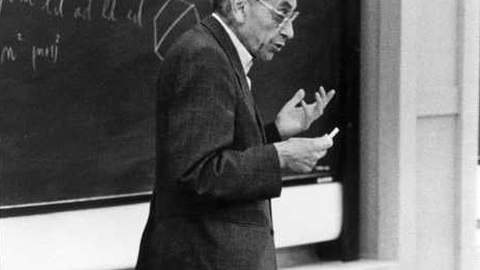
How Paul Erdős lived on others' couches but changed all of mathematics
Translated from Estonian, summarized and contextualized by DistantNews.
At a glance
In-depth
Sources not specified
Context piece
- Paul Erdős, a prolific mathematician, lived a nomadic life, traveling between universities and collaborating with hundreds of scientists.
- He is credited with developing thousands of mathematical ideas and influencing generations of mathematicians through his unique approach to research.
- Erdős's legacy includes famous theorems, a way to measure scientific collaboration (the Erdős number), and his distinctive method of conducting research.
Paul Erdős, a mathematician renowned for his prolific output and unconventional lifestyle, shaped modern mathematical collaboration by abandoning traditional notions of a stable life. He lived out of a suitcase, moving from one university to another, driven by an insatiable curiosity for mathematical problems and a desire to inspire others.
Erdős's nomadic existence, far from being a hindrance, became the engine for his groundbreaking work. He fostered a global network of mathematicians, leaving an indelible mark on the field. His unique approach to research and his prolific output of thousands of ideas and hundreds of scientific papers have influenced countless mathematicians.
The mathematician's legacy extends beyond his theorems. He is remembered for his distinctive way of measuring scientific interconnectedness through the "Erdős number," a concept that quantifies the collaborative distance between any two mathematicians. His life story itself serves as an inspiration, demonstrating how a radical departure from conventional living could lead to profound intellectual achievements and a lasting impact on the world of mathematics.
DistantNews Editorial
Originally published by Postimees in Estonian. Translated, summarized, and contextualized by our editorial team with added local perspective. Read our editorial standards.
More Stories

/nginx/o/2026/07/13/17780690t1h736b.jpg)
From Our Blog

What Gets Lost (and Found) When News Is Translated

The Critical Role of Diaspora Media in Global News

What Travellers Should Know About Countries with Restricted Press

A Digital Nomad's Guide to Following Local News

How the Same Story Looks Different in Different Countries
