


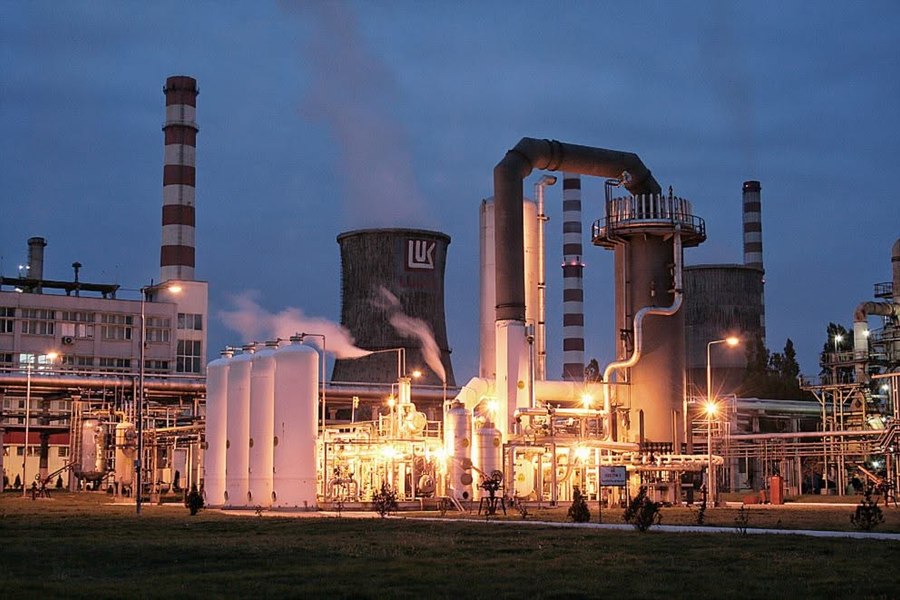
How Petrotel Lukoil refinery's insolvency could affect Romanians
Translated from Romanian, summarized and contextualized by DistantNews.
At a glance
News
Named sources
Context piece
- Romania's energy expert Silviu Gresoi discussed the potential impact of Petrotel Lukoil refinery's insolvency on fuel supply and prices.
- Gresoi stated that insolvency does not automatically mean bankruptcy and could be a legal mechanism for restructuring and finding a solution, potentially including a new owner.
- While the refinery's shutdown affects Romania's refining capacity and increases external dependency, it does not guarantee immediate price hikes at the pump.
The insolvency of the Petrotel Lukoil refinery raises questions about Romania's fuel supply and pump prices, as the refinery is currently offline. Energy expert Silviu Gresoi explained that insolvency is not equivalent to bankruptcy and can serve as a legal tool for companies to protect assets, restructure debts, and gain time to find solutions, which might include a change of ownership and restarting operations.
In a favorable scenario, Gresoi noted, the insolvency procedure could help preserve the refinery and its specialized workforce while the company seeks a path forward. This could involve a sale or restructuring that ultimately allows the refinery to resume operations, a development he described as the most desirable outcome for Romania.
Din punctul meu de vedere, trebuie să separăm două lucruri: insolvența Petrotel-Lukoil și efectul asupra pieței carburanților
However, the impact on the fuel market must be viewed separately from the company's legal proceedings. Petrotel represents a significant refining capacity, and its unavailability means that the volumes it would have produced must be sourced elsewhere. Gresoi cautioned that this does not automatically translate to immediate price increases for consumers at the pump.
While immediate price hikes are not guaranteed, Gresoi pointed out that prices could be influenced in the longer term, depending on how long the refinery remains inoperable and how the fuel demand is met. He also highlighted a broader concern: with each domestic refining capacity that becomes unavailable, Romania's dependence on external sources increases, a significant issue in the current complex geopolitical climate.
În acest caz poate fi un mecanism juridic prin care compania încearcă să își protejeze activele, să își restructureze obligațiile și să câștige timpul necesar pentru găsirea unei soluții, inclusiv schimbarea proprietarului și, în final, repornirea rafinăriei
DistantNews Editorial
Originally published by Adevărul in Romanian. Translated, summarized, and contextualized by our editorial team with added local perspective. Read our editorial standards.
More Stories

From Our Blog

What Gets Lost (and Found) When News Is Translated

The Critical Role of Diaspora Media in Global News

What Travellers Should Know About Countries with Restricted Press

A Digital Nomad's Guide to Following Local News

How the Same Story Looks Different in Different Countries
