


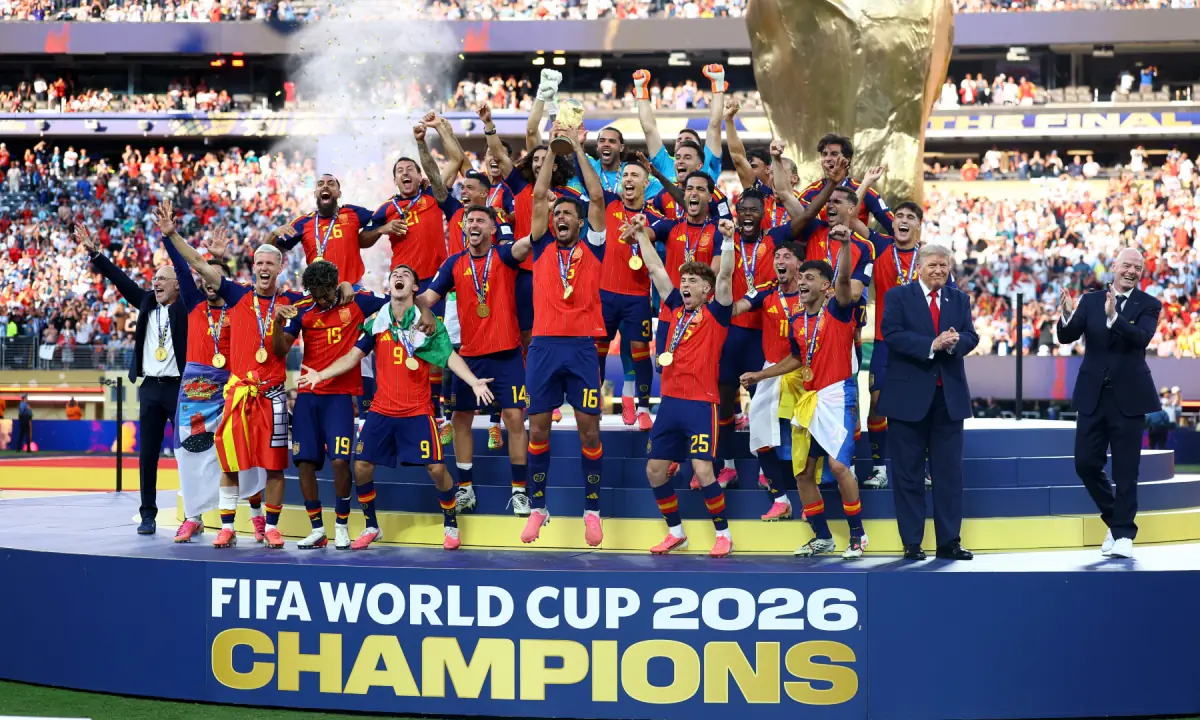
How Spain made Argentina look ordinary
Summarized and contextualized by DistantNews.
At a glance
News
Named sources
Outcome reported
- Spain defeated Argentina 1-0 after extra time to win their second World Cup title.
- Spain controlled the match, making Argentina appear ordinary despite Lionel Messi's presence.
- The victory was notable for Spain's complete control and composed possession against a resilient opponent.
Spain's World Cup triumph over Argentina was a masterclass in control, leaving the defending champions looking ordinary despite the presence of Lionel Messi. The final scoreline of 1-0 after extra time hardly reflected Spain's dominance throughout the match.
For large portions of the game, Spain dictated the tempo and possessed the ball with purpose, a stark contrast to an Argentinian side reduced to chasing shadows. This victory, Spain's second World Cup title, was particularly significant for its sheer command of the game. They demonstrated control without panic and possession without sterility.
For much of the World Cup final in New Jersey, Spain did not merely outplay the defending champions. They controlled the game so completely that Argentina, despite the presence of Lionel Messi in what was expected to be his final World Cup match, were reduced to chasing shadows.
Against an Argentinian team known for its resilience and Messi's individual brilliance, Spain offered a different model of success. Their performance was characterized by pressure applied without recklessness, showcasing a tactical maturity that overwhelmed their opponents. The image of Lamine Yamal taking a free kick encapsulates Spain's blend of youthful energy and strategic execution.
Luis de la Fuente's team executed a game plan that neutralized Argentina's strengths, securing a victory that was as emphatic in its execution as it was narrow in its margin. The manner of the win highlighted Spain's ability to impose their style on the biggest stage.
Against a team that had built its tournament on resilience, late comebacks and the individual brilliance of Messi, Spain offered something altogether different: control without panic, possession without sterility and pressure without recklessness.
DistantNews Editorial
Originally published by Dawn. Summarized and contextualized by our editorial team with added local perspective. Read our editorial standards.
More Stories

From Our Blog

What Gets Lost (and Found) When News Is Translated

The Critical Role of Diaspora Media in Global News

What Travellers Should Know About Countries with Restricted Press

A Digital Nomad's Guide to Following Local News

How the Same Story Looks Different in Different Countries
